
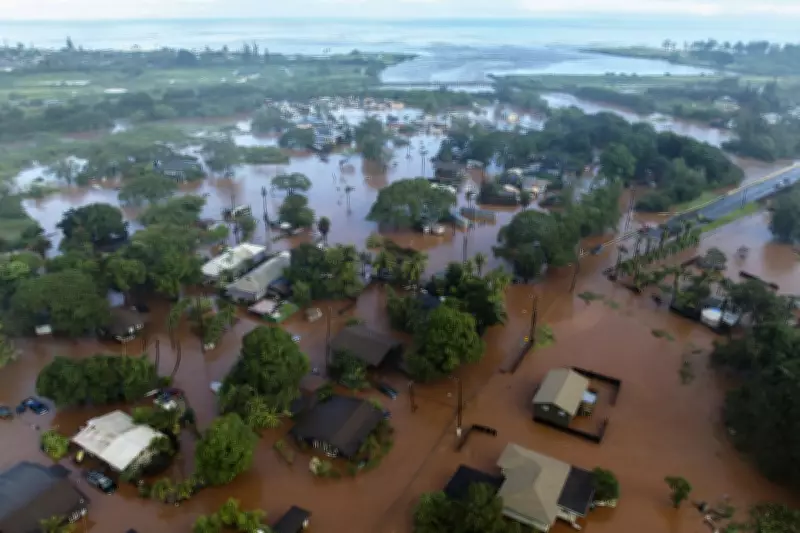
Massive Rescue Effort Underway as Flash Flooding Ravages Hawaii
More than 230 individuals were rescued from perilous conditions as flash flooding struck the Hawaiian island of Oahu, marking the worst inundation the region has experienced in two decades. The crisis unfolded rapidly, with fears mounting over a potential dam failure that could exacerbate the already catastrophic situation.
Immediate Threats and Evacuation Orders
Heavy rains pounded Oahu throughout the night, leading to towering flash floods and triggering urgent evacuation warnings. Authorities reported that water levels at a critical dam surged dangerously close to capacity, rising from 79 feet to 84 feet in less than 24 hours—just 6 feet shy of its maximum threshold. While water levels have since receded, officials caution that additional rainfall could swiftly reverse this progress.
Approximately 5,500 residents were placed under evacuation orders as floodwaters swallowed streets and vehicles. Videos circulating on social media depicted cars being overtaken by muddy waters, highlighting the sudden and severe nature of the flooding. No fatalities have been reported, and all individuals are accounted for, according to Hawaii Governor Josh Green.
Catastrophic Damage and Ongoing Challenges
Governor Green estimated that the damage from the flooding could exceed $1 billion, with dozens—if not hundreds—of homes sustaining significant harm. Honolulu Mayor Rick Blangiardi described the destruction as "catastrophic", noting that full assessments have been hampered by ongoing rescue operations and inaccessible areas.
Emergency services faced considerable obstacles in reaching stranded residents, compounded by unauthorized drone flights that interfered with aerial search efforts. About 10 people were hospitalized for hypothermia, while others sought refuge in shelters. One evacuation center at Waialua High and Intermediate School had to be relocated due to flooding, displacing 185 people and 50 pets.
Historical Context and Future Concerns
The current storm follows a similar event just last week, which caused catastrophic flooding and serious injuries. Officials have been vigilantly monitoring dam levels since that incident, aware of the potential for repeat disasters. In 2006, the collapse of the Ka Loko dam on Kauai resulted in seven fatalities, a grim reminder of the risks posed by aging infrastructure.
Residents like Kathleen Pahinui of Waialua expressed ongoing anxiety about the dam's stability during heavy rains, urging prayers and preparedness as more precipitation is forecasted. The National Weather Service reported that parts of Oahu received 8 to 12 inches of rain overnight, with Kaala, the island's highest peak, recording nearly 16 inches in the past day.
Community Response and Safety Measures
Local representatives, such as North Shore State Representative Amy Perruso, emphasized the dire circumstances faced by many residents, whose vehicles were submerged and escape routes blocked. The Honolulu emergency department issued urgent guidelines, advising those trapped to seek higher ground and avoid attics without roof access.
As Hawaii braces for additional rainfall through the weekend, Governor Green characterized the situation as "touch-and-go", underscoring the unpredictable nature of the storm and its potential to unleash further devastation. The state remains under a flood watch, with specific flash flood warnings in effect for northern Oahu communities like Haleiwa and Waialua.



