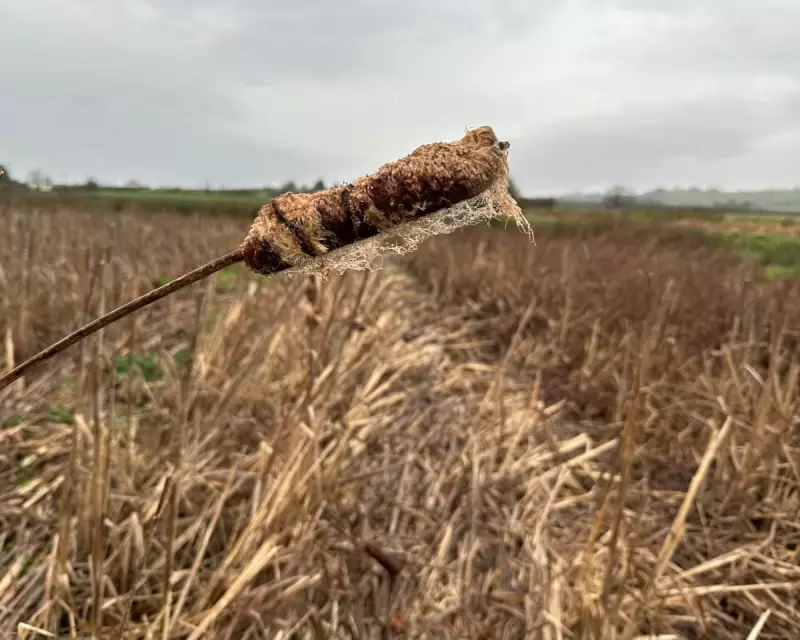
On a rain-swept field in Greinton, Somerset, a quiet agricultural revolution is taking root. What appears as a few soggy acres of broken, brown bulrush is, in fact, a pioneering trial that could redefine farming on some of Britain's wettest land.
Reversing Centuries of Drainage
For generations, the dominant practice on the Somerset Levels has been to drain the land. This transformed a vast, seasonal inland sea of bogs, lakes, and islands into the fertile pasture we know today, crisscrossed by ditches and water channels known as rhynes. However, this drying of the underlying peat has come at a significant environmental cost: the process releases large quantities of stored carbon dioxide into the atmosphere.
Now, a forward-thinking group of farmers is championing a radically different approach. Instead of fighting the water, they are learning to work with it through a method called paludiculture, or 'marsh growth'. This involves cultivating crops that naturally thrive in permanently wet, peat-rich conditions.
The Bulrush Experiment
At the heart of the trial on the Levels is a native plant: Typha latifolia, commonly known as bulrush, reedmace, or cattail. Farmer Will Barnard, standing on the land in a persistent December drizzle, explained the transformation. "Two years ago, this was bare, just black desert," he said, gesturing across the field. "I seeded it with bulrush, a new technique, and harvested the tops last autumn. It's a perennial, so it will grow again this spring."
The harvested bulrush seedheads are processed in a converted cowshed. Stripped of their waxy, waterproof casing and dried in specialist wooden crates, the material reveals its remarkable potential. When a tarpaulin is pulled back, gossamer-like strands float into the air. Each seedhead can expand to over 200 times its original size, producing a luxuriously soft, downy fluff.
From Marsh to Modern Material
This fluff is not destined to stay on the farm. The harvest is supplied to Bristol-based biomaterials company Ponda, which processes it into a product named BioPuff. This innovative, pillowy fibre is designed as a sustainable insulating material for clothing, such as jacket linings, offering a plant-based alternative to synthetic or down fills.
This commercial application is key to the model's viability. It provides an economic incentive for farmers to keep their peatlands wet, thereby locking in carbon, reducing fire risk, and preserving the unique ecology of wetland landscapes. The trial represents a tangible shift from seeing waterlogged ground as problematic 'black desert' to viewing it as a productive and ecologically vital resource.
As winter rains once again sheet across the low-lying Somerset ground, this small patch of bulrush stands as a test case for a more harmonious form of agriculture. It's a novel method that works with the natural rhythm of the Levels, not against it, potentially paving the way for a greener future for Britain's precious peatlands.