
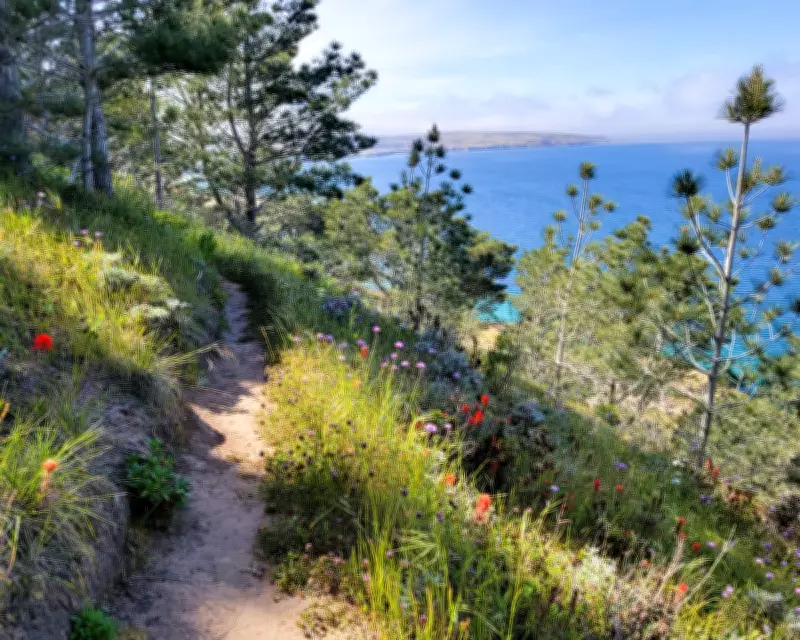
A rare wildfire on Santa Rosa Island, part of California's Channel Islands, is threatening a unique grove of Torrey pines and several other plant species found nowhere else on Earth. The fire, which broke out late last week, has already scorched approximately 18,000 acres, nearly one-third of the island's surface.
Unique Ecosystem Under Threat
Santa Rosa Island is home to six endemic plant species, including the Torrey pine, which grows in a grove of a few thousand trees on the island's south-eastern corner. Some of these trees are more than 250 years old. The only other location where Torrey pines exist is in San Diego County, but biologists classify the two populations as different subspecies. The fire threatens to push the island's Torrey pines to extinction if it spreads into the grove.
Dr Heather Schneider, director of research and conservation at the Santa Barbara Botanic Garden, expressed concern: 'We're all watching this with a little bit of trepidation. Are these plants going to recover on their own?'
Endemic Plants at Risk
Biologists view the Channel Islands as a conservation success story, where native plants rebounded after decades of damage from non-native livestock and wild game. The fire threatens that recovery. In addition to Torrey pines, the fire endangers the Santa Rosa Island manzanita, East Point dwarf dudleya, soft-leaved Indian paintbrush, Santa Rosa Island live-forever, and Hoffman's slender-flowered gilia.
Steve Junak, a biologist who has studied the island's flora for nearly four decades, said some species may benefit from fire. The manzanita, for instance, belongs to a genus that thrives after fires. However, he worries about the Torrey pine grove and the East Point dwarf dudleya, a succulent whose range has already burned. 'Their response to fire is not known at all,' Junak said. 'I hope they survive this event.'
Fire Origin and Response
Wildfires are rare on the Channel Islands, historically occurring only after lightning strikes. The current fire is believed to be human-caused. A 67-year-old sailor crashed his boat into rocks on the island's shore last week and fired flares to signal for help, which may have sparked the blaze. Coast Guard officers rescued the man, who was uninjured.
Drone footage suggests firefighters have so far shielded the Torrey pine grove from the worst damage. 'Initial video offers cautious optimism because some green canopy remains visible,' said Sierra Frisbie, a fire information officer. However, she warned that delayed mortality can occur months or even years later in species not adapted to wildfire.
Long-Term Concerns
Biologists must wait until the fire is contained to assess the full damage. Junak noted that the fire's effects extend beyond plants: 'When we think about the effects of this fire, we need to consider how the endemic insects and animals that interact with them are being affected.' He also highlighted damage to soil crusts, which help prevent invasive plants and erosion.
The Santa Barbara Botanic Garden has been building a seed bank for decades, including a conservation grove of 40 Torrey pines, which could aid restoration if necessary. 'This is why we do what we do,' Schneider said. 'There's always the hope that nature will recover on its own. But if it doesn't, we have been gathering the seeds we need to help.'



