
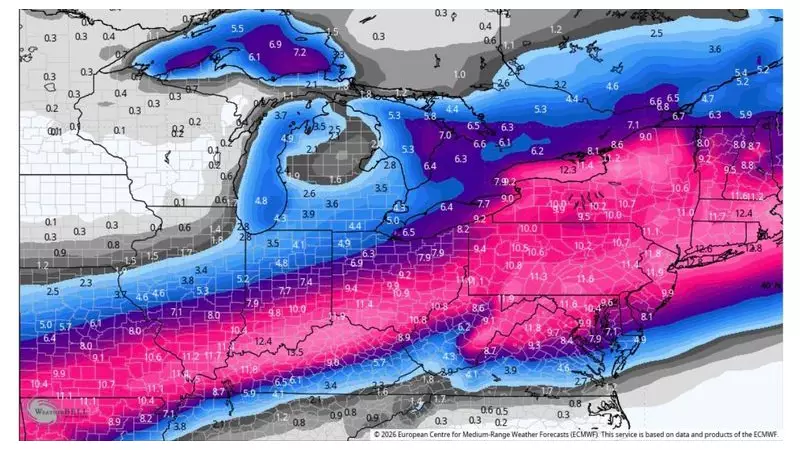
A severe and potentially life-threatening winter storm is poised to strike the United States this weekend, unleashing a barrage of snow, sleet, ice, and perilously cold temperatures across a vast swathe of the country. Forecasters are issuing stark warnings that the impending damage, particularly in regions burdened by heavy snowfall and ice accumulations, could rival the destructive force of a hurricane. In a proactive move, a total of twelve states have already declared states of emergency as communities brace for the onslaught.
Understanding the Impending Winter Storm
According to the NOAA's National Severe Storms Laboratory, a winter storm is characterised by a dangerous combination of heavy snow, blowing snow, and hazardous wind chills, conditions that are unequivocally described as "life-threatening." This specific storm system is being fuelled by a potent area of low pressure surging northwards from the Gulf of Mexico, which is laden with moisture, colliding with an exceptionally frigid mass of Arctic air plunging southwards from Canada.
The storm brings with it the grave threat of an ice storm, defined by the accumulation of at least a quarter of an inch of ice on exposed surfaces. This creates extremely hazardous conditions for driving and walking, alongside the significant risk of downed power lines and trees, potentially leading to widespread power outages and infrastructure damage.
Forecasted Path and Severe Impacts
The National Weather Service has alerted communities that a "significant, long-duration winter storm" will impact the nation from Friday through to Monday. It is forecast to bring widespread heavy snow, sleet, and freezing rain stretching from the Southern Rockies all the way to New England. Residents are being urged to prepare for "bitterly cold temperatures and dangerously cold wind chills."
Meteorologists predict the storm will deliver a crippling ice event from Texas through parts of the Southern United States. Simultaneously, heavy snowfall of up to 30 centimetres (12 inches) is anticipated from Oklahoma through to major eastern cities including Washington D.C., New York, and Boston. In a final, severe blow, a surge of bitterly cold air could plunge temperatures to as low as -46°C (-50°F) in parts of Minnesota and North Dakota.
The NWS has emphasised the severity, stating: "The storm will cause significant to locally catastrophic ice accumulations with the potential for long-duration power outages, extensive tree damage, and extremely dangerous or impassable travel conditions." They further warned that in the storm's aftermath, communities from the Southern Plains to the Northeast will contend with prolonged hazardous conditions due to the extreme cold.
Millions Under Alert as States Declare Emergencies
Approximately 160 million people—nearly half of the entire United States population—are currently under a variety of winter weather watches, warnings, and alerts. These advisories span from Arizona and Montana in the west to the Carolinas and Maine in the east.
The twelve states that have pre-emptively declared states of emergency include:
- Texas
- Georgia
- South Carolina
- North Carolina
- Virginia
- Maryland
- Louisiana
- Arkansas
- Tennessee
- Alabama
- Mississippi
- Missouri
Federal and State Emergency Responses
The Federal Emergency Management Agency (FEMA) has activated its National Response Coordination Center and regional centres in preparation. According to agency documents, FEMA has pre-positioned critical supplies and is deploying more than 200 call centre specialists nationwide.
Pre-positioned resources include 250,000 meals, 400,000 litres of water, 30 generators, and 12 shuttle drivers stationed at Camp Minden in Louisiana. Additional shuttle drivers are being deployed to distribution centres in Greencastle, Pennsylvania; Fort Worth, Texas; and Atlanta, Georgia, to facilitate the rapid movement of essential commodities. A total of 28 search and rescue teams are also on standby, ready to respond to emergencies.
Safety Advice for Residents
Authorities are strongly advising residents to stay at home and avoid all non-essential travel. Households are urged to prepare emergency kits stocked with essential supplies. The North Carolina Department of Emergency Management highlighted in a social media post: "Items like flashlights, batteries, and battery back-ups can make all the difference."
Recommended items for emergency kits include:
- Mobile phone chargers and battery packs
- Battery-powered or hand-crank radios
- Winter clothing, blankets, and thermal layers
- A comprehensive first-aid kit
- Sufficient food and drinking water supplies
Critical safety warnings have been issued, emphasising that generators should never be operated inside a house or garage due to the lethal risk of carbon monoxide poisoning. The Georgia Emergency Management Agency also advised people to regularly check weather forecasts for updates, ensure smoke and carbon monoxide detectors are functioning, refuel vehicles and heating sources, check on vulnerable neighbours and family members, properly ventilate any emergency heat sources, keep generators at least 20 feet away from homes, and exercise extreme caution while shovelling snow and ice.



