
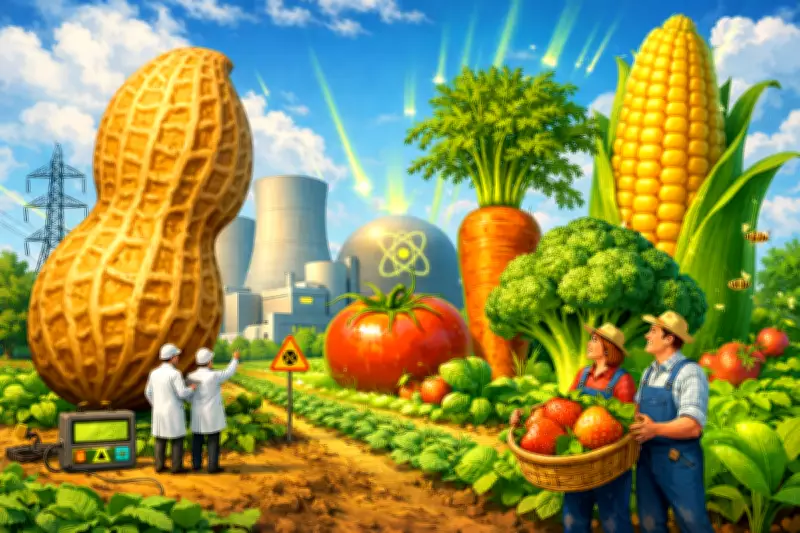
Embracing Nuclear Food: The Joy of Gamma Ray Greens and Nuked Nuts
In a bold call to action, Tim Gregory urges Britain to shed its radiophobia and fully embrace the innovative benefits of atomically enhanced food. Drawing from personal experience, he recounts how the initial fear of radiation, symbolized by a Geiger counter's clicks, gave way to a profound appreciation for nuclear science as a powerful problem-solving tool. Gregory highlights that radiation levels in such contexts are often minimal, comparable to natural background radiation found in places like Cornwall, challenging the widespread anxiety that hampers progress in this field.
The Historical Roots of Genetic Manipulation
Our ancestors began manipulating plant genetics as far back as the tenth millennium BC, selectively propagating crops for desirable traits such as high yield, rapid growth, and enhanced taste. This slow, natural process transformed wild plants into the agricultural bounty that sustains modern society. Gregory notes that every morsel we consume today is, in essence, genetically modified, a fact that might surprise organizations like Greenpeace. However, traditional methods relied on nature's pace, which artificial radiation has dramatically accelerated.
Atomic Gardening: A Faster Path to Innovation
By exposing seeds and cuttings to gamma rays and other forms of radiation, scientists can induce genetic mutations much more rapidly than natural evolution allows. While many plants do not survive this process, those that do often acquire new and beneficial traits, such as pest resistance, faster growth, or drought tolerance. During the mid-twentieth century, fueled by nuclear optimism, researchers established 'gamma gardens' using isotopes like cobalt-60, which is incredibly radioactive, to breed crops like beans, rice, and wheat tailored for a growing global population.
Public Enthusiasm and Eccentric Experiments
The excitement around atomic gardening extended beyond laboratories to amateur enthusiasts. In the late 1950s, Clarence Speas, a dentist from Tennessee, cultivated radiation-modified flowers like poppies and petunias in his homemade atomic allotment, even selling 'atom-blasted seeds' commercially. Meanwhile, Muriel Howorth from East Sussex gained fame with her giant atomic peanut bush, described as 'the most sensational plant in Britain.' She founded the Atomic Gardening Society in 1960, distributing irradiated peanuts to members and fostering a community dedicated to this novel science.
The Legacy and Future of Atomic Crops
Despite the decline of public interest following events like the 1986 Chernobyl Disaster and the end of the Cold War, the legacy of atomic gardening endures. The International Atomic Energy Agency's Mutant Variety Database lists over 3,400 entries, with irradiated plant varieties thriving on every continent except Antarctica. Gregory emphasizes that this strange-sounding science, enriched by creativity and eccentricity, continues to deliver significant benefits to humanity. He personally favors gamma-bred barley for its stiffer straw, improved yields, and enhanced malting properties, ideal for brewing, and celebrates the potential of nuclear food with a toast to its rays.



