
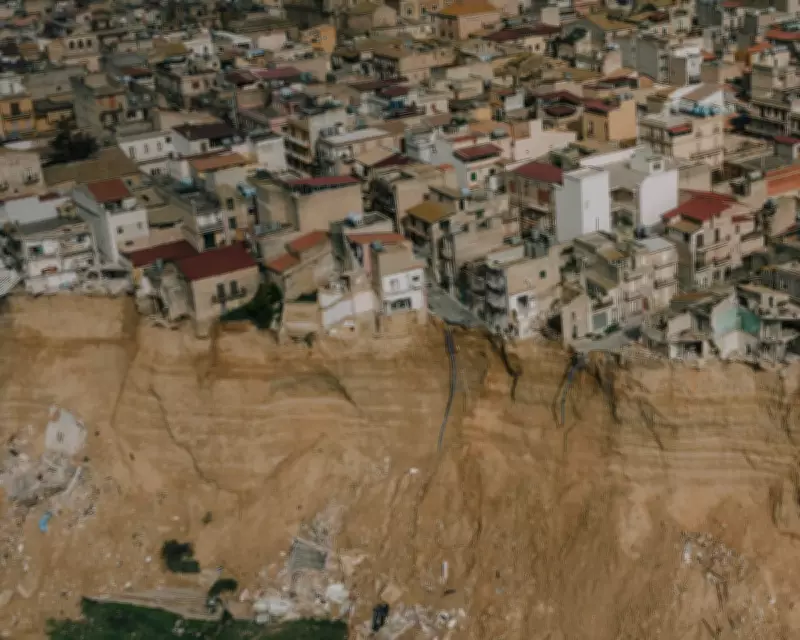
Niscemi's Cliffside Catastrophe: A Town Teetering on the Brink
In the Sicilian town of Niscemi, a community of 25,000 residents is grappling with a harrowing reality as dozens of houses hang precariously over the edge of a 25-metre abyss. This dire situation unfolded on 25 January, when torrential rain from Cyclone Harry triggered a devastating landslide, carving a 4km-long chasm through the urban fabric. Roads have collapsed, cars have been swallowed, and entire sections of the town have plunged into the valley below, leaving a landscape of ruin and uncertainty.
Immediate Aftermath and Evacuations
Authorities have evacuated more than 1,600 people from Niscemi, with entire sections of the historic centre, including 17th-century churches, now at risk of sliding downhill at any moment. The landslide continues to advance, with vehicles and fragments of roadway giving way hour by hour under the strain of unstable ground. For those displaced, the experience has been traumatic. Salvatrice Disca, 70, described the sudden evacuation: "The power went out, and a few minutes later the police knocked on our door. They told us to leave immediately, to abandon everything and take only the essentials." Many evacuees are staying with relatives or in care homes, while others have found temporary shelter in bed-and-breakfasts.
Personal Losses and Community Anguish
The human toll is profound, as residents mourn not just homes but lifetimes of memories. Benedetta Ragusa, 41, owner of the well-known pizzeria A Barunissa, had only minutes to salvage machinery and furnishings before her business was lost. "We've lost everything," she lamented. Similarly, Sofia Salvo, 61, a primary school teacher, expressed despair over her family home, built legally over three generations but now gone. "I keep asking why the authorities allowed it in a risk area. Someone has to take responsibility," she said. The town has fallen into a hush, with streets emptied and the urban landscape reduced to a ghost town.
Historical Context and Investigative Scrutiny
This disaster is not an isolated incident but part of a troubling pattern. The same stretch in Niscemi collapsed in 1790 and again in 1997, yet many buildings were erected from the 1950s onward, ignoring the area's hydrogeological vulnerability. The public prosecutor's office in Gela has opened an investigation into negligent disaster, with chief prosecutor Salvatore Vella stating, "No one will be spared scrutiny." Geologists and environmental experts point to decades of reckless housing and planning policies in Italy, where hundreds of neighbourhoods have been built in fragile areas prone to landslides, floods, and seismic risk.
Climate Emergency and Broader Implications
According to Christian Mulder, a professor of ecology and climate emergency at the University of Catania, the landslide in Niscemi is a stark sign of how the climate crisis is reshaping the Mediterranean. "These are not reassuring rains but violent downpours, dumping a year's worth of water in a few hours," he warned. Cyclone Harry, with winds exceeding 60mph, caused an estimated €2bn in losses across Sicily, highlighting the island's vulnerability to extreme weather events. Legambiente reported 45 such events in 2025 alone, each damaging infrastructure significantly.
Uncertain Future and Lingering Despair
As the landslide advances, the fate of valuable assets like the Biblioteca Marsiano library, with over 4,000 rare books, remains uncertain, lying in a "black zone" off-limits even to firefighters. Volunteers like Davide Cascio, 38, note the mix of anger and despair among residents, who feel this disaster could have been prevented. For many, like an elderly couple turned back by firefighters while trying to retrieve belongings, the reality is a painful negotiation with loss. They walk with heads bowed, knowing they may never return home, a poignant reminder of the irreversible impact of environmental neglect and urban mismanagement.



