
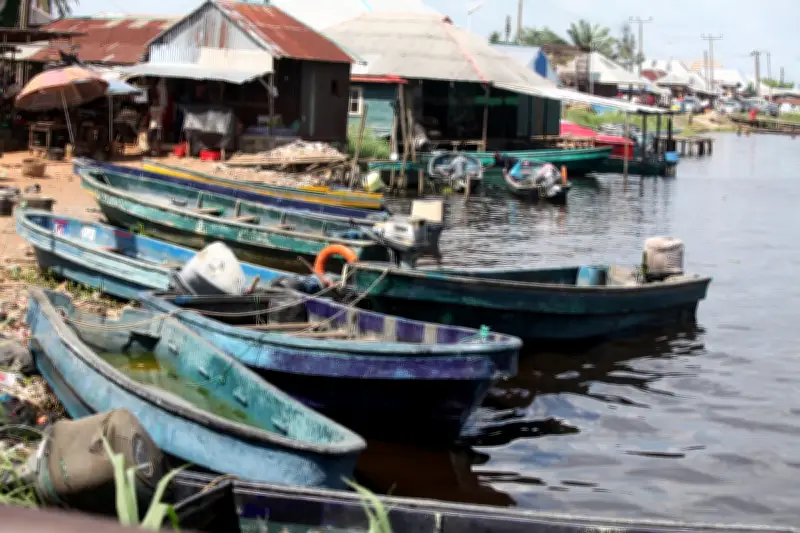
For six years, the Ororo-1 oil well off the coast of Awoye in Nigeria's Niger Delta has burned continuously, releasing smoke, soot, and toxic fumes that have sickened residents and devastated their fishing livelihoods. Despite repeated pleas, no government agency has conducted a comprehensive health assessment or taken action to stop the pollution.
Health Crisis Unfolds
Bodunwa Orugbemi, 70, watches over her 21-year-old son Ijadopin in a hospital in the Niger Delta. He started coughing in May, then developed skin irritation and difficulty breathing. "He started shivering and coughing uncontrollably. Now he can eat, but he still cannot speak," she says. She blames the pollution from the burning well.
Across the Ilaje coast, residents report persistent coughs, respiratory difficulties, skin problems, and collapsing livelihoods. Philip Jakpor, executive director of the NGO Renevlyn Development Initiative, says this pattern is familiar: "In the Niger Delta, the plight of oil-polluted communities has reached a point where people are forced to live with contaminated air and water."
The Blowout and Its Aftermath
The Ororo-1 well was originally drilled by Chevron, then capped and abandoned. Nigeria's petroleum regulator awarded licences to Owena Oil and Gas and Guarantee Petroleum. In April 2020, a blowout ignited the well. Temilorun Patrick Ajimisogbe, a fisher, recalls: "It was around 7pm when the explosion happened. The whole community shook. Since that day, nothing has been the same."
Fishers stayed away from the water for days as soot and crude oil spread along the coast. Years later, residents still complain of coughs, skin irritation, and dizziness. Black soot settles inside water containers and uncovered food, yet no government agency has conducted a public health assessment.
Expert Concerns on Long-Term Exposure
Dr Bieye Briggs, an environmental health expert, says the core concern is prolonged exposure to toxicants: "What is truly worrying is the lack of an adequate bio-monitoring regime to determine what people may be ingesting into their bodies." A study by Kebetkache Women Development and Resource Centre in Bayelsa state found high levels of polycyclic aromatic hydrocarbons (PAHs) in women's blood and contamination of soil and water.
Dr Nnimmo Bassey of the Health of Mother Earth Foundation warns that continuous burning of crude oil releases benzene, sulphur dioxide, particulate matter, and PAHs, linked to cancer and respiratory diseases. "You can be sure there will be elevated levels of blood disorders, cancers, skin diseases, breathing difficulties and, of course, deepening poverty," he says.
Livelihoods Destroyed
Fishing, the main livelihood, has collapsed. Ajimisogbe says: "When you cast your net, sometimes the fish smell of crude oil. Unless you buy fuel worth 60,000 to 70,000 naira [£33 to £39], twice as much as before, and travel much farther out to sea, you'd hardly get a decent catch." Oil contamination forms slick layers on the water, blocking oxygen exchange and destroying marine breeding grounds. Dead fish sometimes wash up near polluted creeks.
Christianah Abiye, a fishmonger, says dwindling catches mean lower incomes and rising debts: "At first we thought the fire would stop. Now it feels like we have been abandoned with it."
Community Feels Abandoned
Awoye's traditional leader, Happiness Abiye, expresses frustration: "Our people are dying slowly, with increased sickness and hunger linked to this pollution. Fishermen no longer catch like before, children are coughing, and women spend their little money treating illnesses that were rare before this fire. We feel abandoned. It is as if the lives of coastal people do not matter to those in power."
Environmental campaigners say the disaster exposes systemic failures in Nigeria's environmental governance. Bassey notes: "The Niger Delta environment has become a completely sacrificed zone. Communities are carrying the health burden, while regulators remain largely absent." Experts call for a system to monitor environmental and health risks, as there is no comprehensive study on oil pollution's long-term health effects in the delta.
No one from Owena Oil and Gas or the Ondo State government responded to requests for comment.



