
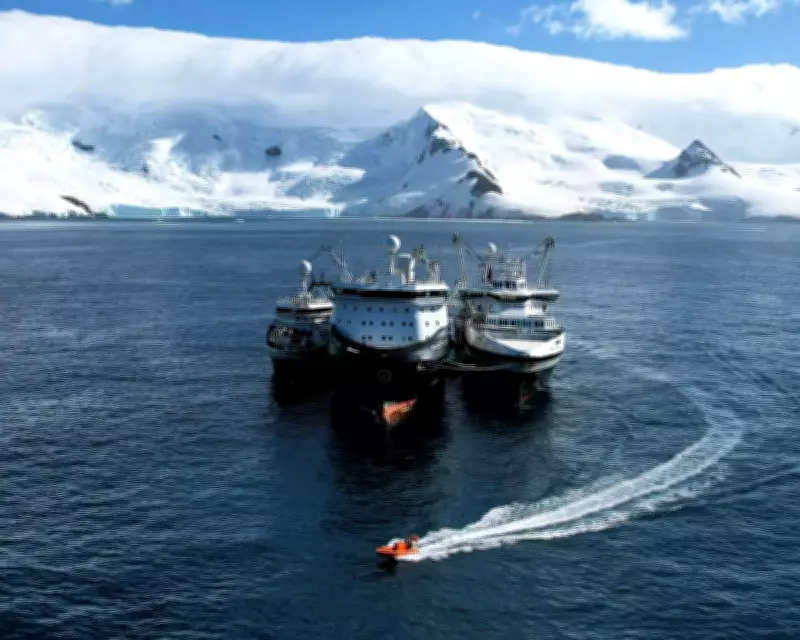
Norwegian Krill Harvesting Giant Faces Intense Scrutiny Over Sustainability Label
Norwegian company Aker QRILL, recognized as the world's largest harvester of Antarctic krill, finds itself embroiled in a significant controversy regarding its "blue tick" sustainability certification. Environmental organizations are vigorously opposing the recommendation to renew this label, citing serious concerns about concentrated fishing pressure and the dramatic impacts of climate change on Antarctica's delicate ecosystem.
The Core of the Controversy: MSC Certification Under Fire
Aker QRILL and its sister company, Aker BioMarine, have held the Marine Stewardship Council's (MSC) "blue tick" sustainability label since 2010. This certification applies to their krill products, which are used as feed additives in aquaculture and as dietary supplements for pets and humans. However, the company is currently undergoing a fresh evaluation by a third-party assessor to determine its continued eligibility for this prestigious environmental endorsement.
Environmental advocates argue that since Aker's last certification in 2020, the management of the entire Antarctic krill fishery has deteriorated significantly. This decline is primarily attributed to the lapse of crucial conservation measures designed to protect this keystone species. Krill, tiny crustaceans that form the foundation of the Antarctic food web, serve as the primary nutrition source for whales, penguins, and seals.
Conservation Deadlock and Lapsed Protections
The controversy intensified in 2024 when a key conservation measure, established to disperse krill catches across multiple areas of the Southern Ocean to prevent local depletion, expired due to political gridlock. China and Russia, both member nations of the Commission for the Conservation of Antarctic Marine Living Resources (CCAMLR), blocked the renewal of the agreement restricting krill fishing. This deadlock persisted into 2025, with countries failing to reach a consensus on new protective measures.
Holly Curry, marine protected areas campaign director at the Antarctic and Southern Ocean Coalition (Asoc), expressed strong opposition: "The Antarctic and Southern Ocean Coalition opposes the recommendation to recertify the Antarctic krill fishery." Similarly, Rhona Kent, polar oceans programme manager at WWF-UK, called for "an immediate moratorium on krill fishing and a review of the sustainability certification issued by the MSC until more precautionary fisheries management measures are agreed by CCAMLR."
Climate Change Exacerbates Ecological Threats
Compounding these management failures, scientists from the British Antarctic Survey have issued warnings about climate-driven extreme changes occurring in Antarctica at an accelerated pace. These environmental shifts place crucial krill populations under increased threat, undermining their role as both a keystone species and an important climate buffer. The combination of fishing pressure and climate impacts has raised alarms about potential local depletions in key feeding grounds for marine predators.
In response to these concerns, Asoc and WWF have formally objected to any MSC recertification of Aker's fishery. Asoc has submitted detailed letters to both the third-party evaluators and the MSC, arguing that the current assessment overlooks the deepening climate crisis and the lapsed conservation measure. These organizations are not alone in their apprehension; renowned naturalist David Attenborough highlighted the issue in his film "Ocean," questioning the sustainability of industrial krill trawling by stating, "Some claim this is sustainable, but we might be removing the foundations of an entire ecosystem."
Assessment Process and Corporate Response
In February, a draft 300-page report by LRQA, part of Lloyds Register and serving as a third-party conformity assessment body for the MSC, recommended that Aker's fishery be certified against the MSC standard for another five years. Curry expressed "deep disappointment" that evaluators had not adequately addressed Asoc's concerns about the long-term sustainability of krill fishing, noting that the situation had "taken a step backward" due to the ongoing deadlock at CCAMLR.
A spokesperson for the MSC emphasized that they could not comment on the ongoing evaluation but defended their standards, noting that krill fisheries face "especially precautionary catch limits which are much lower than for other species, ensuring the needs of dependent predators in the food web are met before those of humans." The spokesperson added that all fisheries seeking certification must demonstrate effective management systems, including measures taken by relevant bodies like CCAMLR.
Matts Johansen, CEO of Aker QRILL, countered that environmental NGOs promote an "extreme narrative" that is "counter-productive" to achieving ecosystem protection in the Antarctic. He emphasized the need for cooperation and consensus at CCAMLR, revealing that his company is actively working behind the scenes, including engagements with China, to help break the deadlock on appropriate conservation measures. Johansen asserted that Aker has no interest in expanding its fishery and is committed to supporting marine protected areas and spatial management initiatives. "We want these changes, we want the MPA in place, we want spatial management in place and we are working hard to make it happen," he stated.
The outcome of this certification review will have significant implications for both the krill fishing industry and Antarctic conservation efforts, highlighting the complex interplay between commercial interests, environmental protection, and international diplomacy in one of the world's most fragile ecosystems.



