
Braiding Knowledge: Indigenous Expertise Meets Western Science
In a transformative shift, researchers are increasingly weaving Indigenous practices with Western scientific methods to revive ecosystems and reclaim food sovereignty. This convergence represents a departure from historical dismissals of Native knowledge, fostering collaborations that benefit both environmental health and community heritage.
The Clam Garden Revival
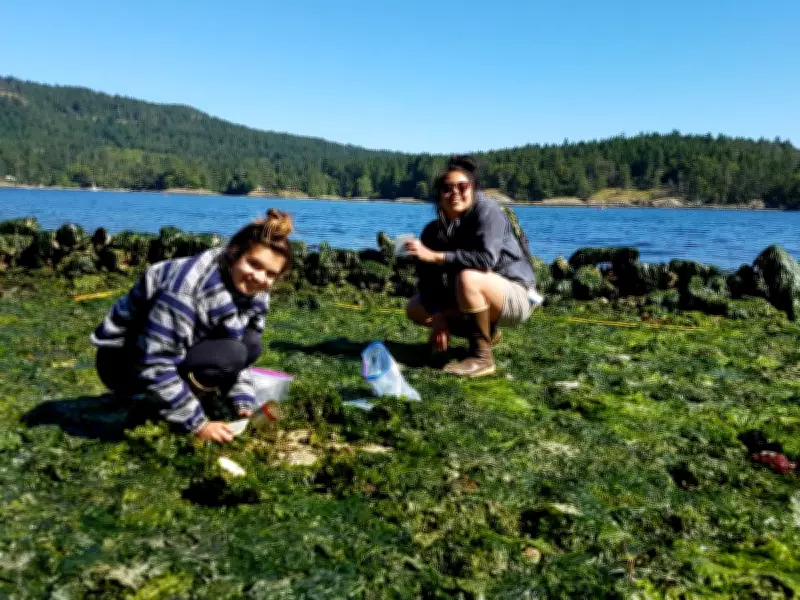
Marco Hatch, a marine ecologist at Western Washington University and an enrolled member of the Samish Indian Nation, humorously describes himself as a "glorified clam counter." His work involves surveying mollusks in clam gardens—ancient, rock-walled terraced beaches created by Indigenous communities in the Pacific Northwest. Hatch collaborates with seven Indigenous nations to rebuild these structures, using Western scientific methodology to gather data on beach ecology and clam health.
This data is crucial for obtaining local, state, and federal permits, enabling these communities to maintain or re-engineer clam gardens. By doing so, they assert greater control over their heritage and regain food sovereignty, ensuring access to traditional foods like butter clams, which were historically smoked, dried, stored, and traded.
A Massive Shift in Scientific Perspective
Kyle Whyte, a professor of environmental justice at the University of Michigan and a member of the Citizen Potawatomi Nation, notes a "massive shift" in how Western scientists view Indigenous knowledge. Historically, Native thought was often classified as mythic or religious, but now, there is growing recognition of its empirical rigor. This braiding of knowledge systems is becoming more common, driven by Indigenous scholars like Vine Deloria Jr. and Robin Wall Kimmerer, who advocate for "native ways of knowing."
Institutions are also adapting; for example, the Brooklyn Botanic Garden now includes Lenape names and uses for food plants, while international organizations increasingly incorporate Indigenous voices in climate crisis discussions. Since 2022, federal funding has supported studies on combining Indigenous and Western sciences, aiming to strengthen both while keeping them distinct.
Proven Ecological Benefits
Clam gardens, dating back at least 4,000 years, stretch from Washington state through coastal British Columbia to southeast Alaska. They are a form of mariculture that enhances biodiversity, providing habitat for species like red rock crab, sea cucumbers, and seaweeds. Studies show that clam productivity is higher inside these gardens, and they may protect against shoreline erosion.
Kisha Supernant, director of the University of Alberta’s Institute of Prairie and Indigenous Archaeology, emphasizes that Indigenous knowledge involves "a rich history of observation, experimentation, and understanding" with its own systems of rigor. This interconnected view of earth, water, air, plants, and animals offers valuable lessons for Western science, which often operates in distinct disciplines like ecology and archaeology.
Challenges and Opportunities in Collaboration
Despite progress, challenges remain. Suzanne Greenlaw, an ecologist with the Houlton Band of Maliseet Indians, highlights frustrations with the need to "prove" the validity of Indigenous practices. In a 2016 study on sweet grass harvesting, Wabanaki practitioners demonstrated superior ecological knowledge, leading to potential harvest rights restoration. Greenlaw stresses that Indigenous people must maintain control over knowledge and its use, as Western scientists have historically extracted information for their own purposes.
Opportunities for collaboration are multiplying. Whyte points to examples like the Sault Ste Marie Tribe of Chippewa Indians, which collaborated with US Forest Service researchers to prove the benefits of prescribed burns for wildlife populations. Such efforts can save money and advance ecosystem studies by building on Indigenous knowledge.
Moving Forward with Equal Weight
Progress in braiding knowledge depends on giving equal weight to both systems. Supernant argues that if Indigenous communities must continually prove their knowledge using Western methods, true collaboration is hindered. However, she notes positive steps, such as Canada's 2019 legislation requiring consideration of Indigenous knowledge in fisheries management.
Whyte encourages early involvement of Indigenous partners in research, suggesting that scientists approach them with open-ended topics like water management before defining specific questions. He also advocates for more Indigenous-led research initiatives, like the Center for Cooperative Ecological Resilience established by the Sault Ste Marie tribe.
In Hatch's experience, reconnecting Indigenous knowledge holders with federal land managers fosters community building and strengthens relationships. As he puts it, "The beach is a great place to connect," symbolizing the potential for these collaborations to sprout into new areas of environmental and social benefit.



