
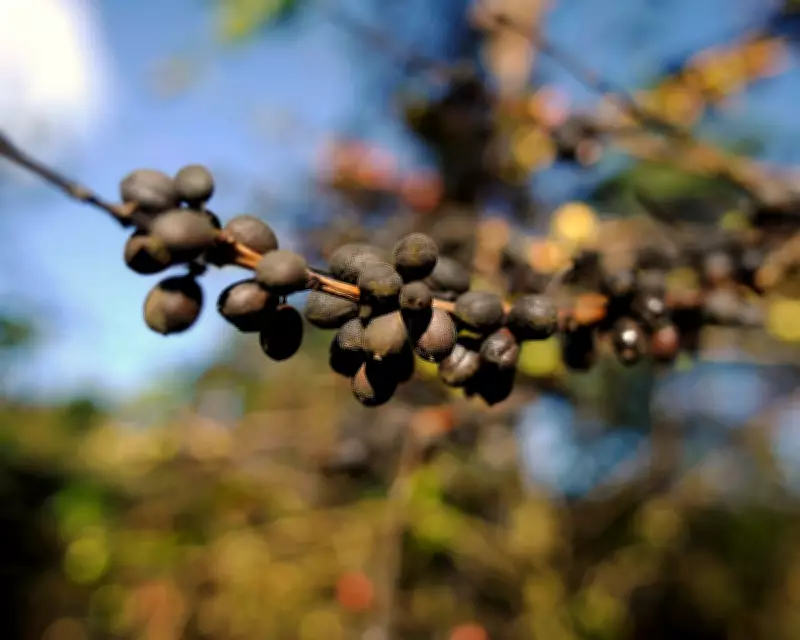
Damaged coffee beans in San Tecla, El Salvador, illustrate a growing crisis for the global coffee industry. The plants, particularly the prized arabica variety, struggle significantly when temperatures exceed 30°C, a threshold increasingly breached in key growing regions.
Analysis Finds Coffee-Growing Nations Becoming Uninhabitable for Beans
An extensive analysis by Climate Central has revealed that countries responsible for coffee bean cultivation are becoming too hot to sustain production due to climate breakdown. The research indicates that the top five coffee-producing nations, which collectively supply 75% of the world's coffee, experienced an average of 57 additional days of coffee-harming heat annually as a direct result of the climate crisis.
The Bean Belt Under Pressure
Coffee beans originate primarily from the "bean belt" between the Tropic of Cancer and the Tropic of Capricorn, requiring specific temperature and rainfall conditions to thrive. The arabica variety, known for its superior quality, is particularly vulnerable to temperatures above 30°C, which can reduce yields and increase susceptibility to diseases.
Approximately 2 billion cups of coffee are consumed daily worldwide, but this massive industry faces unprecedented strain. According to World Bank data, prices for arabica and robusta coffee beans nearly doubled between 2023 and 2025, reaching an all-time high in February 2025.
Country-Specific Impacts Revealed
Climate Central's analysis compared the number of days above 30°C in coffee-growing regions from 2021 to 2025 against what would have occurred without carbon pollution. The findings show:
- El Salvador suffered the most severe impact with 99 additional days of coffee-harming heat
- Brazil, the world's largest coffee producer accounting for 37% of global production, experienced 70 extra days above 30°C
- Ethiopia, responsible for 6.4% of global coffee output, faced 34 additional hot days
Ethiopia's Coffee Crisis Deepens
In Ethiopia, the birthplace of coffee, more than 4 million households depend on coffee as their primary income source. The crop contributes nearly one-third of the country's export earnings, but its future is increasingly uncertain.
"Coffee farmers in Ethiopia are already seeing the impact of extreme heat," said Dejene Dadi, general manager of the Oromia Coffee Farmers Cooperatives Union. "Ethiopian arabica is particularly sensitive to direct sunlight. Without sufficient shade, coffee trees produce fewer beans and become more vulnerable to disease."
The Oromia cooperative has implemented adaptation measures, distributing energy-efficient cookstoves to members to discourage deforestation in wooded areas that provide natural shade for coffee cultivation. However, Dadi emphasized that without substantial support, farmers' adaptation efforts have limits.
Funding Gap for Smallholder Farmers
Campaigners highlight a critical shortage of climate finance for meaningful adaptation. Smallholder farmers produce 60% to 80% of the world's coffee but received just 0.36% of the funds needed to adapt to climate impacts in 2021, according to a recent study.
"To safeguard coffee supplies, governments need to act on climate change," Dadi stressed, underscoring the urgent need for coordinated global action to protect both livelihoods and the beloved beverage consumed worldwide.



