
Brent's Fly-Tipping Crisis: Residents Embarrassed as Enforcement Officers Hunt Culprits
Welcome to the fly-tipping capital of England, where locals express deep embarrassment over the state of their neighbourhoods. Sky News has embedded with a dedicated squad of enforcement officers in Brent, London, who are tirelessly tracking down fly-tippers in a relentless game of cat and mouse. Victoria Seabrook, climate reporter, documented their efforts on Wednesday, 25 February 2026, revealing a stark contrast between the gleaming arch of Wembley Stadium and the filthy residential streets just steps away.
It is hard to believe that the London Borough of Brent was once even more littered than it is today. The area is a patchwork of filth, with scenes ranging from a sea of bottles near recycling centre signs to hollowed-out sofas sagging against brick walls and discarded TVs left feet from communal dustbins. Robert Hall, a lifelong resident of over 60 years, describes his neighbourhood as an obstacle course of dumped cars, rubbish, and mattresses. On a mere 20-minute walk from Wembley Park Tube station, observers can spot a fridge, TV, pet cage, and countless bags of rubbish. Hall adds, "It's an eyesore. I'm embarrassed to have people visit," noting that his friends have even stopped coming to see him due to the conditions.
The Unenviable Crown of Fly-Tipping
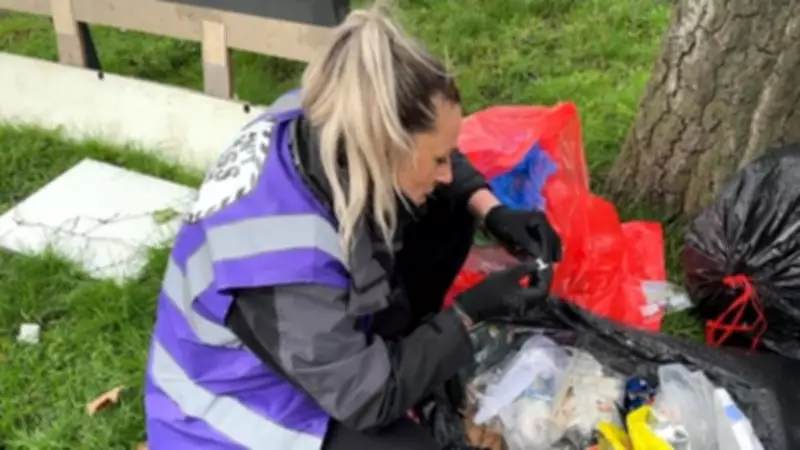
Brent recently earned the unenviable title of fly-tipping capital of England, recording a staggering 35,000 incidents in a single year. This stain on the borough is slowly being addressed by Brent Council, thanks to a zealous squad of enforcement officers dedicated to tracking down culprits. Anca Pricop, enforcement patrol supervisor at Brent Council, emphasizes the importance of pride in their work, stating, "It might not seem a very nice job, but it is satisfying when you catch people." She and her team act as little detectives, donning gloves and combing through piles of black bin bags with gusto.
In one instance, Pricop, with her glamorous appearance including a high ponytail and painted silver nails, delves elbows-deep into filth to piece together torn-up paper scraps, hoping to find a delivery label. Although no smoking gun emerges this time, she notes the household went to great lengths to conceal evidence. Her luck improves a few streets away, where a mound of household waste spills from a phone box. Combing through the papers, she discovers a box of medicine with an intact prescription label, exclaiming, "We have a name." Earlier that week, her team seized a van caught fly-tipping by tracing rubbish back to the vehicle.
Pricop warns that many people fail to realize the onus is on them to verify if waste removal services have proper licences, as unlicensed operators often dump rubbish on the same street. Households caught by her team face fines, but the challenge remains immense.
A National Epidemic of Waste Crime
Thanks to rigorous inspections and new community skips, Brent Council claims it is making progress in reducing fly-tipping, slowly inching down the national league table. However, nationally, figures have barely budged from around one million incidents per year. New statistics for 2024-2025, due later on Wednesday, are predicted to show that the tide of rubbish is nowhere near receding. These figures are believed to be only the tip of the iceberg, excluding cases on private land like farms and National Trust estates, and few result in fines or prosecutions.
Campaigners at Clean Up Britain accuse local and central governments of failing to enforce the law or demonstrate that fly-tippers will be caught. They advocate for stronger enforcement and maximum fines of £20,000. In response, the government asserts it is "determined to stop" criminals and is "giving authorities the tools they need to fight back." A spokesperson told Sky News that councils have the power to crush vans used in waste crimes, leaving perpetrators with nowhere to hide.
Fast-forward a few days from Brent, and filming at a recycling facility in Wokingham shows a van seized by Brent Council being crushed. This image symbolizes the councils' and government's desire to publicize caught perpetrators, but for most cases, this reality remains far from the truth. The ongoing battle against fly-tipping highlights a broader environmental and social issue affecting communities across England.



