
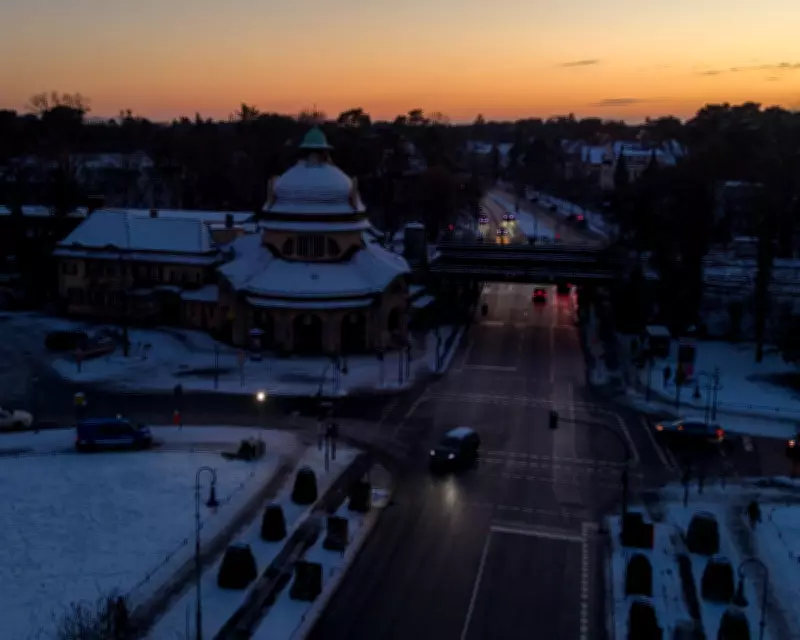
An aerial view of Berlin's Zehlendorf district during the blackout shows a city plunged into darkness. This January, the German capital experienced its longest power cut since the Second World War, lasting five days and affecting 45,000 homes, 2,200 businesses, and four hospitals. The cause? A deliberate act of sabotage on high-voltage cables under a bridge over the Teltow Canal.
The Attack
At around 6am on 3 January, someone set fire to five 10cm-thick cables leading from a natural gas power station. These cables supplied electricity to a significant portion of Berlin's southern suburbs. The attack cut power to 45,000 homes, and although 10,000 were reconnected by the next day, the remaining 35,000 endured a five-day blackout. Hospitals scrambled to operate on emergency generators, with some facing heating failures due to disconnected gas pumps.
Impact on Hospitals
Sebastian Brandt, chief technician at Immanuel Hospital, recalled smelling diesel from the emergency generator that morning. The hospital had to cancel surgeries and prepare for a prolonged outage. Nearby, the Hubertus Hospital considered evacuating 150 patients after its heating system failed. Technicians eventually rerouted power, but the ordeal highlighted the vulnerability of critical infrastructure.
The Claim of Responsibility
About 24 hours after the blackout, a confession appeared on leftwing platforms like Indymedia.org. The rambling 4,500-word statement, titled "Shutting down fossil fuel power stations is handiwork. Take courage. Militant new year's greetings," was signed by the "Volcano Group: Turn off the juice of the rulers." This group has claimed responsibility for at least seven attacks since 2011, targeting railway power lines, cable boxes, and the Tesla Gigafactory near Berlin.
Who Are the Volcano Group?
The Volcano Group's origins trace back to 2011, with early attacks inspired by the Eyjafjallajökull volcano's disruption of air travel. The group's name and style have evolved, but no arrests have been made. Investigations by Germany's federal state prosecutor's office treat these as terrorist acts, yet authorities remain stumped. Experts suggest the group operates as a "franchise," with individuals adopting the label for their own actions.
Theories and Controversies
Linguists analyzing the January statement noted odd German phrasing and misspellings, leading to speculation that it was originally written in Russian. This fueled theories of Russian involvement or far-right false flags. However, the AfD party denies any connection, and the Volcano Group itself dismissed such claims as "irrelevant rubbish."
Public Reaction
Public opinion has been largely hostile to the Volcano Group, with images of elderly residents in emergency shelters dominating news coverage. Berlin's leftist scene has disowned the group, with historian Nathaniel Flakin noting, "Absolutely no one on the left is defending them." Tadzio Müller, a veteran climate activist, called the act "indefensible" and suggested it was a leftist action that went horribly wrong.
Conclusion
The Berlin blackout remains unsolved, with investigators pursuing multiple leads. Whether the Volcano Group is a cohesive militant organization or a loose label for copycat saboteurs, their actions have exposed the fragility of modern power grids and raised urgent questions about the boundaries of protest in the climate crisis.



