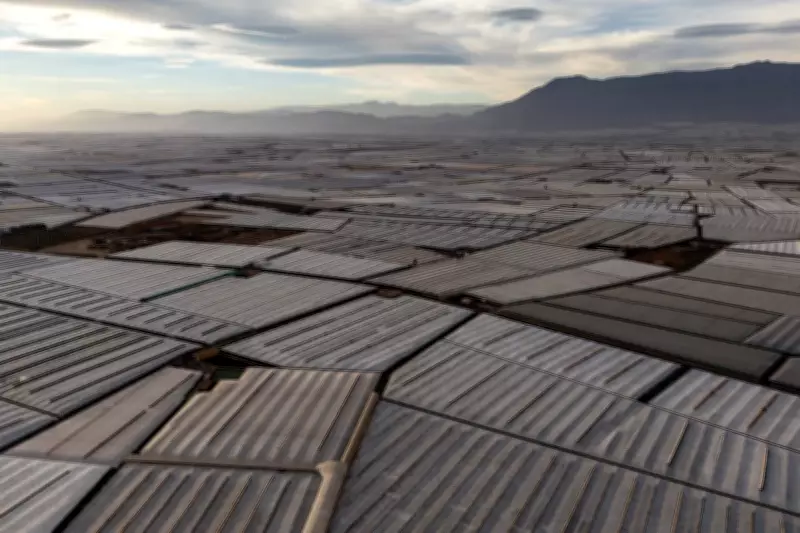
Europe's Vegetable Garden: The Vast 'Sea of Plastic' in Andalusia
In the sun-drenched region of Andalusia, southern Spain, lies a remarkable agricultural phenomenon visible even from space. Known as the 'sea of plastic,' the Campo de Dalías area southwest of Almería covers more than 30,000 hectares, equivalent to five times the size of Manhattan. This geometric labyrinth of greenhouses produces an astounding 3.5 million tons of vegetables each year, including tomatoes, cucumbers, peppers, courgettes, aubergines, and melons. With an annual turnover exceeding 3 billion euros, this intensive farming district feeds half a billion people across Europe and beyond, solidifying its status as Europe's premier vegetable garden.
A Laboratory of Innovation and Development
Guadalupe López Díaz, project director of the Fundación Tecnova experimental centre, describes the area as "the largest monument on the planet dedicated to food production." However, it is not just about scale; it is a hub of innovation and development. Researchers at Tecnova are pioneering water stress tests, robotics, artificial vision for crop sorting, and biological control methods using predatory insects like Nesidiocoris tenuis to combat pests sustainably. This technological revolution focuses on producing healthy, high-quality food with reduced water and energy consumption, while enhancing resilience to climate change impacts.
Historical Roots and Economic Transformation
The economic miracle of the sea of plastic began in 1963 in the arid Campo de Dalías peninsula, once an area with low economic growth and harsh horticultural conditions. Farmers initially used rudimentary plastic greenhouses to shield crops from wind, but soon discovered they could diffuse light, retain heat, and preserve humidity, creating controlled microclimates. Coupled with drip irrigation, natural pest control, and genetic research, this allowed for multiple harvests year-round, even in winter. Today, the district includes nurseries, chemical laboratories, vocational schools, research centres, packaging companies, and distribution cooperatives, exporting products primarily to northern European countries.
Sustainability and Environmental Challenges
Addressing water scarcity, the Campo de Dalías desalination plant in Balanegra, managed by Acuamed, is one of Europe's largest. Operational since 2015, it draws over 120 cubic kilometres of seawater daily, desalinating the equivalent of two Olympic swimming pools per hour. Technician Patricia Baldan Cruz highlights that the sea of plastic has become a global benchmark for efficient, safe, and responsible food production. However, challenges persist, including plastic waste management—while 85% of plastic is recycled, illegal dumps still exist—and human exploitation issues among the workforce of over 70,000 foreign workers, many from Morocco and sub-Saharan Africa, who sometimes face underpayment and precarious living conditions.
Future Prospects and Educational Initiatives
Looking ahead, the Escuela Agraria de Vícar, founded in 1972, prepares 480 students with the latest agricultural techniques. Director Francisco Valverde envisions a future where agriculture is powered by applied AI, IoT, advanced sensors, agrivoltaic systems, and bio-composites, fostering a circular economy mindset. This educational focus aims to ensure sustainability, food security, and Almería's role as a global benchmark for innovative growth combined with social development. As the planet grapples with feeding a growing population and protecting resources, Almería's sea of plastic stands as a living laboratory, demonstrating how advanced technology and minimal water consumption can produce fresh, healthy food year-round with strict environmental standards.