
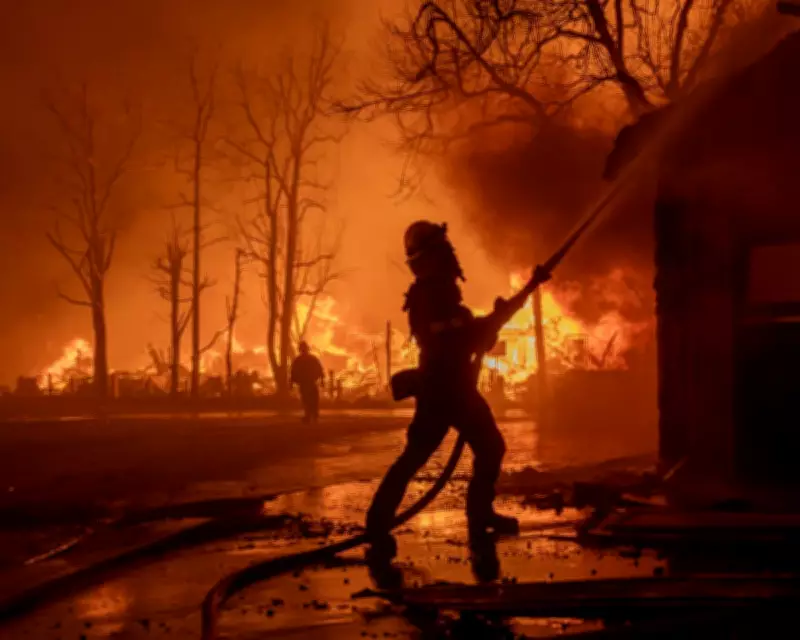
Firefighters battled the Eaton fire in Pasadena in January last year, a stark reminder of the escalating wildfire threat. A groundbreaking study published in Science Advances has found that the number of days with hot, dry, and windy conditions—ideal for sparking extreme wildfires—has nearly tripled globally over the past 45 years. This alarming trend is largely driven by human-made climate change, with more than half of the increase attributed to the burning of fossil fuels like coal, oil, and natural gas.
Rising Synchronous Fire Weather Days
Researchers discovered that from 1979 to 1994, the world averaged 22 synchronous fire weather days per year, where multiple regions experienced conditions ripe for wildfires. By 2023 and 2024, this number surged to over 60 days annually. This increase means that as the planet warms, more areas are becoming prone to wildfires simultaneously, overwhelming firefighting capabilities and reducing the likelihood of aid from neighboring regions dealing with their own blazes.
Impact on the Americas
The study highlights that the Americas are particularly affected. In the continental United States, synchronous fire weather days averaged 7.7 per year from 1979 to 1988 but jumped to 38 days annually in the last decade. Even more dramatically, the southern half of South America saw an average rise from 5.5 days to 70.6 days per year, with 118 days recorded in 2023 alone.
Key Factors and Global Variations
Lead author Cong Yin, a fire researcher at the University of California, Merced, emphasized that while weather is a critical dimension, other factors like fuel availability, oxygen, and ignition sources also play roles. Co-author John Abatzoglou warned that these changes make fires increasingly challenging to suppress, potentially leading to widespread outbreaks.
Globally, 14 regions were analyzed, with only south-east Asia showing a decrease in synchronous fire weather, likely due to increased humidity. Fire scientist Mike Flannigan noted that overlapping fire seasons in previously distinct regions further strain resources, exacerbating the crisis.
Attribution to Climate Change
Using computer simulations, researchers confirmed that over 60% of the global increase in fire weather days stems from climate change. This underscores the urgent need for action to mitigate greenhouse gas emissions and adapt to a warmer world where wildfire risks are becoming the new normal.



