
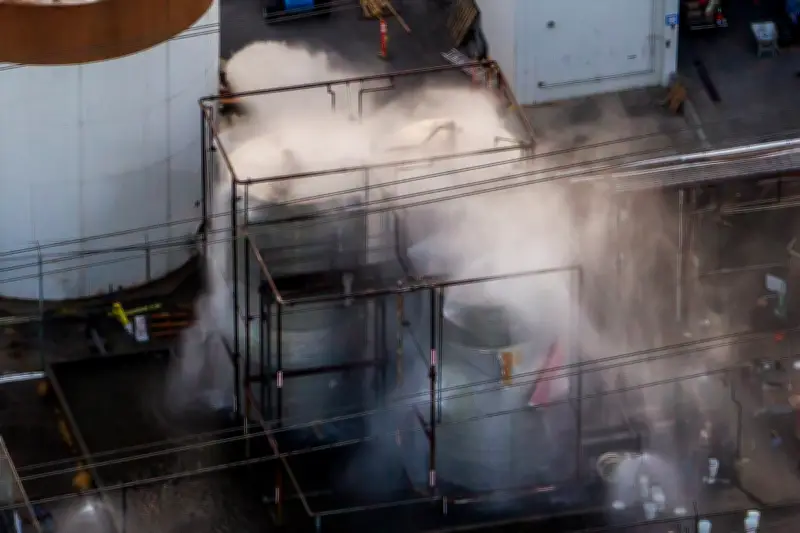
The number of US chemical accidents is rising sharply as the Trump administration dismantles federal protections against such disasters, according to a new analysis by the non-profit Public Employees for Environmental Responsibility (Peer). The report found that chemical accidents, explosions, fires and other emergencies releasing chemicals into the atmosphere increased by at least 51% since 2021, while deaths and injuries rose by at least 20%.
High-profile incidents highlight growing danger
The report follows two major emergencies: a malfunctioning chemical tank in Garden Grove, California, which forced the evacuation of more than 40,000 residents, and the collapse of a chemical tank at a plant in Longview, Washington, that killed 11 workers. Under the Clean Air Act, the US Environmental Protection Agency’s Risk Management Program (RMP) requires over 12,500 high-risk facilities to develop protocols to prevent catastrophes or limit fallout, primarily to protect workers, first responders and nearby communities. The Biden administration strengthened these protections in 2024, but the Trump administration is pressing ahead with plans to dismantle the federal disaster management system.
Critics condemn administration's actions
Tim Whitehouse, Peer’s executive director and a former EPA enforcement attorney, called the administration’s actions “simply appalling.” He added: “Like our public infrastructure, America’s industrial infrastructure is ageing, making disastrous failures increasingly likely. Serious chemical accidents are becoming an almost daily occurrence.” Peer obtained the data after suing in 2017 to compel the government to track it as required by the Clean Air Act. The data shows industrial accidents resulting in chemical releases grew from 83 in 2021 to 131 in 2025, according to reports filed with the Chemical Safety and Hazard Investigation Board. Accidents involving injuries or fatalities rose from 60 to 89 during the same period, up from 73 in 2024.
Undercounting and broader risks
Jeff Ruch, senior counsel with Peer, noted that the figures are likely an undercount because they only include chemical releases into the atmosphere. Plants that “poison their workers inside” a facility would not be counted. Another estimate found that the US experienced a chemical accident harming humans or the environment every other day on average between 2004 and 2025. The law the Trump administration is targeting mandates facilities to take protective steps such as installing technology to detect chemical releases, fire suppression systems, and emergency response plans for employees. The updated 2024 rules require hazardous facilities to implement newer technology to prevent disasters, backup measures, and safer alternatives to hazardous chemicals, including kill switches and automatic shut-offs. The rules also require plans for “double disasters” like hurricanes, earthquakes or wildfires hitting chemical facilities, as occurred with Hurricane Harvey in Houston in 2017.
Rollbacks and industry impact
The Trump EPA has already eliminated a public website informing communities and first responders about chemicals in use at facilities and aims to undo most of the 2024 update. The White House has also targeted the Chemical Safety Board (CSB), which reviews accidents and develops prevention plans, by eliminating its $14 million budget. Ruch said the CSB is non-regulatory but industry adopts about 90% of its safety recommendations, and the administration “wants to take credit for eliminating another agency” despite the CSB’s effectiveness at low cost. Marc Boom, a former EPA policy adviser and senior director with the Environmental Protection Network, said the report highlights the need for stronger regulations and that the administration is shifting disaster risks from chemical companies to nearby residents and workers.
Preventable disasters and regulatory outlook
“This report makes plain what communities, workers and first responders already know: chemical disasters are happening far too often, and are too often undercounted,” Boom said. “Many are preventable, but instead of strengthening safeguards, this EPA is trying to weaken the rules designed to stop them.” Ruch said there is little that can be done to stop the Trump administration from shredding protections now, as it is proposing new rules under the rule-making process likely to be finalized by fall. About 40% of Americans live within three miles of at least one of the more than 12,000 high-risk chemical facilities in the US. “You better hope you’re lucky in that there’s no proactive effort to make sure that these ultra-dangerous facilities are operating safely,” Ruch said.



