
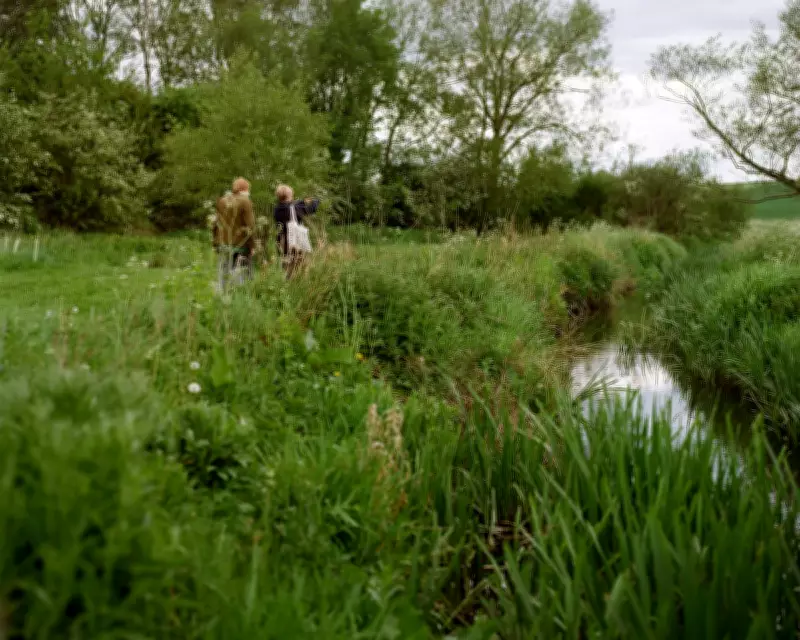
For 150 years, the River Mease in the Midlands was straightened, deepened, and controlled by human hands, destroying habitats and leaving it in poor condition. But a 13-year restoration campaign led by the Trent Rivers Trust (TRT) has transformed the river, earning it the UK River Prize 2026. The prize, established by the River Restoration Centre in 2014, recognizes innovative projects that improve river health.
Ruth Needham of the TRT says, 'A noisy river is a healthy river.' The Mease now gurgles with life, sunlight glinting off riffles and shoals of fry darting past. Needham explains, 'The prize has been a massive boost. If we can get the Mease into better condition, we can improve other rivers, too.'
The History of the Mease
The 27-kilometer lowland river rises in Leicestershire, passes through south Derbyshire and Staffordshire, and flows into the River Trent at Croxall. Farms dot its banks, with over 400 farmers in its catchment area. For decades, food production was the priority, and the river was seen as an inconvenience to be controlled. 'For too long, water has been seen as a problem: drain it, dredge it, get it away,' says Needham.
Over the past 150 years, drainage ditches were engineered, banks shored up, and weirs installed to control flow. This disconnected the river from its floodplain, causing downstream flooding and washing soil, silt, and sediment into the water. High phosphate levels led to algal blooms, reducing oxygen and harming fish, including rare species like the spined loach and European bullhead. The river's state became unacceptable.
Restoration Begins
In 2013, the TRT launched a restoration project, largely funded by the Environment Agency (EA). The goal was to change the status quo and get people to work together. The biggest challenge was convincing farmers to give up land for buffer strips. So far, 111 farmers have joined, covering over half the catchment area.
One example is Culloden Farm in Leicestershire, where father-daughter duo Jo and Tony Thorp raise dairy cows. They restored a 500-meter tributary of the Mease, allowing water to find a slow path across the field instead of being diverted into ditches. This traps pollutants and creates wetland habitat for birds like the threatened sedge warbler.
Adam Noon, a catchment coordinator from the EA, notes, 'Slow the flow, get the habitat right and the species will come.' He spots little ringed plover, reed bunting, yellowhammer, and green woodpecker, as well as lapwing and golden plover.
Key Interventions
The TRT has made about 250 interventions along 17 kilometers of river, creating 25 hectares of new habitat. These include silt traps, wetlands, buffer strips, bunds, leaky barriers, swales, and ponds. Volunteers have cleared over 12 kilometers of invasive Himalayan balsam, which outcompetes native plants. Volunteers like Jan Cope and Liane Coleman also monitor riverflies, which are sensitive to pollution; their numbers are increasing.
Funding has come from multiple sources: the EA invested over £1.6 million since 2017, developers contributed more than £800,000, Natural England over £120,000, and Leicestershire county council about £80,000. Separately, Severn Trent is spending over £100 million to reduce storm sewer overflow at 17 sites and building a 24-kilometer pipeline to divert treated sewage from the Mease to the River Tame. This plan is controversial, as it may improve the Mease but worsen the Tame.
Future Plans
About 30 additional restoration schemes are in planning. Gravel has been added for fish spawning, wood left for juvenile fish feeding, and saplings planted for shelter. A remaining weir will be bypassed this summer with a new channel, similar to the Colwick fish pass on the Trent. Needham believes the Mease model can be scaled up nationwide, despite funding challenges. She says, 'In 20 years, we'll see more natural spaces along our rivers.'
The restoration highlights the importance of collaboration among government, campaigners, farmers, and volunteers. 'We all want our rivers to be protected,' Needham concludes. 'We have ignored them for too long.'



