
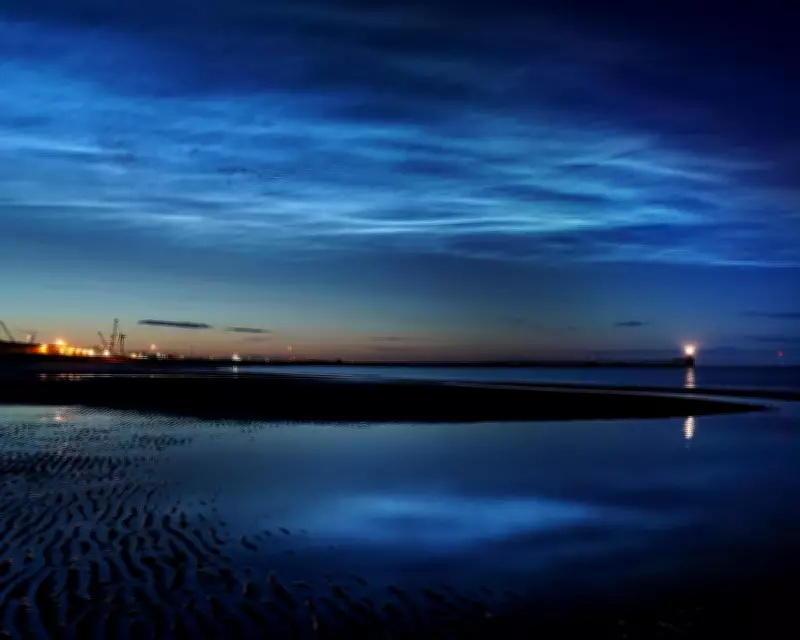
Noctilucent Clouds Shine Over Blyth Pier
Noctilucent clouds have been spotted shining brightly over Blyth pier in Northumberland, captivating observers with their ethereal glow. These enigmatic summer formations, whose name means 'night shining' in Latin, appear high in the atmosphere during the northern hemisphere's warm months. They are best viewed about half an hour after sunset, when they illuminate the darkening western sky with an electric-blue intensity.
Existing at an altitude of roughly 80 kilometres, virtually the edge of space, noctilucent clouds are the highest known clouds in Earth's atmosphere. Their origin remains a subject of scientific debate. Notably, there are no recorded sightings before 1885, which has led researchers to propose various explanations for their sudden appearance.
Possible Origins: Volcanoes, Pollution, or Climate Change
Some scientists suggest that the clouds may be a result of industrial pollutants accumulating in the atmosphere during the late 19th century. These aerosols could have provided sites for water ice to form, creating the conditions necessary for noctilucent clouds. Others point to the 1885 eruption of Krakatoa as a possible trigger, as volcanic ash and gases might have seeded the clouds. Alternatively, climate change may be driving water vapour into the upper atmosphere, making these formations possible.
Regardless of their origin, noctilucent clouds are a beautiful phenomenon to watch for. In the southern hemisphere, their season begins around October. Scientists continue to study these clouds to better understand their role in atmospheric science and the impacts of human activity on the upper atmosphere.



