
The Emerging Berlin-Rome Axis: A Threat to Europe's Green Ambitions
When the European Union launched its landmark Green Deal in 2019, establishing legally binding climate neutrality targets for mid-century, it represented a monumental display of strategic foresight and global environmental leadership. The subsequent Russian invasion of Ukraine has only intensified the urgency, starkly revealing how Europe's energy security and long-term prosperity are inextricably linked to a rapid transition away from fossil fuel dependency. However, a dangerous new political alliance is emerging that threatens to derail this critical progress, championing a deregulatory agenda that could compromise the entire project.
A Powerful Alliance Against Environmental Regulation
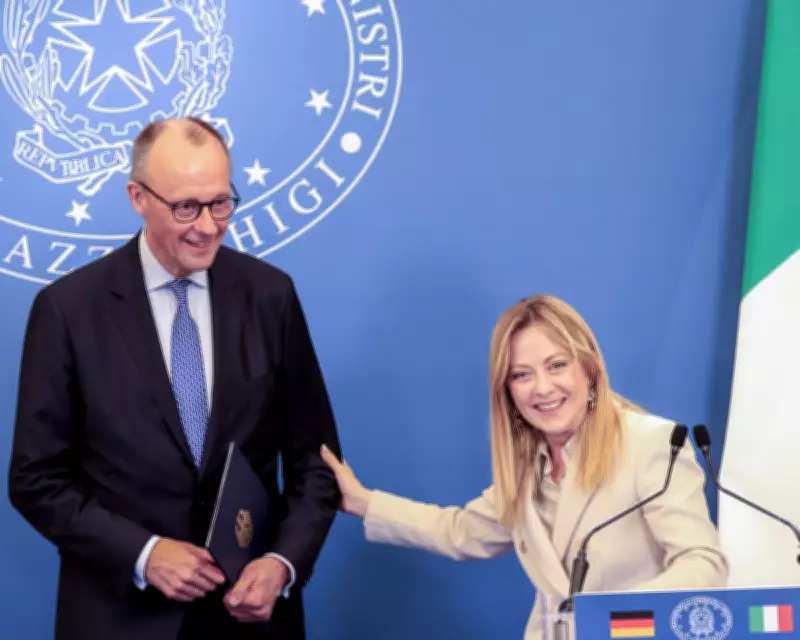
The recent European Industry Summit in Antwerp captured headlines not only for controversial remarks on immigration but for revealing a coordinated assault on core EU environmental policies. At the heart of this movement are German Chancellor Friedrich Merz and Italian Prime Minister Giorgia Meloni, who are forging what analysts describe as a formidable Berlin-Rome axis. This partnership is fundamentally reshaping the European political landscape regarding climate action, with potentially devastating consequences for the bloc's environmental commitments.
Ms. Meloni has long been an outspoken critic of what she dismissively labels Brussels' "green follies," advocating for reduced regulatory burdens on industry. She has now found a powerful and ideologically aligned partner in Mr. Merz, an economic liberal whose instinctive hostility toward regulation aligns perfectly with her agenda. Together, they are pushing for what they describe as a growth-oriented approach, one that prioritizes corporate flexibility over environmental safeguards.
Concrete Policy Retreats and Diluted Ambitions
The influence of this new alliance is already manifesting in tangible policy reversals. The Berlin-Rome axis successfully weakened the EU's plan to ban new petrol and diesel vehicle sales by 2035, introducing loopholes that could delay the transition. Furthermore, EU leaders have voted to scale back ambitious 2040 greenhouse gas reduction targets under pressure from this coalition. Corporate sustainability reporting requirements, a cornerstone of transparent environmental accountability, have been significantly watered down.
Perhaps most alarmingly, Mr. Merz has shown sympathy toward demands from industrial leaders, including Sir Jim Ratcliffe, for a radical relaxation of the EU Emissions Trading System (ETS). This system, which forces polluters to pay for their carbon dioxide emissions, has been remarkably effective since 2005 in driving down overall emissions and spurring green innovation. Attacking this mechanism represents a direct assault on one of the EU's most successful environmental policy instruments.
The Economic and Ethical Flaws of Deregulation
This deregulatory push is profoundly shortsighted from both economic and ethical perspectives. The Green Deal was originally conceived not just as an environmental imperative but as an economic strategy to enhance European competitiveness in a rapidly decarbonizing global economy. With China aggressively advancing its own green industrial capabilities, Europe's future prosperity depends on accelerating—not slowing—its transition.
As former European Central Bank President Mario Draghi has argued, true long-term competitiveness requires sustained investment in green technologies, potentially financed through common EU borrowing mechanisms. While Mr. Merz correctly identifies bureaucratic simplification as beneficial in some areas, blind faith in deregulation represents a capitulation to corporate lobbying that fails to address the scale of the climate challenge.
The Stakes for European Leadership
With former U.S. President Donald Trump continuing to undermine international climate cooperation, Europe's role as a global environmental leader has never been more crucial. The continent must develop a coherent industrial vision that ensures both prosperity and security through the green transition. The emerging Berlin-Rome axis threatens to replace this vision with a dangerous regression toward fossil fuel dependency and weakened environmental standards.
As Mr. Merz and Ms. Meloni continue their political manoeuvring, defenders of the EU Green Deal face a critical moment. The choice between short-term corporate interests and long-term environmental sustainability has never been clearer. Europe's climate leadership—and its economic future—now depends on whether this deregulatory alliance can be countered with a renewed commitment to the ambitious goals that once defined European environmental policy.



