
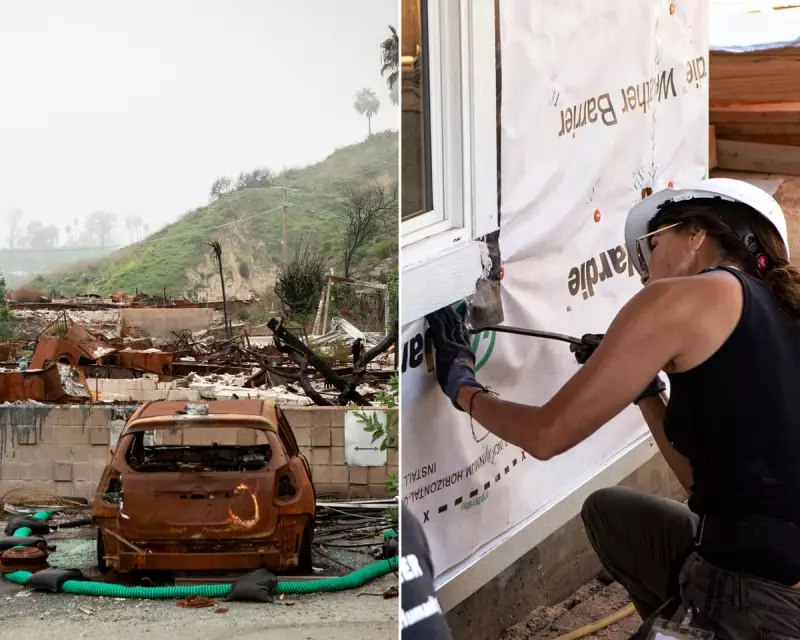
A year has passed since unprecedented wildfires tore through the hillsides and suburbs of Los Angeles, leaving a scar of ash and trauma across the city. On the anniversary, a thick fog clings to the ruins in Pacific Palisades, a poignant shroud over melted newsstands and the blackened foundations of what were once vibrant homes.
A Slow and Unequal Path to Recovery
The fires, which erupted amid a lethal mix of drought, high winds, and tinder-dry brush, killed 31 people and reduced more than 16,000 structures to toxic debris. While a mammoth cleanup operation removed 2.5 million tons of waste—a task compared to clearing Ground Zero after 9/11—the subsequent rebuilding has dramatically slowed.
By early January, permits had been issued for roughly 41% of applications, with construction underway on just a few hundred homes in the hardest-hit areas of the Palisades and Altadena. The process has laid bare sharp inequalities. "It is predominantly the wealthy who are rebuilding," observed Dr Thomas Chandler of Columbia University's National Center for Disaster Preparedness. Those with resources and developer connections have surged ahead, while many survivors, under-insured or overwhelmed by complex paperwork, remain in limbo.
Thousands are still displaced, competing for housing in an expensive market while often paying mortgages on vanished homes. The slogans of resilience, like "Pali Strong," now share space with 'For Sale' signs, as financial strain and uncertainty push long-time residents out. Research indicates outside investors have purchased a significant portion of available lots, particularly in Altadena, threatening the diverse character of these communities.
Lessons from a 'Perfect Storm'
Investigations into the disaster have termed it a "perfect storm" supercharged by climate change. Years of wet weather fuelled rampant brush growth, followed by a record-dry winter. Then, winds gusting up to 90mph drove flames with shocking ferocity into urban areas. The catastrophe exposed critical failures: overwhelmed water systems, gridlocked evacuations on winding canyon roads, and emergency alerts that failed to reach thousands, particularly the most vulnerable.
A sobering report found that the majority of those killed were over 65 or had disabilities, with many having no means of escape. "The systems we built previously haven't caught up," said UCLA researcher Dr Edith de Guzman. Analysis showed the fires spread as an urban conflagration, with embers igniting wooden fences and vents, causing homes themselves to become fuel. This underscores the urgent need for community-wide "home hardening" with fire-resistant materials, though the cost is prohibitive for many.
Community Ingenuity and the Long Road Ahead
Amid the challenges, grassroots efforts offer glimmers of hope and a model for a more resilient future. In Altadena, architects Cynthia Sigler and Alex Athenson launched the Foothill Catalog, a modern take on catalogue homes that provides pre-approved, fire-resilient designs to streamline rebuilding for residents. "Resiliency is most effective at the community scale," Sigler noted.
Nearby, volunteers are painstakingly reviving the decimated Altadena Community Garden, a vital neighbourhood hub. "I know people need this place," said president Joe Nagy, highlighting the role of community in healing. Meanwhile, organisations like MySafe: LA are fostering neighbourhood preparedness councils across the city.
Yet, the fundamental question persists. With over 115 million Americans living in similar fire-prone zones, and climate extremes intensifying, Los Angeles's struggle is a stark warning. "This could not only happen again – it could be much worse," warned David Barrett of MySafe: LA. The city's arduous recovery is not just about rebuilding what was lost, but confronting a dangerous new normal and deciding what it is willing to invest to protect itself from the inevitable next fire.



