
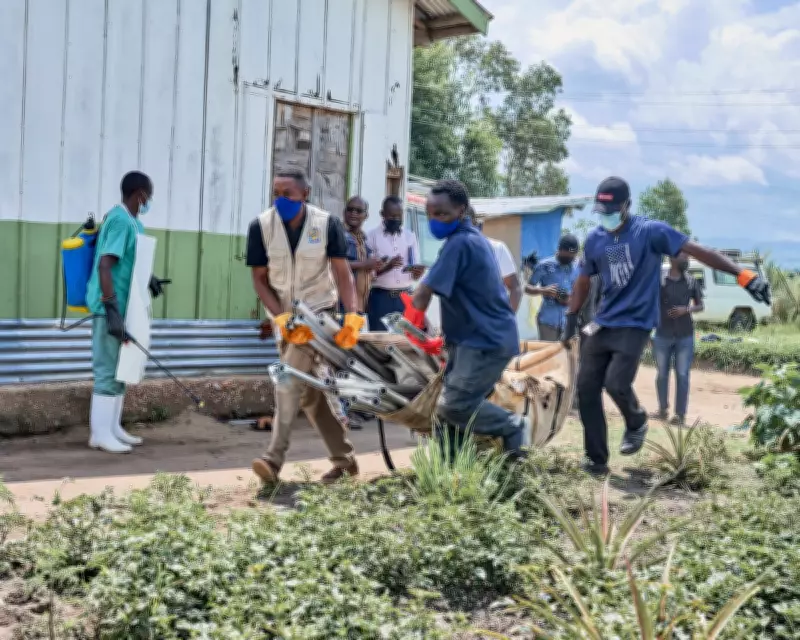
The World Health Organization has announced that doses of the most promising potential vaccine against the Bundibugyo virus, which is causing an Ebola outbreak in central Africa, will not be available for six to nine months. This update comes as the number of suspected cases has risen to 600, with 139 deaths reported so far.
Current Outbreak Situation
Dr. Tedros Adhanom Ghebreyesus, the WHO director-general, stated during a press briefing that the outbreak in the Democratic Republic of the Congo and Uganda is expected to see further increases in cases and fatalities. Officials believe the disease may have begun spreading several months ago, potentially accelerated by a super-spreader event, such as a funeral, in early May.
The security situation in Ituri province, where over 100,000 people have been displaced due to armed conflict, has significantly complicated detection and response efforts. Health workers fleeing violence cannot provide adequate care or surveillance, further hindering containment. Additionally, other endemic illnesses like malaria and typhoid share early symptoms with Ebola, which can delay diagnosis.
Vaccine Development Timeline
Dr. Vasee Moorthy, who leads the WHO's research and development blueprint, explained that the most promising potential vaccine for the Bundibugyo strain uses the same basis as Ebola vaccines targeting the Zaire strain. However, no doses are currently available for clinical trials, and it is expected to take six to nine months to produce them.
An alternative vaccine, developed using the same platform as the AstraZeneca COVID-19 vaccine by Oxford University, could be available for clinical trials in two to three months. However, Dr. Moorthy noted significant uncertainty, as animal efficacy data are not yet available.
WHO Response and Criticism
The outbreak was made public by African health officials on Friday, and the WHO declared it a public health emergency of international concern early Sunday. Dr. Tedros defended the organization against criticism from US Secretary of State Marco Rubio, who claimed the WHO declared the outbreak too late. Tedros suggested the criticism stemmed from a lack of understanding of the International Health Regulations and the WHO's supportive role.
Dr. Tedros emphasized that the WHO assesses the risk as high at national and regional levels but low globally. Modeling from Imperial College London suggests there could already be over 1,000 cases in the affected region.
Challenges and Priorities
Access issues, including frequent flight cancellations, are complicating efforts to deliver tests and supplies to Ituri province. Dr. Chikwe Ihekweazu, the WHO emergencies lead, stated that the absolute priority is to identify all existing transmission chains to define the outbreak's scale and provide care.



