
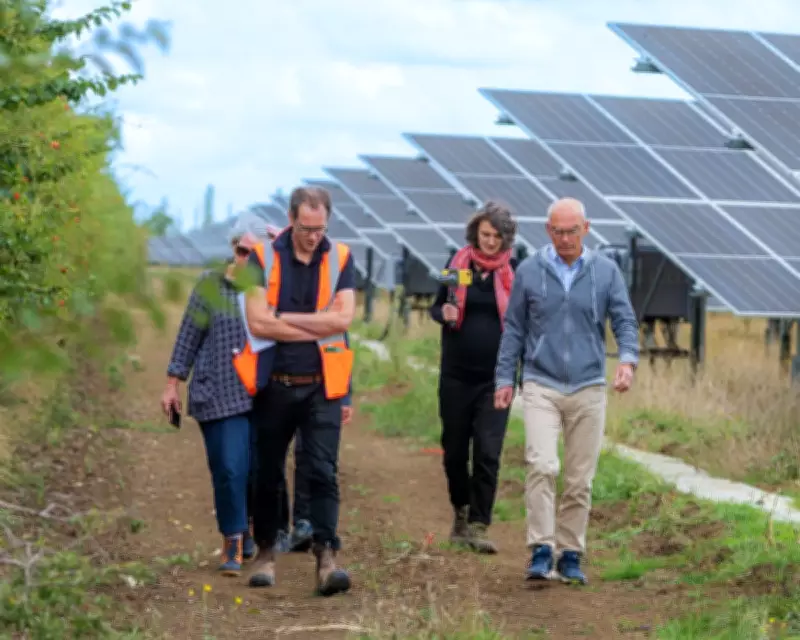
Nestled among hedgerows on a large field between a motorway and the River Ray, one of the UK's largest community-owned solar parks is hard to spot from the surrounding country lanes. However, the nearly 36,000 solar panels installed at Ray Valley Solar, south of Bicester in Oxfordshire, are a shining example of what can be achieved when a renewable energy project is co-owned by local people.
Clean Energy for Thousands of Homes
The solar park generates enough clean electricity to power approximately 7,000 homes for a year. Profits from the project are reinvested into community initiatives that reduce carbon emissions and improve energy efficiency across homes, schools, and businesses in Oxfordshire.
Battery Storage: A Game Changer
On very sunny days, Ray Valley Solar produces more clean electricity than the local grid can handle, leading to some energy wastage. To address this challenge, the project plans to install a battery storage system, which will capture surplus solar power during the day and release it during evening peak demand when the grid is more carbon-intensive and electricity prices are higher.
Barbara Hammond, CEO of the Low Carbon Hub, which established the solar park in 2022, explained: "This will allow the community solar park to generate more power and earn more money, which is reinvested into local sustainability and emission-cutting projects."
Crowdfunding the Battery
The 12-megawatt-hour battery is expected to save enough electricity to power an additional 300 homes annually. By selling stored electricity at higher evening rates, the Low Carbon Hub estimates it can increase its community benefit contribution to £1 million over the battery's 15-year lifetime.
To finance the lithium-ion battery installation, planned for October, the Low Carbon Hub is seeking to raise between £500,000 and £1.3 million. Individuals and organisations can buy shares ranging from £100 to £100,000 through the Ethex investing platform until late June, with investors forecast to receive up to 5% return on their investment.
The hub has already raised significant funds for community energy projects, including £3 million for Ray Valley Solar itself. Hammond recalled: "All I remember is going into it with my stomach in knots, thinking: 'How are we ever going to raise this much?' But in the end, we had to stop it because we didn't need the money. It was just amazing."
Community Investors Share Their Stories
Dale Hoyland, 41, from Banbury, invested in Ray Valley Solar and is supporting the battery installation. A team leader in climate action at Oxfordshire County Council, he said: "For the sake of a few hundred quid, I can take a share in the delight of making this all happen."
Eleanor Watts, an investor in her 70s, is an active member of a volunteer environmental group in southeast Oxford that has received grants from Low Carbon Hub for solar panels, energy-saving retrofits, and free cycle-repair workshops. She commented: "Even if the shares don't do so well in the future, I will feel happy that my money has done a little bit to combat the climate emergency."
Scaling Up Community Energy
The project has attracted interest from other community energy groups across the UK keen to learn from the experience. Hammond's top tip is to find "really good" consultants for technical advice.
Low Carbon Hub runs 56 community-owned renewable energy projects in Oxfordshire, from rooftop solar to hydroelectric plants on the Thames, and supports 50 community groups in developing carbon-cutting projects. The UK government has pledged up to £1 billion for community-owned green energy schemes, but Hammond noted that more policy action is needed to ensure everyone benefits from the clean energy transition.



