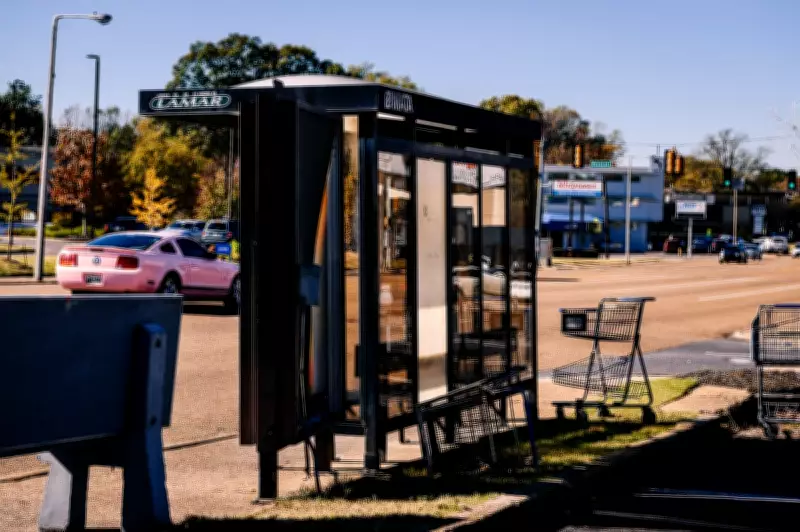
Zen'Yari Winters works at a pet shop in East Memphis, Tennessee, a commute that should take 20 minutes by car. Instead, she leaves three hours for the journey. 'The bus is always, always late,' she said, if it arrives at all. The only full-service grocer in her Chelsea-Hollywood neighborhood closed in 2025, forcing her to choose between a two-bus, 13-mile trip to Walmart or paying $24 for an Uber back. She now buys groceries online every two weeks, spending $35 minimum to avoid a $6.99 fee plus a $7 monthly delivery charge not covered by Snap benefits. 'That's literally my only option,' she said.
Winters is one of 16 million Americans without cars and nearly 25 million living in a 'transit desert' where public transit supply falls short of demand. Accessing healthy, affordable food becomes both an inconvenience and an extravagance. Some pay neighbors $60 for rides to the supermarket, according to Urban Institute research. A University of New Hampshire study found that adding one bus per 10,000 residents could modestly reduce household food insecurity. Yet cities like Memphis, Providence, and Duluth have cut service instead, driven by what Art Guzzetti of the American Public Transportation Association calls a 'transit fiscal cliff' as $70 billion in Biden-era pandemic funds expire. Food insecurity rises amid job losses and threats to Snap cuts.
Cuts Force Hard Choices
Transit agencies have rerouted buses, reduced frequency, and removed stops. Economist Sierra Arnold of Xavier University found that losing stops leads to fewer purchases of healthier foods. 'When stops leave a neighborhood, your options immediately change,' she said, pushing people toward local bodegas instead of traveling farther for nutritious options.

In Memphis, post-Covid attempts to improve ridership and finances led to reduced service on many routes, while repairs for aging buses stalled amid a leadership spending scandal. Activist Kelsey Huse noted that 'upper-income and white people see the bus system as a corrupt failure that's never going to improve. They don't want to ride, and people like Zen'Yari are just forgotten.'
Rhode Island's transit authority cut service on 45 of 63 routes in September 2025. Sherman Pines of Newport said this compounded earlier Covid cuts that reduced service during non-summer months. A nearby supermarket is 'horrible, pricey, small,' but traveling farther means long waits and transfers, with too few bus shelters. 'That's just hard on an elderly person to stand there for 30 or 45 minutes in rain or snow,' he said.
Study Confirms Transit's Limitations
Epidemiologist Ric Bayly led a 2025 Tufts University study on Rhode Island's bus-food connection. Even with double the travel time, less than half of residents had healthy food access via bus compared to car. 'Public transit is just a terrible way to get food,' he said, citing weather, weight, carrying, and bus drivers who can forbid entry with a food cart.
Deborah L Wray, 70, of Providence, had her cart rejected once. She used to catch the 92 bus every half hour to Price Rite; now it runs every two hours. 'You just sit there and wait because if you're not standing right at that bus stop, you're out of luck,' she said. Price Rite doesn't accept her Medicare UCard for diabetes-required foods, so she takes another bus to Stop & Shop, and yet another to Market Basket for sales. Some evenings, she eats peanut butter from a pantry box delivered to her building, a short-term fix 'when you ain't got nothing.'
A survey of 100 Duluth residents found similar barriers: Covid-reduced routes, long waits, lack of cart space, and bad weather. The city formed a transportation commission, but changes are 'sometimes beneficial, other times not,' said food justice policy developer Stephany Medina. One changed stop now requires crossing a major highway to reach a supermarket.
Innovative Solutions Emerge
Somerville, Massachusetts, with a 35% food insecurity rate in 2025, tested a Taxi to Health program offering vouchers for rides to grocers like Super 88 in Malden. Vouchers are a form of demand-responsive transit, a flexible alternative to fixed routes. Another model, microtransit, uses vans to connect residents to supermarkets on a sliding scale. Students of public health law professor Kathleen Hoke developed such a system for Duluth.

Mobile grocery stores let people shop in their neighborhoods, addressing the preference to pick their own groceries. Guzzetti advocates for city planners to prioritize transit access in new developments. 'Make transit access a foremost, high-level consideration in location decisions,' he said.
In Memphis, a non-profit called MyCityRides teaches residents to drive gas-powered scooters. 'The bus is not perfect and cars are expensive,' Huse said. Winters completed scooter school and is practicing. If she passes her motorcycle test, MyCityRides will sell her a scooter for $150 monthly over three years. 'Riding a scooter would be so much cheaper and easier than riding the bus and getting stuck for hours,' she said. 'I am hoping that soon I will be able to get one.'