
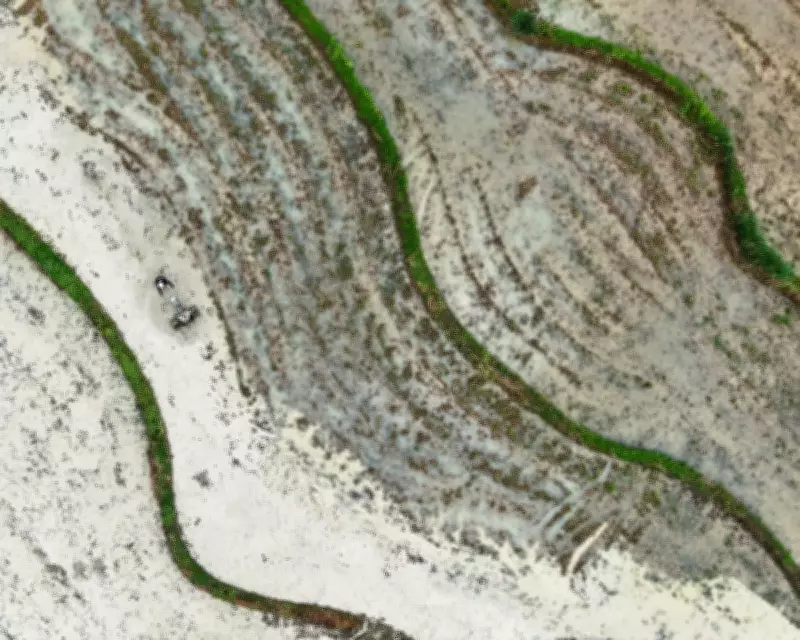
An aerial photograph taken on 20 April 2026 shows paddy fields in China's Hubei province. This image captures the landscape during a critical time for farmers, who depend on seasonal rains to sustain their crops.
Weatherwatch: Chinese farmers hope for rain at time of ‘small fullness’
In May, farmers in China look for heavy downpours to fill the rice paddies so that they stay wet throughout summer. The Chinese solar term xiaoman, alternatively translated as “small fullness” or “grain buds”, corresponds with the last two weeks of May. In northern China, the name traditionally refers to growing wheat grains; in southern China, to the fullness of rivers with rainwater.
Xiaoman weather is generally warm and sultry, and traditional menus feature bitter herbs and cucumber, thought to counteract the heat. While in England, farmers hope for a warm May with moderate rainfall, in China farmers look for heavy rain to fill the rice paddies. According to traditional belief, if the fields are not full in xiaoman, they will dry out before the end of summer. Hence, rain is eagerly anticipated.
Chinese weather folklore for this term is full of signs of approaching rain. Frogs croaking loudly in unison are said to be singing the rain down. Low-flying swarms of bees or flies are a sign of imminent rain. Xiaoman is a key period for silk production and is celebrated as the birthday of the silkworm goddess, Leizu. Although heavy storms are welcomed, it was believed that the sound of thunder could kill silkworms while they were at the vital stage of spinning their cocoons. Farmers would therefore bang drums before xiaoman to accustom their worms to loud noises, so the storms would not affect them.



