
Argentina's Glacier Law Overhaul Ignites Water Security Concerns
Argentina has enacted sweeping reforms to its landmark glacier law, a move championed by President Javier Milei's far-right government to boost mining investment but decried by environmentalists as a dire threat to drinking water for millions. The revised legislation, approved by the Chamber of Deputies with 137 votes in favor, 111 against, and three abstentions, shifts authority to provincial governments to determine which glaciers are protected based on their "relevant water function," effectively opening high-altitude ice-covered regions to industrial development.
Historical Context and Community Impact
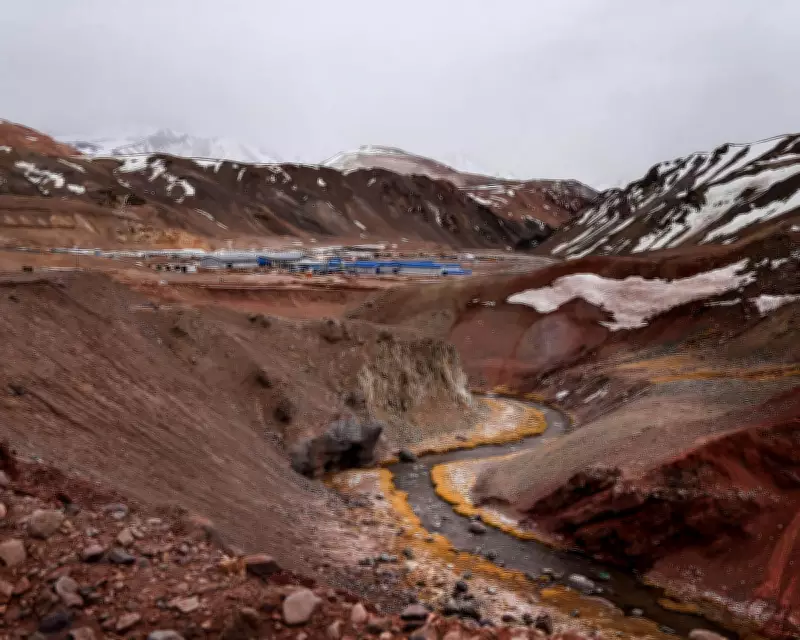
The original glacier law, enacted in 2010 as Latin America's first such protection, banned activities that could alter or destroy glaciers and surrounding periglacial areas. This law has long been a flashpoint, particularly in communities like Jáchal in San Juan province, where residents such as Saul Zeballos, a 51-year-old accountant turned activist, have witnessed firsthand the consequences of mining. In 2005, the Veladero gold and silver mine began operations, and a decade later, a major cyanide spill polluted local rivers, raising alarms about water safety despite subsequent studies showing cyanide levels remained within safe limits. Further spills in 2016 and 2017, still under investigation, have fueled ongoing fears.
Environmental groups allege that Veladero, jointly owned by Canada's Barrick Mining Corporation and China's Shandong Gold, operates illegally in zones off-limits under the glacier law. Barrick has declined to comment but previously stated compliance, while Shandong Gold has remained silent. A 2017 lawsuit accuses Argentine officials of failing to properly inventory glaciers, allowing the mine to function; the case awaits trial.
Political and Economic Drivers
For Milei, the reform is a cornerstone of his agenda to attract international investment and position Argentina as a key exporter of critical minerals, such as copper and lithium, driven by global energy transition demands. He hailed the change as ending "ideological distortions and artificial obstacles," arguing the original law was confusing and led to absurd interpretations that hindered mining in areas with nothing to protect. Mining Secretary Luis Lucero echoed this, dismissing the environment-versus-mining debate as a myth.
The reform has spurred significant economic announcements, including an $18 billion investment by Vicuña Corp, a joint venture of Australia's BHP and Canada's Lundin Mining, in gold, copper, and silver projects in San Juan. CEO Ron Hochstein noted that while the industry supports the reforms, they are not a prerequisite for project advancement, emphasizing provincial roles in decision-making.
Environmental and Social Backlash
Campaigners warn that the reforms erode national environmental standards, risking water reserves for about 7 million people, or 16% of Argentina's population, who depend on glaciers. Glaciers not only feed rivers but also stabilize ecosystems increasingly stressed by climate change, with scientists reporting a 17% shrinkage in northwest Argentina over the past decade. Andrés Nápoli of the Foundation of Environment and Natural Resources (Farn) criticizes the move, calling it an oxymoron to destroy glaciers for the energy transition.
Protests have erupted nationwide, including Greenpeace demonstrations at the National Congress where activists were detained in February. Lucas Ruiz, a glaciologist at Argentina's National Scientific and Technical Research Council (Conicet), points out that the reform lacks clarity on defining significant water reserves and ignores glaciers' dynamic roles in ecosystems. He argues this is a political, not technical, debate about protection priorities.
Future Implications and Community Resilience
In Jáchal, the stakes are existential. Zeballos, who no longer drinks from the local river, warns that without water defense, communities face displacement or poisoning. The reform empowers provincial governors, like those in mineral-rich areas, to push for development, but it raises questions about long-term water security amid a heating planet. As Argentina navigates this contentious shift, the balance between economic growth and environmental preservation remains fiercely contested, with millions of lives hanging in the balance.



