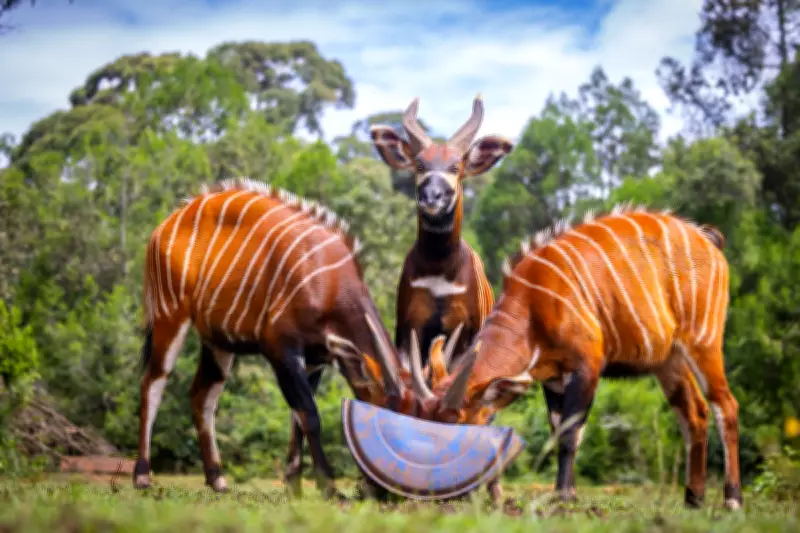
The Mount Kenya Wildlife Conservancy has successfully repatriated four male mountain bongos from Czechia to Kenya, marking a significant milestone in the conservation of this critically endangered species. The operation, which involved a cargo flight to Jomo Kenyatta International Airport, was the culmination of decades of effort to rescue the mountain bongo from the brink of extinction.
A Species on the Edge
Mountain bongos are endemic to Kenya's highland forests, including the Aberdares, Mount Kenya, the Mau, and the Eburu. With fewer than 100 individuals estimated in the wild, the species is critically endangered. The four new arrivals—Fitz, Maue, Kudu, and Bon64—were carefully selected from European zoos to strengthen the genetic diversity of the captive population at the conservancy.
The Journey Home
Wildlife officer Ngenoh Erick Kibet and animal keeper Christine Gichohi spent two weeks in Czechia learning the routines and personalities of the four bongos before the journey. Each animal has a distinct character: Maue is gentle and calm, Fitz is aggressive, Kudu has trust issues, and Bon64 is curious but easily spooked. The transfer was led by experts from Chester Zoo in England, in collaboration with the Kenya Wildlife Service and the European Association of Zoos and Aquariums.

On the day of the move, the bongos were transported from quarantine to crates and then to the airport. The flight was tense, with Kibet and Gichohi monitoring the animals constantly. Upon landing, Kibet described the moment as one of the happiest of his life.
Broader Conservation Efforts
The repatriation is part of a larger effort that began in 2004, when 18 mountain bongos were brought from North American zoos. The conservancy's captive herd has grown from 54 in 2021 to 93 before the arrival of the four males, and a 100th bongo calf was recently born on site. The organization emphasizes that these numbers represent not just statistics but proof that conservation efforts are working.
Personal Commitment
For Gichohi and Kibet, the work is deeply personal. Gichohi, who grew up near Mount Kenya forest, has witnessed the challenges of wildlife conservation firsthand. Kibet, inspired by a university field trip, joined the conservancy as an intern and now dedicates his career to ensuring that future generations will see mountain bongos in the wild, not just in books.
The four males are now settling into their new environment, with signs of comfort such as digging and marking territory. After a 21-day acclimatization period, they will be introduced to females for mating. With 179 mountain bongos now in Kenya, up from 150 in 2021, there is renewed hope for the species' future.