
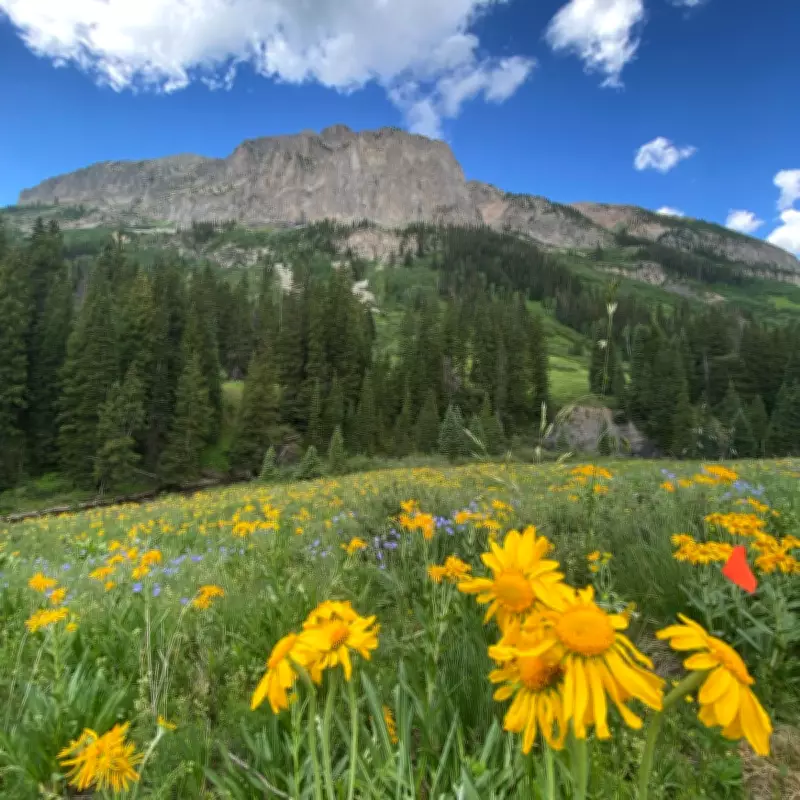
Rocky Mountain Meadows Face Drastic Transformation Under Climate Heating
A long-running scientific experiment in the Rocky Mountains of Colorado has delivered an alarming glimpse into the future of fragile ecosystems. For nearly three decades, researchers have artificially heated patches of meadow by 2°C above pre-industrial levels, simulating unchecked global warming. The results, published in the Proceedings of the National Academy of Sciences, reveal a rapid shift from lush grasslands and vibrant wildflowers to desert-like scrubland dominated by sagebrush.
The Experiment: Heating Meadows to Predict Future Changes
In January 1991, scientists at the Rocky Mountain Biological Laboratory in Gothic, Colorado, initiated one of the first and longest-running climate experiments. Using electric infrared radiators, they warmed five experimental plots year-round, maintaining a constant temperature increase. The setup, costing $6,000 annually in electricity, heated the top six inches of soil while allowing natural grazing and preserving the ecosystem as much as possible.
Over 29 years, the heated plots experienced a 150% increase in shrub growth compared to unheated areas. Soil moisture dropped by up to 20%, stressing shallow-rooted plants and leading to the extinction of some wildflower species. Lead researcher Lara Souza from the University of Oklahoma notes, "It's a sign of things to come." The transformation extended below ground, with declines in beneficial fungi that aid nutrient absorption and increases in decomposer fungi, highlighting irreversible changes.
Global Implications: Shrubification Spreads Beyond Mountains
This phenomenon, termed "shrubification," is not confined to Colorado. Alpine grasslands worldwide, which host unique plant species on minimal land area, are at risk. Dr. Patrick Möhl from Lancaster University, studying pristine alpine grasslands in Austria, warns that climate breakdown could replace diverse meadows with uniform forests. Similarly, in the Arctic, shrub cover has expanded by 2.2% per decade due to rising summer temperatures, as observed in the western Canadian Arctic between 1984 and 2020.
Conservation ecologist Sarah Dalrymple from Liverpool John Moores University explains that global heating removes cold-related restrictions on plant growth, enabling shrubs and trees to invade grasslands. While shrubs may provide shelter, their spread accelerates permafrost melting and carbon emissions, exacerbating climate change. Dalrymple emphasizes, "Shrubification is a symptom of our inability to control carbon emissions, not the cause."
A Fragile Future for Biodiversity-Rich Landscapes
The speed of these changes exceeds earlier projections, threatening ecosystems that have existed for thousands of years. Souza, still captivated by the insect-rich meadows, describes them as "like flowers on steroids," but expresses sadness over their uncertain future. As temperatures rise, these delicate landscapes face irreversible transformation, underscoring the urgent need for global climate action to preserve biodiversity and prevent further ecological disruption.



