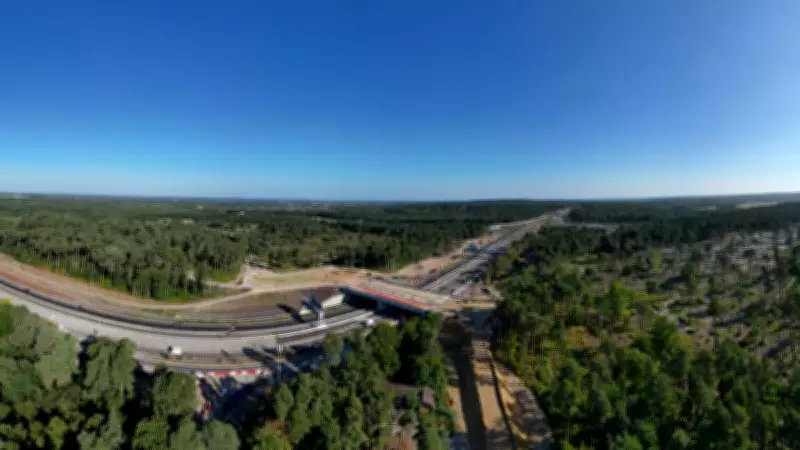
The Cockrow Bridge in Surrey, a lowland heath wildlife crossing, is set to open in the coming weeks. It connects two nature reserves split by the A3, providing a safe passage for adders, lizards, roe deer, foxes, and insects, allowing biodiversity to recover.
The Problem of Habitat Fragmentation
James Herd, director of reserves management at the Surrey Wildlife Trust, recalls the Wisley Common heathland teeming with wildlife 17 years ago. Now, he notes a decline in reptiles and other species. The A3, a major arterial road into London carrying hundreds of thousands of vehicles daily, cuts through the protected Wisley and Ockham commons, fragmenting this rare lowland heath habitat.
“It has fragmented the habitat, disconnected the ecological permeability of the site,” Herd explains. “Species on this side can’t get to that side because there’s six lanes of tarmac and vehicles doing 70mph in the way.” The £317m M25 improvement scheme further disrupted the area.
The Green Bridge Solution
To mitigate the impact, National Highways built Cockrow Bridge, a green bridge that transplants heathland from either side. Heather already grows in purples and yellows above the A3, supporting insects and reptiles. Piles of sand provide breeding habitat for the threatened sand lizard, and logs offer cooler spots and cover from predators.
“If you’re a lizard or a snake and you get too hot, those stumps provide cooler habitat,” says Herd. Ground-nesting birds like nightjars, woodlarks, and Dartford warblers also benefit from the connected landscape. Insects, crucial for pollination and decomposition, are also supported.
Wildlife Already Using the Bridge
Though not officially open, foxes, roe deer, and adders have been spotted on the crossing. The bridge aims to address genetic isolation caused by fragmented habitats, which weakens gene pools and reduces species’ ability to adapt to climate change.
UK Lags Behind Other Countries
Ben Hewlett, senior biodiversity adviser at National Highways, notes that the UK is behind continental Europe, the US, and Canada. The US has over 1,000 animal crossings, including overpasses and tunnels, primarily for safety reasons. The Netherlands has built about 80 green bridges since 1988, including the 800-metre-long Natuurbrug Zanderij Crailoo, which has seen pine martens and badgers return after 15 years.
Dr Silviu Petrovan, assistant research professor at Cambridge University’s zoology department, says Britain is one of the most fragmented countries due to its dense road network. Green bridges increase habitat resilience and help populations recover through recolonisation.
Cost and Future Potential
Cockrow Bridge cost £3.7m, just over 1% of the project cost. Herd believes dedicating 1% to 3% of road scheme costs to greening elements could unlock nature recovery. “We’re in a nature crisis, right? We’re in a biodiversity crisis. Nature is really, really struggling. And unless we act pretty damn swiftly, we’ll hit a tipping point where we might be facing ecosystem collapse.”