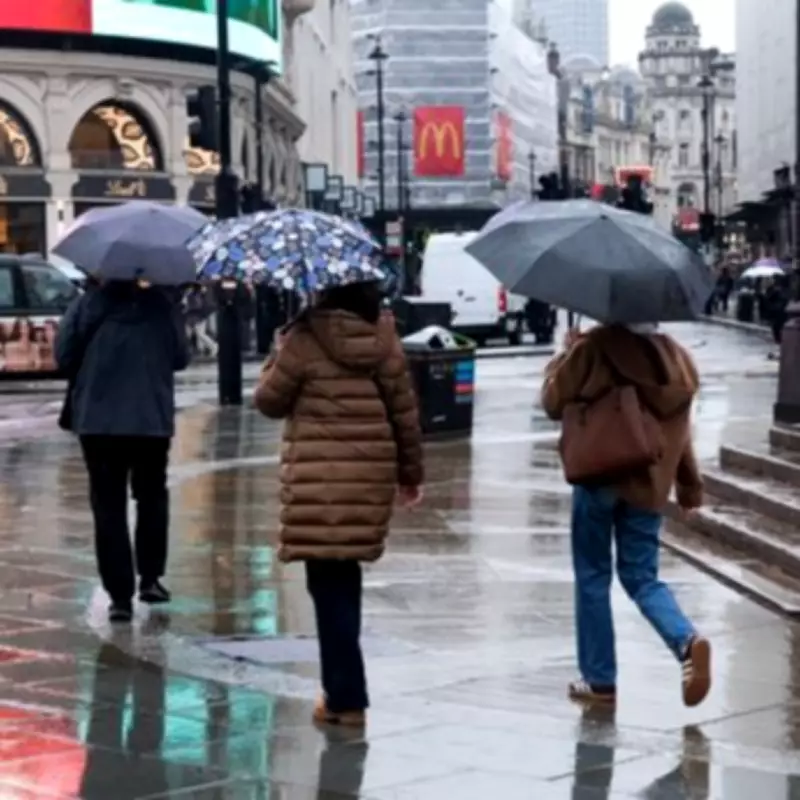
London residents should prepare for a prolonged period of wet weather as meteorological forecasts predict nearly two straight weeks of rainfall across the capital. According to BBC Weather projections, the city will experience consistent precipitation through Tuesday, March 3rd, extending what has already been an exceptionally damp February season.
The Silver Lining in London's Weather Outlook
Despite the persistent rainfall, there exists a significant meteorological consolation for Londoners. While precipitation continues unabated, the chilling winter temperatures that have characterized recent weeks are expected to dissipate dramatically. Thermometers are forecast to climb into double digits beginning Friday, February 20th, with anticipated highs reaching approximately 11°C.
Temperature Surge and Spring Indicators
Following this initial warming trend, maximum temperatures throughout London are projected to stabilize between 13°C and 15°C consistently through the commencement of March. This substantial thermal increase suggests that spring conditions might be emerging earlier than typical seasonal patterns would indicate. During this identical timeframe, overnight lows in the capital should register between 7°C and 8°C, representing a marked departure from the recent colder climate.

Meteorological authorities at the Met Office have corroborated these warming predictions, confirming that milder atmospheric conditions are indeed approaching. Their comprehensive extended-range forecast indicates that Atlantic frontal systems will continue influencing British weather patterns, delivering periodic rainfall that will concentrate most intensely over elevated western and northwestern regions.
Detailed Meteorological Analysis
The Met Office's technical assessment further elaborates that sheltered eastern and southeastern areas, including London, will likely experience comparatively reduced precipitation accumulation. Wind patterns are expected to remain brisk, with strongest gusts occurring predominantly in western and northwestern territories. A prevailing west or southwesterly airflow should maintain temperatures at or above seasonal averages throughout this period.
Meteorologists are simultaneously monitoring potential snowfall developments across the United Kingdom as low-pressure systems advance from western and southwestern directions. These atmospheric disturbances could generate sleet and snow flurries across portions of southern England and Wales, though precise impacts remain uncertain at this forecasting stage.
London's Fourteen-Day Weather Forecast
According to BBC Weather's detailed projections, London's meteorological outlook through early March includes:
- Wednesday, February 18: 6°C/4°C, light rain with moderate breeze
- Thursday, February 19: 7°C/3°C, light rain with light winds
- Friday, February 20: 11°C/10°C, light rain showers with moderate breeze
- Saturday, February 21: 15°C/12°C, light rain with gentle breeze
- Sunday, February 22: 14°C/9°C, light rain showers with moderate breeze
- Monday, February 23: 14°C/9°C, drizzle with gentle breeze
- Tuesday, February 24: 15°C/10°C, drizzle with gentle breeze
- Wednesday, February 25: 15°C/9°C, drizzle with gentle breeze
- Thursday, February 26: 14°C/9°C, light rain with gentle breeze
- Friday, February 27: 13°C/7°C, light rain with gentle breeze
- Saturday, February 28: 13°C/7°C, drizzle with gentle breeze
- Sunday, March 1: 13°C/9°C, light rain with gentle breeze
- Monday, March 2: 13°C/8°C, light rain with gentle breeze
- Tuesday, March 3: 13°C/8°C, light rain with gentle breeze
This extended precipitation period coincides with gradually improving thermal conditions, offering Londoners the paradoxical combination of continued rainfall alongside increasingly spring-like temperatures. The meteorological transition suggests that while umbrellas will remain essential throughout the coming fortnight, heavy winter coats might become progressively less necessary as the capital experiences this unusual weather pattern.