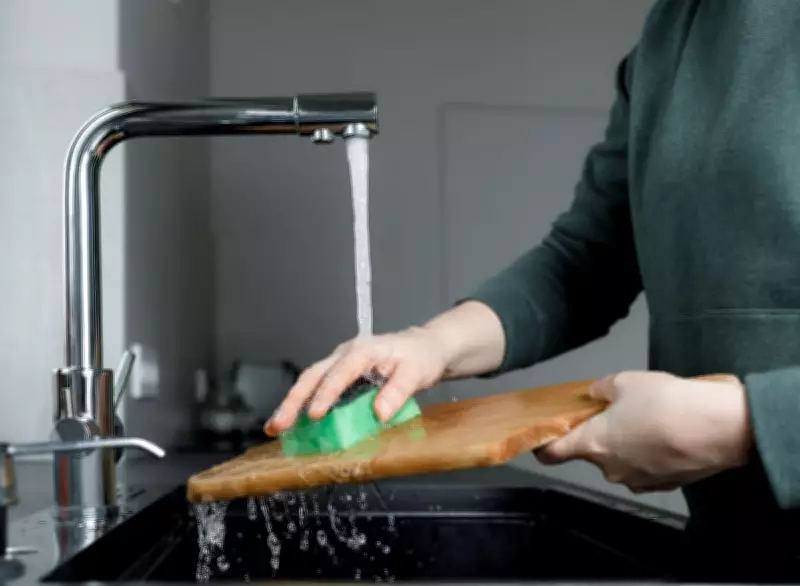
Your cutting board could be dirtier than a toilet seat, according to germ experts. When we recently asked microbiologists about surprisingly filthy everyday items, they ranked cutting boards among the germiest household items, alongside kitchen sponges and water bottles.
Many things at home are technically dirtier than toilet seats, a surface we emphasize disinfecting regularly. So this is not something to spiral into a germaphobic panic about, but at dinner cleanup, it is worth paying special attention to that cutting board you just used to chop zucchini or carve chicken. Knowing how to clean this kitchen surface is vital for avoiding unpleasant odors, unsightly stains, and potentially harmful bacteria such as salmonella or E. coli.
We asked Dr. Keith R. Schneider, University of Florida professor of food safety, our burning questions on cutting board hygiene. For our fellow overthinkers, he has good news: "Washing with soap and water is still a great option for most cleaning situations."
Which Cutting Boards Are Dishwasher Safe?
Most plastic, glass, composite, or stainless steel cutting boards can be cleaned by placing them on the bottom rack of your dishwasher, where the high temperatures will grant the added benefit of sanitizing them. Wooden cutting boards are not dishwasher safe; your only option is to handwash them. For a gentle dish sponge, we recommend compostable Blueland sponges.
Help! What If I Put My Wooden Board in the Dishwasher?
If it is intact, just try to avoid doing it again. Prolonged exposure to a dishwasher's hot water leads to warping and cracking. To protect your board and ensure it lasts for years, apply food-grade oil after washing and letting it sit overnight. For extra insurance, apply a board butter every month or so.
How Do I Prevent Bacteria From Growing in My Cutting Board?
When you have finished rinsing off any soap, use a cloth or paper towels to soak up as much moisture as possible from the cutting board. Storing a board while damp can create a breeding ground for bacteria, so be sure to place it in an upright angle against a wall or object to ensure adequate airflow, allowing it to dry entirely before you put it away.
Do I Need Antibacterial Soap to Clean?
Luckily, the best choice for the job is usually standard dish soap such as Dawn or Palmolive and warm water. "Antibacterial soaps really do not offer much additional advantage over regular soaps," said Schneider. In other words, the only extra ingredient you need is your own elbow grease.
Is It Safe to Bleach My Cutting Board? Should I?
While soap and water are adequate for foods such as fruits, vegetables, and bread, there are cases when sanitizing your cutting board is the best approach. "If you were cutting raw meat, which has a higher potential of containing pathogens, you might want to sanitize a cutting board," said Schneider. Dishwasher-safe cutting boards will be sanitized during a cycle in the machine, but for sanitizing by hand, Schneider recommends using a bleach solution. Begin by diluting 1 tablespoon of unscented household bleach with a quart of water, then liberally apply the solution across the surface of the cutting board and leave it for 5 to 10 minutes to fully disinfect. Afterward, rinse the board and let it air dry before storing it away.
How Do I Know If My Cutting Board Is Not Safe to Use?
Most cutting boards will eventually begin to show light signs of wear and tear, but that is usually not a reason to fret. Signs that your cutting board may be better off in the trash bin include deep grooves that cannot be reasonably sanded or scrubbed out, severe warping or cracks, or lingering odors that are difficult or impossible to remove. "You cannot see bacteria, thus you really cannot tell just by looking at a cutting board if it is safe or not," warned Schneider. "A heavily damaged cutting board, whether wood or plastic, should be replaced. Those cracks are places microbes can hide." In those cases, avoid the risk and just buy a new cutting board so you can get back to slicing and dicing safely.