University of Southern Maine Cancels Palestine Conference Citing Federal Sanctions
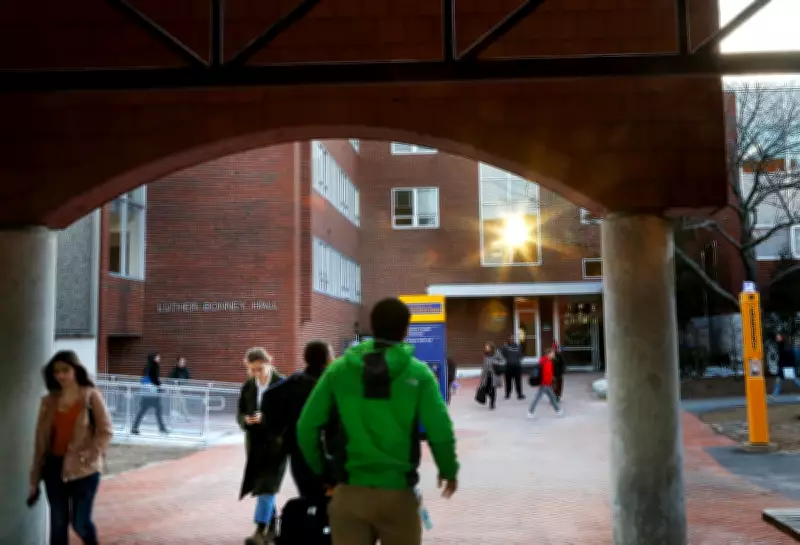
The University of Southern Maine has abruptly revoked access to an on-campus venue just days before a major conference about Palestine was scheduled to take place, citing federal sanctions against a featured speaker and responding to pressure from local legislators. The sudden cancellation has sparked outrage among organizers who are now scrambling to find an alternative location while considering legal action against the university.
Conference Details and Sanctions Conflict
More than 300 participants had registered to attend the "Consequences of Palestine" conference, which was organized by the Maine Coalition for Palestine, Maine Voices for Palestinian Rights, and USM's own department of criminology and sociology. The event was slated to include remote participation from Francesca Albanese, the United Nations special rapporteur for the occupied Palestinian territories, who has been under sanction by the Trump administration since July 2023.
Samantha Warren, the University of Maine system's chief external and governmental affairs officer, stated in an email that "hosting a conference that is being actively promoted as including a speaker sanctioned by the U.S. government would put our public university in violation of federal law." She further suggested that organizers should have obtained permission from the treasury department to include the sanctioned speaker.

Contradictory Government Guidance
This position appears to directly contradict guidance issued by the Office of Foreign Assets Control (OFAC) in December, which clarified that featuring sanctioned individuals as speakers at conferences does not constitute providing a prohibited service and does not require prior authorization. OFAC issued this clarification specifically in response to a letter from the Middle East Studies Association, which was also looking to feature Albanese's virtual participation in an event.
In the letter to MESA, OFAC wrote that "no authorization" was necessary to include Albanese so long as she did not receive an honorarium or expense reimbursement and that she was not provided with any "training or assistance." The U.S. Treasury Department, which oversees OFAC, did not immediately respond to requests for comment regarding the USM situation.
Free Speech Concerns and Legal Implications
Abigail Fuller, a sociology professor at USM and one of the conference organizers, expressed strong concerns about free speech suppression. "We're a public university; the university system is subject to First Amendment laws," Fuller stated. "We feel we have a very, very strong case that they are suppressing our free speech."
Xiangnong Wang, a staff attorney at the Knight First Amendment Institute who sought officials' guidance on MESA's behalf, told the Guardian that USM's cancellation represents a troubling reflection of the sweeping impact of U.S. sanctions. "It's very concerning that sanctions continue to have such a broad deterrent effect on speech that is undoubtedly protected by the First Amendment," Wang noted.
In 2023, the Knight Institute sued the Treasury Department in a case that challenged the impact of sanctions on the exchange of political ideas, leading to a settlement and the department's acknowledgement that including sanctioned speakers in events is not prohibited under U.S. law.
Organizer Response and Alternative Plans
Conference organizers have stated they "refuse to be silenced" and are actively seeking a last-minute venue to hold the event. After failing to convince university officials that no OFAC authorization was required to include Albanese, organizers offered to remove her from the conference program entirely. However, they were then informed that insufficient time remained for the university to assess the conference's "risk."
Organizers believe USM administrators responded to outside pressure, including a letter reportedly sent to the chancellor by Republican lawmakers requesting "information on steps the university is taking to ensure the safety and well-being of its Jewish students." Fuller also noted that university officials cited fears of federal funding cuts in communications with organizers.

Background on Sanctioned Speaker
The U.S. sanctioned Francesca Albanese last July, accusing her of "unabashed antisemitism, expressed support for terrorism, and open contempt for the United States, Israel, and the West." Albanese has consistently rejected these accusations and denounced the sanctions against her as a sign of "guilt."
"The US is a country of contradictions, full of ideals and principles and still, plotting against democratic values," Albanese told the Guardian in an interview last summer. She did not respond to a request for comment regarding the USM conference cancellation.
Determination to Proceed
Fateh Azzam, a career human rights practitioner and member of the Maine Coalition for Palestine, emphasized that organizers remain determined not to cancel the conference despite the obstacles. "That would mean that they have effectively silenced an open and public debate on the issues," he stated, noting that the controversy has paradoxically drawn greater interest in the event. "This controversy will probably bring in more people."
The situation highlights ongoing tensions between federal sanctions enforcement, academic freedom, and First Amendment protections in American higher education institutions, particularly regarding discussions of contentious international issues.