The Birth of a Global Movement: Rethinking Economics
In the turbulent aftermath of the 2008 global financial crisis, a quiet revolution began brewing in university economics departments worldwide. What started as isolated acts of student discontent has blossomed into Rethinking Economics – an international movement fundamentally challenging how economics is taught and understood across academic institutions.
From Harvard Walkouts to Global Network
The seeds were sown when Harvard University students walked out of their introductory economics class, protesting what they described as a "specific and limited view" that perpetuated economic inequality. Simultaneously, across the Atlantic at Manchester University, British economics students established a "post-crash economics society", frustrated that their rigid mathematical curriculum bore little relation to the economic turmoil unfolding around them.
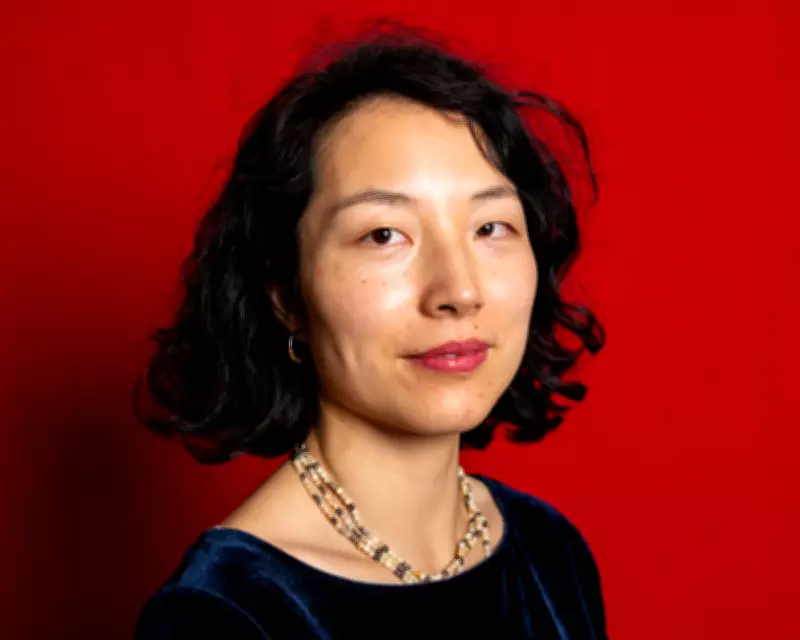
These separate expressions of dissatisfaction converged in early 2013 at the London School of Economics, where the inaugural meeting of Rethinking Economics took place. Yuan Yang, one of the movement's founders and now a Labour MP, recalls that first gathering as "a bit chaotic" but remarkable for attracting students from multiple universities beyond the LSE.

Building a Pluralist Vision
According to communications lead Sara Mahdi, the movement's core mission is to transform economics education into something "plural, critical, decolonised and historically grounded" rather than dominated by a single framework presented as neutral or objective. The organisation envisions an economics that acknowledges the economy as embedded within ecology, power structures, institutions, history, and inequality.
Prominent economist Ha-Joon Chang compares the previous dominance of neo-classical economics in universities to "Catholic theology in medieval Europe" – a doctrine that fundamentally shaped humanity's worldview. He credits Rethinking Economics with exposing "the staggering deficiency in the way economists are educated" and initiating significant, though insufficient, changes worldwide.
Tangible Curriculum Reforms
The movement has achieved substantial concrete changes across global institutions. Since 2019 alone, Rethinking Economics has supported over 80 campaign victories in universities across 35 countries, including 23 major curriculum reforms affecting tens of thousands of students. These aren't minor adjustments but fundamental reshaping of what constitutes mainstream economics education.
Notable achievements include Goldsmiths, University of London launching a politics, philosophy and economics course in 2014, the University of Lille in France introducing an interdisciplinary programme in 2020, and Leiden University in the Netherlands establishing new economics and society undergraduate and public sector economics masters programmes in 2023.
Global Reach and Local Impact
One of the movement's most active chapters operates in South Africa, where it evolved from broader student protests about higher education access into a comprehensive critique of academic systems and their colonial perspectives. Amaarah Garda, junior programme officer for Rethinking Economics in Africa, explains how the campaign shifted strategy when universities resisted changing mainstream teaching, instead creating "our own progressive courses and events" within existing institutions.
The movement continues growing as students seek answers to pressing contemporary issues – from understanding war economies to engaging with UN climate negotiations. Garda observes that students find these ideas "not just interesting but more and more urgent given the multiple crises we are facing".
Academic Collaboration and Support
Many established economists welcome the space Rethinking Economics has created for broader discussion. Clara Mattei, economics professor at the University of Tulsa and president of the Forum for Real Economic Emancipation, collaborates with the movement to "improve economic education and make it a useful tool for expanding economic agency among the general public".

Mattei argues that our current economic system shows "its most violent face" through rampant militarism and unprecedented inequality, noting that "four people own more wealth than four billion people". She praises Rethinking Economics students for pushing toward frameworks that "prioritise the logic of need over the logic of profit".
Jayati Ghosh, economics professor at the University of Massachusetts Amherst, appreciates how the movement forces established economists to reconsider basic questions they were trained to overlook. Despite encountering resistance from institutional power structures, think tanks, and journals maintaining narrower economic perspectives, Ghosh notes the campaign's thoughtful approach and willingness to engage diverse perspectives.
Ghosh has participated in Rethinking Economics gatherings worldwide and observes that they bring together "not just economists and students but activists and others" to examine questions from multiple angles. This interdisciplinary approach has led her to conclude that "economics is too important to be left to economists" alone.
From its humble beginnings as student-led discontent, Rethinking Economics has grown into an international network with thousands of members across more than 40 countries, fundamentally challenging economic orthodoxy and reshaping how future generations understand the complex economic realities of our world.