Federal Judge Halts Trump Administration's University Race Data Collection
A federal judge has issued a preliminary injunction blocking the Trump administration's controversial effort to collect detailed race and sex data from universities across the United States. The ruling represents a significant setback for an initiative that critics argued was rushed, chaotic, and potentially invasive to student privacy.
Legal Challenge from Democratic States
The injunction follows a lawsuit filed by a coalition of 17 Democratic state attorneys general who argued the data collection was implemented without proper consultation and placed unreasonable burdens on educational institutions. U.S. District Judge F. Dennis Saylor IV in Boston granted the preliminary injunction, though it currently applies only to public universities within the plaintiff states.
In his ruling, Judge Saylor acknowledged the federal government likely possesses the authority to collect such data but criticized the administration's implementation as fundamentally flawed. "The 120-day deadline imposed by the president led directly to the failure of the National Center for Education Statistics to engage meaningfully with institutions during the notice-and-comment process," Saylor wrote, highlighting how the rushed timeline prevented addressing numerous practical problems with the new requirements.

Background of the Controversial Policy
The data collection initiative originated from an August order by former President Donald Trump, who expressed concerns that colleges and universities might be using personal statements and other indirect methods to consider race in admissions decisions following the Supreme Court's 2023 ruling against affirmative action. While that ruling prohibited explicit racial preferences, it allowed institutions to consider how race has shaped applicants' experiences when shared voluntarily in essays.
The Trump administration sought comprehensive data including the race, sex, grade-point averages, and standardized test scores of applicants, admitted students, and enrolled students for the past seven years. Originally due by March 18, the requirement demanded disaggregated reporting that many institutions argued would be extraordinarily difficult to compile accurately within the tight timeframe.
Privacy and Implementation Concerns
Plaintiff states raised multiple objections to the data collection, warning it could:
- Invade student privacy through extensive personal data gathering
- Lead to baseless investigations of colleges and universities
- Create administrative chaos for institutions given insufficient preparation time
"The data has been sought in such a hasty and irresponsible way that it will create problems for universities," argued Michelle Pascucci, a lawyer representing the plaintiffs. She suggested the effort appeared designed to uncover unlawful practices rather than gather legitimate statistical information.
Enforcement Threats and Parallel Actions
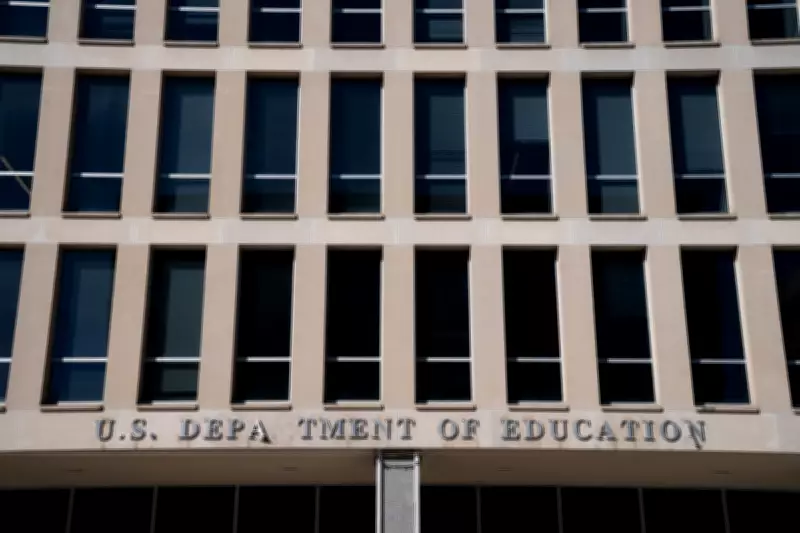
The Education Department had defended the data collection as necessary for transparency regarding how federal funds are spent at institutions receiving government support. Education Secretary Linda McMahon had warned that failure to submit complete and accurate data could trigger action under Title IV of the Higher Education Act of 1965, which governs requirements for colleges receiving federal financial aid.
This policy echoed settlement agreements previously negotiated with Brown University and Columbia University, where those institutions agreed to provide similar data and undergo government audits in exchange for restored federal research funding.
Separately, the Trump administration has pursued legal action against Harvard University over related data requests, alleging the university refused to provide admissions records that would ensure compliance with affirmative action restrictions. Harvard maintains it has been responsive to government requests and complies with the Supreme Court ruling. The Education Department's Office for Civil Rights recently directed Harvard to comply with data requests within 20 days or face referral to the Justice Department.

Broader Implications for Higher Education
The preliminary injunction represents more than just a temporary pause in data collection—it highlights ongoing tensions between federal oversight and institutional autonomy in higher education. As universities navigate the post-affirmative action landscape, this ruling suggests courts may scrutinize not just the substance of federal demands but also the process through which they are implemented.
The case continues to develop, with further legal proceedings expected to address both the procedural deficiencies identified by Judge Saylor and the substantive questions about what data collection represents appropriate federal oversight versus undue intrusion into university operations and student privacy.