Iranian Students Defy Crackdown with Renewed Campus Protests
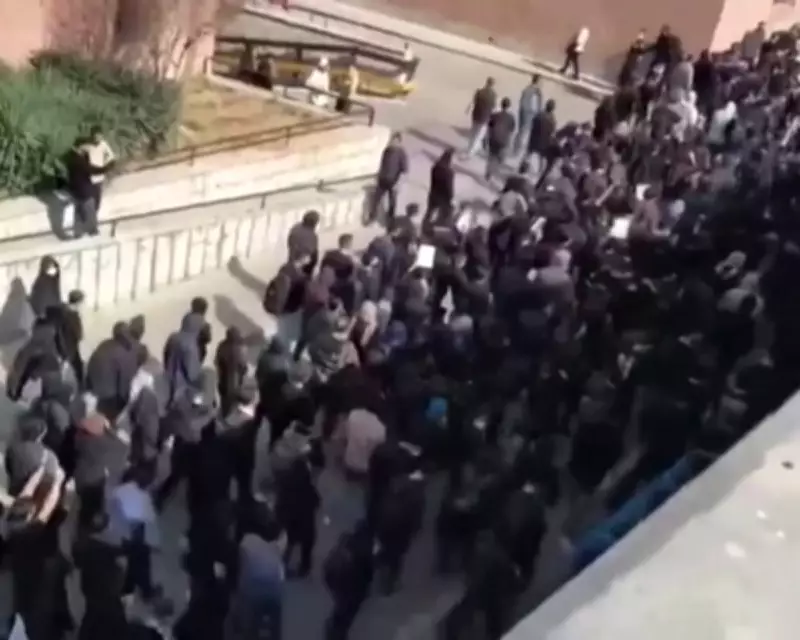
More than six weeks after a devastating January crackdown that resulted in the deaths of thousands of Iranian protesters, students across multiple universities are once again taking to the streets in defiance. As Iran's new academic term commenced this past Saturday, students in Tehran gathered on campus grounds, loudly chanting anti-government slogans despite a formidable security presence and plainclothes officers positioned outside university gates.
Empty Classrooms and Full Graveyards
The Guardian conducted interviews with protesting students to understand their motivations for rallying despite the immense risks. Thousands were killed and tens of thousands arrested during the January demonstrations, creating an atmosphere of profound grief and anger.
"Our classrooms are empty because the graveyards are full," declared Hossein*, a 21-year-old student at the University of Tehran. "It's for them – our friends, classmates, and compatriots who were gunned down before our very eyes – that we decided to boycott classes."

Now entering their third consecutive day, these protests have rapidly spread to universities throughout the capital and the northeastern city of Mashhad. Numerous videos circulating online depict students chanting anti-regime slogans while violent clashes erupt between protesters and pro-regime Basij forces.
Defiance in the Face of Brutality
"They called their spilled blood foreign-backed," Hossein added, referencing the regime's frequent labeling of dissenters as agents of foreign powers. "But we know the regime can no longer kill students on campus and call us terrorists. We are not afraid of losing our lives. We are all willing to put our lives on the line so that at least the next generations of this country will live in freedom and peace."
According to data from the US-based organization HRANA (Human Rights Activists News Agency), at least 7,000 people have been confirmed killed in the January crackdown, with another 11,700 deaths currently under investigation. Other estimates from medical professionals across Iran suggest the death toll could be in the tens of thousands. HRANA has documented more than 53,000 arrests, including hundreds of students.
From Silent Vigils to Vocal Protests
Although Saturday's protests represented the first large-scale campus rallies since last month's mass killings, smaller demonstrations had been simmering for weeks. Medical students, in particular, had been demanding the release of detained healthcare workers.
Leyla*, a student at Sharif University of Technology in Tehran, described how a quiet campus vigil unexpectedly evolved into a vocal protest with students chanting slogans.
"Because nobody can tolerate this much grief," she explained. "We didn't coordinate the protests in advance. It was supposed to be only a silent sit-in. As soon as the students began to speak, everyone stood behind them and continued. Even if it doesn't lead to anything concrete, it is symbolic: showing that they couldn't silence the people."
Students were galvanized by intense anger at security forces and "how they killed so many people," she emphasized.
Violent Confrontations and Collective Mourning
Campus protest videos from the University of Tehran show Basij forces – state-backed paramilitary volunteers – attacking protesting students, hurling threats and insults, and breaking windows. At Sharif University, Leyla reported that tensions quickly escalated into physical confrontations between Basij-aligned students and protesters, with clashes persisting through Sunday.
"Many of our students were hurt and bleeding, and many aligned with Basij were too," she said, noting that bottles and stones were thrown by both sides during the violent encounters.
In Mashhad, Reza*, another university student, described a similar sense of collective sorrow fueling demonstrations.
"When society is in mourning, grief and anger are felt at universities too," he stated. "Because we are grieving for our classmates and loved ones, we do not want to attend classes."

Reza explained that students in Mashhad were coordinating protests to resist any return to the status quo. "We are all in mourning, and we will confront anything that tries to make the situation appear normal. Nothing is normal. Nothing will return to the way it was before January 8th. We saw things we should have never seen – things full of fear and sorrow."
"Many of us are afraid," Reza continued, "but when we gather together and become a visible crowd, the fear leaves us. We chant: 'Don't be afraid, don't be afraid – we are all together.'"
A Movement with No End in Sight
Hossein expressed expectations that protests would continue in the coming days, driven by raw emotion and unresolved trauma.
"These protests are against the return to normal life while our loved ones' bodies are still warm," he declared, capturing the profound sentiment driving this renewed wave of student activism across Iranian campuses.
*Names have been changed to protect protesters' identities.