Dining Across the Divide: A Candid Conversation on Education and Healthcare
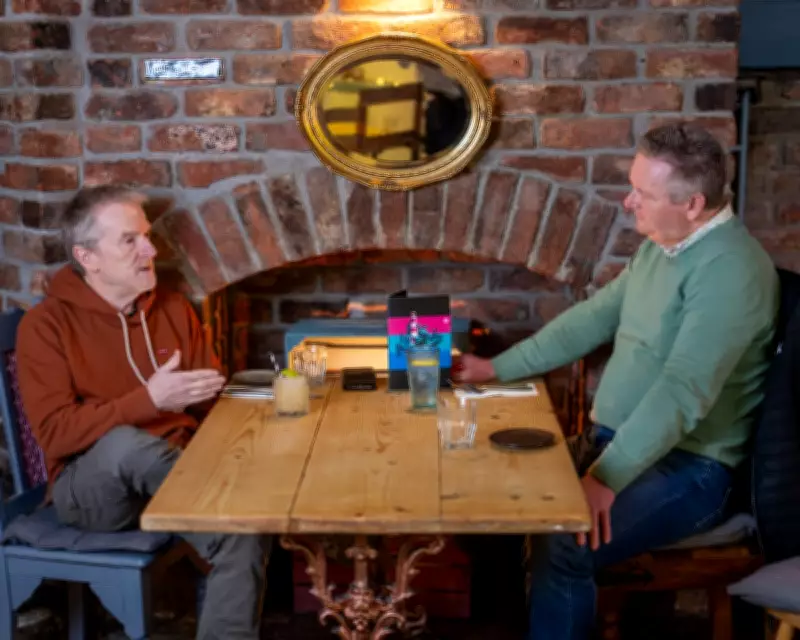
In a unique social experiment, two men from the south-west of England, Grant and Peter, sat down for a meal to discuss pressing issues like university tuition fees and NHS funding. Despite sharing a passion for boats, their views on these topics revealed a deep divide, sparking a lively and thought-provoking debate.
Meet the Participants
Grant, 61, from Yelverton, Devon, is retired after a career restoring properties. In the 2024 election, he voted for Keir Starmer, considering it essential, and has admired Gordon Brown in the past. An interesting tidbit from his life: he lived in Australia as a teenager and took up bottle diving, searching for artifacts from 1700s settlers and convicts. He sold his collection for $28,000 and bought a home by age 18.
Peter, 60, from Saltash, Cornwall, works as a company director. Historically, he has always voted Conservative, but in 2024, he spoiled his ballot paper, feeling no candidate was worthy of his vote. His lifelong hobby and passion is dinghy sailing, which also ties into his work.

The Conversation Begins
Grant noted that Peter wore a Helly Hansen jacket, a common sight among boating enthusiasts, and found him immediately likable for his openness. Peter, who describes himself as not the most open person, entered the conversation with a mindset of sharing opinions to gain something from it. He appreciated Grant's boldness in expressing views to a stranger, calling him a warm and intelligent man.
Over starters, Grant enjoyed black bream with tempura prawns and mocktails, while Peter opted for a scotch egg and mushroom truffle arancini.
The Big Debate: University Tuition Fees
Grant's stance is that universities should be accessible to all. He argued that student loans create a psychological barrier, especially for those from disadvantaged backgrounds. "If you're in a household where there's a lot of negative talk and it's all a bit sad, if there are fees as well and both Mum and Dad are tight on money, you won't do it," he said. He believes any barrier to education is hugely negative, and for every bright person who doesn't pursue higher education, society loses out.
Peter's view challenges the need to send so many people to university. He pointed out that graduates often struggle to find well-paid jobs, suggesting universities have become bloated. He criticized chancellors and vice-chancellors for their high salaries, calling it outrageous. "They're leading failing organisations because they're not putting out people that employers want to employ," he argued. Peter believes universities are teaching the wrong attitudes and skills, and he advocates for reducing student numbers, citing affordability issues for both students and society.
Grant countered by urging to "just give them a break. Make it free. Make it simple. Remove barriers." Peter, however, maintained that funding should come through loans, which he sees as a cheap option.
Sharing Plate: The NHS Discussion
Both men expressed love for the NHS, with Grant calling it a miraculous levelling device staffed by wonderful people, though he acknowledged it's partially broken due to exhaustion. Peter agreed on the importance of the NHS but took an economic perspective, noting that private spending on procedures like hip or knee replacements can reduce the burden on the public system.
They found common ground in opposing simply throwing more money at the NHS. Grant agreed with Peter that the malaise stems from a sick society rather than a broken machine. Peter blamed accountants and middle managers for messing things up by protecting their budgets.
For Afters: Welfare and Work
Grant shared his experience with the dole in Australia, where it's called "dole-bludger," highlighting the psychological harm of having power removed. He doesn't mind if the benefits system is abused, noting that everything gets abused. Peter emphasized the need for a welfare state that protects people while encouraging work, but he criticized the system for making it hard to transition between welfare and work.

Takeaways and Future Plans
The conversation ended on a positive note, with Peter inviting Grant to visit his industrial estate, where Grant already knows a spear fisher. Peter reflected that putting two boat enthusiasts together was bound to lead to a connection.
Grant and Peter dined at Salumi in Plymouth, with additional reporting by Kitty Drake. This encounter showcases how shared interests can bridge divides, even when opinions on critical issues like education and healthcare differ sharply.