Higher Education Regulator Launches Compliance Investigation
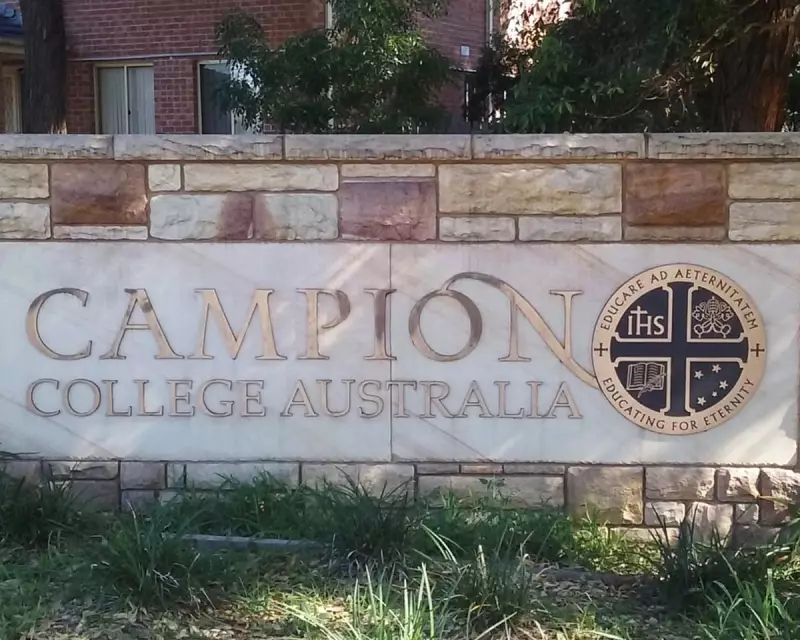
An influential Catholic college in Sydney has found itself at the centre of a major controversy after two of its prominent academics made comments supporting the White Australia policy and calling for Anglo-Celtic Australians to become a "supermajority" in the country. Campion College, a private institution in western Sydney, is now facing a formal investigation by Australia's higher education regulator.
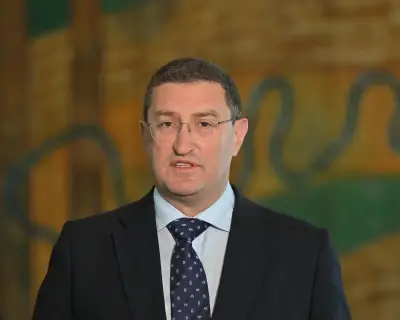
The Tertiary Education Quality and Standards Agency (Teqsa) has confirmed it is "undertaking a compliance process" with the college following numerous concerning statements made by Stephen McInerney, the dean of studies, and Associate Professor Stephen Chavura, a senior lecturer. Federal Education Minister Jason Clare emphasised that "there is no place for racism in higher education or anywhere else in our society."
Controversial Comments and Political Affiliations
The investigation was triggered after the Sydney Morning Herald reported that both academics had been promoting white nationalist views. Professor Chavura established an Anglo-Celtic nationalist group for Australian men this year, positioning it in opposition to what he described as "leftist thugs", "mass immigration and multiculturalism".

Despite denying sympathies with Nazism or racism, Chavura recently described a banner reading "Abolish the Jewish Lobby" at a neo-Nazi rally in Sydney as "political speech" that should be "protected". He has since denied being a white nationalist, calling the media coverage an "attempt to strangle a rising new conservative movement in its infancy."
Stephen McInerney, who serves on both Campion's academic board and board of trustees, attended the March for Australia rally in Sydney this August. There he warned of a "radical transformation" of Australia caused by "reckless levels of immigration". His social media profile describes him as an "Australian nationalist" who loves "the Commonwealth created by & for White Australians."
Support for Extremist Political Groups
More alarmingly, McInerney recently posted a series of comments on social media platform X encouraging public support for the White Australia Party (WAP). This political party was formed this year by the National Socialist Network, a coalition of neo-Nazis led by Thomas Sewell.
McInerney's comments came in direct response to concerns raised by Australian Federal Police acting deputy commissioner Nigel Ryan about the National Socialist Network's bid to enter politics ahead of the 2025 election. When contacted by Guardian Australia, McInerney reiterated that the WAP should be free to stand in elections "in the interests of our democracy and the larger cause of the anti-mass-immigration movement."
He described himself as an "ethno-religious nationalist" but claimed he does not espouse personal political views in class and that they form "no part" of his curriculum. However, he added he would be "happy to explain or clarify my views" outside the college.
McInerney stated: "I believe European peoples should have their own homelands, like every other race, where they are unquestioned super majorities." He claimed his "ideological disagreements with National Socialism are a matter of the public record."
College Response and Academic Freedom Defence
Campion College, founded in 2006, offers degrees in history, literature, philosophy and theology focused on the "heart of the Western intellectual tradition". The institution's academic freedom policy permits staff to "include content in their teaching that may offend or shock any student or class of students."
College president Paul Morrissey did not respond to requests for comment regarding the investigation's outcome. However, he previously told the Herald that the comments by both academics were made in a personal capacity and there was no evidence either had treated students unfairly.
Morrissey defended the college's position, stating: "A commitment to freedom of speech is meaningless if it doesn't extend to people who say unpopular or even, to some, offensive things." He affirmed that the college believes in "the dignity of every human person, regardless of their race and religion."

Political Connections and Government Funding
Despite its small size, Campion College boasts powerful political connections. Members of its board of trustees include Joseph de Bruyn, who faced criticism last year for comparing abortion to the "human toll of world war two" at an Australian Catholic University graduation ceremony, and former Liberal minister Zed Seselja.
This year, the college unveiled a grand hall named after the late cardinal George Pell. The event featured speeches from former Liberal prime ministers John Howard and Tony Abbott, both longstanding supporters of the institution. Howard declined to comment on McInerney's remarks but maintained his "respect for Campion College."
The college has received significant public funding, with $5 million from the federal government under the former Coalition government as part of its $20 million capital works appeal, plus an additional $5 million from the state government for infrastructure between 2021 and 2024.
Regulatory Scrutiny and Political Reactions
Teqsa's chief executive, Mary Russell, told a Senate inquiry into higher education governance that the regulator had requested answers on how the college was responding to "safety, wellbeing, discrimination and inclusion" concerns. She warned that if evidence emerged of non-compliance, the agency would "consider taking action in the form of conditions or other requirements."
Deputy Greens leader Mehreen Faruqi, who has been subject to McInerney's social media posts, expressed strong condemnation: "There should be no place for white supremacy and white nationalism in higher education." She described it as "shocking that public funding has been provided to this college."
The Teqsa spokesperson confirmed the compliance process relates to how Campion is meeting its obligations under the Higher Education Standards Framework regarding "matters that have been publicly reported," though they didn't specify which parts of the framework were under scrutiny.