Australia's Antisemitism Envoy Appoints Greg Craven After Failed Tender Process
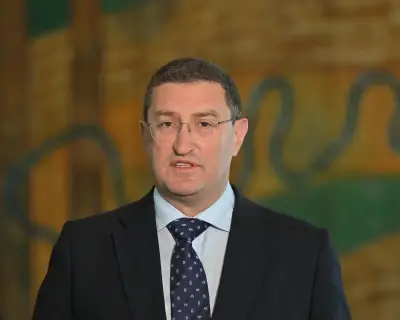
Australia's special envoy to combat antisemitism, Jillian Segal, has appointed constitutional lawyer and former vice-chancellor Greg Craven to lead a controversial university antisemitism monitoring program. The appointment came after a failed open tender process where five professional firms declined to participate, according to documents released under freedom of information laws.
Failed Tender Process Revealed
Segal's office initially approached three independent consulting firms and two law firms to conduct assessments of how Australian universities are addressing antisemitism on campus. All five organizations declined to submit bids for the tender, with conflicts of interest related to their ties to the university sector believed to be the primary reason for their refusal.
Following this setback, Segal's office developed a shortlist of five individual candidates, with Craven positioned at the top. Documents indicate that other candidates on the list would only be approached if Craven declined the role.

Justification for Direct Appointment
In correspondence with the Department of Home Affairs, Segal's chief of staff explained that after receiving "no official bids" during the two-week tender period, they had "re-thought the process." They argued that the project could be "equally well delivered" by a "credentialed, eminent Australian" such as retired jurists or former university vice-chancellors.
The office provided a list of five potential candidates, beginning with Craven, and stated that given the "nature of these individuals," it would be "inappropriate" to approach them all concurrently and have them "compete." Instead, they proposed working through the list one individual at a time.
Craven's Appointment and Compensation
Three weeks after this justification was provided, Craven received a Commonwealth contract for the $232,466 role, with his term extending until June 30, 2027. Segal announced his appointment to the position last November as part of her comprehensive plan to combat antisemitism, which includes a university report card system that could potentially withhold government funding from institutions deemed insufficient in addressing antisemitism.
Controversy and Criticism
The appointment has drawn significant criticism, particularly regarding Craven's previous public statements about Australian universities. In 2023, Craven described Group of Eight universities as "elitist" and "self-interested" in columns published by News Corp's the Australian. He also referred to these institutions as "greedy" organizations that have "dissed Western civilisation, minimised antisemitism and genuflected to Trotskyist student unions."
Following the Bondi shooting incident, Craven commented that universities had been a "major factor in making antisemitism respectable" and described campus protesters as "mutant radical groups."
National Tertiary Education Union (NTEU) president Dr. Alison Barnes has raised concerns about impartiality, stating that Craven has "spent years using his platform to attack the very institutions and people he is now supposed to be assessing impartially."
Report Card System Details
Documents confirm that universities will be graded on how effectively they "deal with" protests, encampments, and the display of flags as part of the antisemitism report card system. The Albanese government adopted this approach following the Bondi terror attack.
The assessment criteria outline four priority areas, including requirements that university policies "effectively address access to campus grounds" and "regulate outdoor protests." Institutions will also be evaluated based on their responses to "all protests, encampments and display of flags, imagery and promotional materials within university campuses and buildings."
The first set of reports was expected to be provided to universities in May, though the exact timeline remains subject to the assessment process. Both Segal and Craven were approached for comment regarding the appointment and the ongoing implementation of the antisemitism monitoring program.