The chancellor's decision to freeze student loan repayment thresholds has ignited a fierce debate about fairness and transparency in education funding. Rachel Reeves faces mounting criticism for what experts describe as a stealth tax on graduates, using the student loan system to fund public services while insisting no taxes have been raised.
The Graduate Levy Disguised as Loan Management
Personal finance expert Martin Lewis delivered a scathing critique of the chancellor's policy, arguing that freezing repayment thresholds effectively transforms student debt into a targeted tax on young graduates. His analysis reveals the fundamental contradiction in the government's position: money collected through student loan repayments cannot simultaneously fund public services while maintaining the fiction that these are simple loan repayments rather than taxation.
How the Threshold Freeze Functions as Taxation
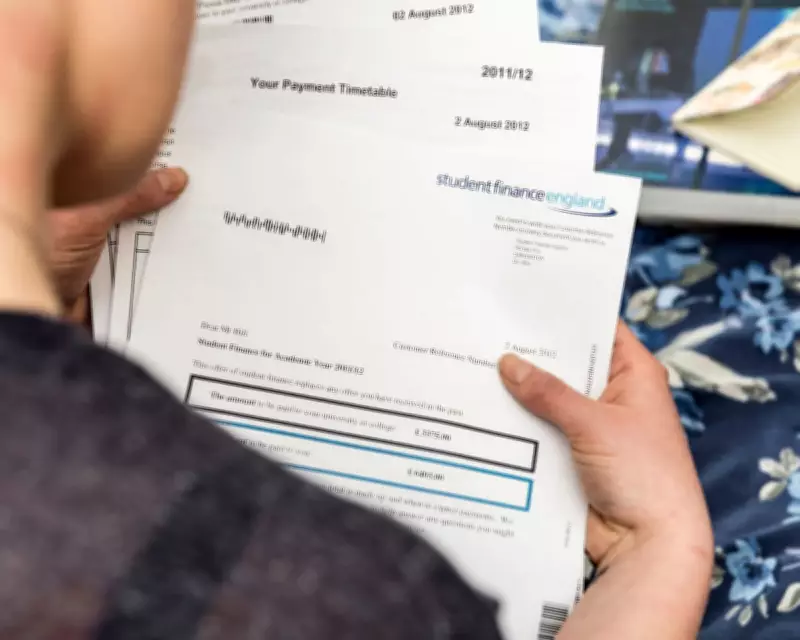
The policy specifically affects the "plan 2" student loan scheme, which covers approximately six million people who entered universities in England and Wales between 2012 and July 2023. For these graduates, the current system already creates challenging financial pressures. Every pound earned between £30,000 and £50,000 faces a 20% income tax rate, 8% national insurance contributions, and 9% loan repayments - creating a substantial 37% marginal tax rate.
By freezing the plan 2 threshold from 2027 as proposed, graduates face a growing financial burden as wages increase. The repayment starting point remains fixed at approximately £30,000, meaning that as salaries rise, an expanding portion of their income becomes subject to the 9% repayment charge. This mechanism ensures that more income remains taxed at the 37% rate for longer periods as earnings increase.
The Institute for Fiscal Studies' Assessment
The respected economic research organisation has concluded that this policy approach is indistinguishable from a straightforward tax increase. Their analysis highlights how the government's strategy creates what amounts to a graduate-specific levy, targeting a particular demographic group while maintaining the political convenience of claiming no general tax rises have been implemented.
The Growing Burden of Student Debt
Current statistics reveal the scale of the challenge facing today's graduates. Official figures indicate that students in England now complete their studies with average debts reaching £53,000 - representing a 10% increase in just one year as borrowing rises to cover escalating educational costs. Perhaps more strikingly, less than one third of full-time undergraduates from the 2022-23 academic year are projected to repay their entire loan balance.
This creates a fundamental question of fairness: should individuals earning £60,000 face additional financial burdens simply because they attended university in 2014 rather than 2009, or because their families lacked the resources to pay tuition fees upfront? The current system appears to penalise graduates based on timing and family wealth rather than genuine ability to pay.
The Wealth Disparity in Education Funding
While education represents a productive investment rather than a luxury commodity, the current system allows wealthy families to effectively "buy out" their children from the long-term financial consequences of student debt. Bankers and other high-earning professionals can clear their balances rapidly, while teachers and public sector workers may face decades of repayments. This creates an inherent inequality where family wealth determines financial freedom after graduation.
Political Consequences and Public Opinion
A significant political backlash is developing as working-age graduates recognise they face debt burdens that previous generations largely avoided. This growing voting bloc is becoming increasingly aware of the generational inequity embedded in current policies. Recent polling by YouGov reveals substantial public support for debt relief measures, with 44% of respondents expressing desire for partial or complete student debt cancellation, and over one third advocating for complete loan forgiveness.
Alternative Approaches to Public Service Funding
The chancellor faces clear alternatives to the current approach. She could fund public services through broader, more progressive taxation systems that distribute costs more equitably across society. Alternatively, the government could utilise the state's balance sheet to invest in services while accepting higher deficit levels. Both approaches offer greater transparency than the current system, which extracts revenue specifically from graduates while permitting ministers to claim they haven't raised taxes.
Economically, the distinction between genuine taxation and student loan repayments has become increasingly meaningless. Politically, however, the current approach represents a calculated evasion that is becoming increasingly difficult to defend as more graduates recognise the true nature of their financial obligations. The debate highlights fundamental questions about how society values education and who should bear the costs of developing the nation's human capital.