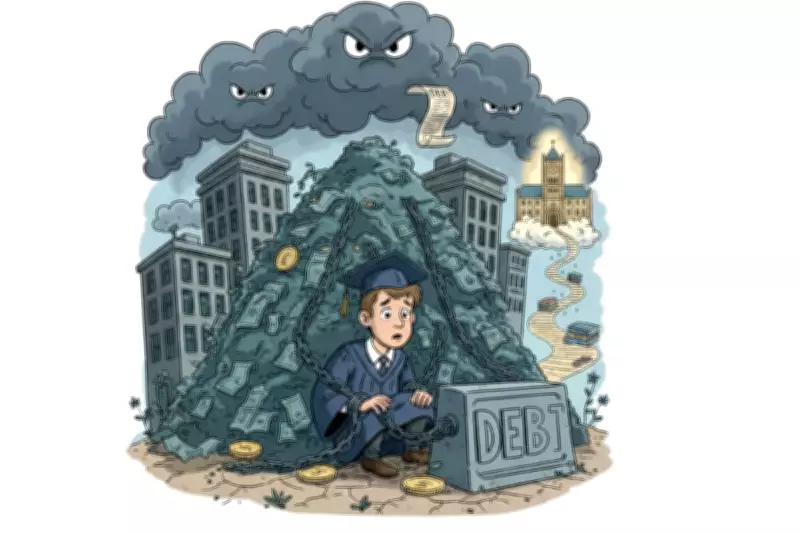
The Great Student Loan Debate: Forgiveness for NHS Heroes or Systemic Reform?
The contentious issue of student loan debt has returned to the forefront of political discourse, with particular focus on graduates who took out plans between 2012 and 2023. As mounting evidence reveals the severe impact of educational debt on public services and individual wellbeing, a fundamental question emerges: should the government forgive student debt, or at least substantial portions of it, particularly for essential workers?
The Case for Targeted Forgiveness: Saving Our NHS
Proponents of student loan forgiveness argue that targeted schemes could provide immediate relief to struggling public services, particularly the National Health Service. The statistics paint a concerning picture: for every five nurse training places available, only the equivalent of three full-time nurses ultimately join the NHS workforce. This alarming dropout rate represents a crisis affecting students, graduates, healthcare institutions, and the government simultaneously.
A proposed solution involves implementing a structured forgiveness programme for healthcare professionals. This could involve writing off 30% of a graduate's loan balance after three years of NHS service, 70% after seven years, and complete forgiveness after a decade of dedicated work. Such a policy would be relatively inexpensive for the Treasury, given that many healthcare workers are unlikely to repay their full loans before the standard write-off period anyway.
The financial burden of student debt frequently deters potential candidates from applying to healthcare courses altogether. A forgiveness scheme could therefore boost application numbers while simultaneously preventing early career departures from the NHS. Furthermore, reducing this financial pressure could significantly improve worker wellbeing, as the psychological impact of substantial debt can severely undermine perceptions of financial security.
International examples demonstrate the potential effectiveness of such approaches. Australia has successfully implemented similar programmes within its healthcare system, providing a viable model for the UK to consider. With the NHS facing unprecedented workforce challenges, loan forgiveness represents a tangible opportunity to make immediate improvements while enhancing the service's appeal to graduates.
The Fiscal Reality: Why Blanket Forgiveness Remains Unrealistic
Opponents of widespread student debt forgiveness acknowledge the appeal of such proposals but question their feasibility within current fiscal constraints. Instead, they advocate for addressing the fundamental unfairness embedded within the existing system.
The debate often presents a false dichotomy between fully publicly funded higher education and completely privatised models. The UK's system was originally designed as a balanced partnership, with costs shared between the state and students even after the 2012 tuition fee increases. This arrangement recognised that graduates should contribute to their education costs while acknowledging society's broader benefits from an educated population.
However, this balanced model has been gradually eroded without public consultation or democratic consent. The financial burden has shifted overwhelmingly onto individuals, with the government projected to generate an £800 million profit from student loans taken out by the 2022/23 cohort alone. What began as a support mechanism has transformed into a revenue-raising tool for a financially constrained government.
The current system traps graduates through eye-watering interest rates that accumulate regardless of earnings. Threshold freezes have broken the implicit contract between students and the state while adding tens of thousands of pounds to lifetime repayments. Middle-earning graduates suffer most under this arrangement, facing an effective nine percent graduate tax while remaining unlikely to ever clear their balances.
Systemic reform rather than blanket forgiveness represents the more sustainable solution. This could involve reducing repayment rates to five percent, ending threshold freezes, and lowering interest rates for graduates. Such measures would rebalance the system without imposing unrealistic fiscal burdens.
The Verdict: Between Crisis Management and Systemic Reform
Student loans have returned to headlines with renewed urgency. Financial expert Martin Lewis has criticised political parties for refreezing repayment thresholds, effectively increasing graduate payments. Recent data revealing ballooning interest charges has prompted calls for a "great reckoning" on student debt, with one MP describing the situation as a "mis-selling scandal waiting to unfold."
Public opinion reflects growing concern, with 44 percent of Britons believing the government should write off some or all student debt. The fundamental question remains whether the government should make amends through forgiveness or focus on repairing a broken system.
Advocates like Lucina Rolewicz argue convincingly that the current unfair system damages essential public services, effectively punishing healthcare professionals for their necessary education. Targeted forgiveness for NHS workers could benefit everyone involved. Meanwhile, Toby Whelton's caution regarding broader fiscal realities remains valid. With £15.2 billion in interest added to student loans last year against only £5 billion in repayments, the system clearly requires intervention.
Student debt forgiveness makes compelling headlines but may not represent realistic policy. The government faces a dual challenge: addressing immediate workforce crises in essential services while implementing sustainable reforms to a fundamentally flawed system. Reducing interest rates and rebalancing repayment terms could provide more achievable solutions than comprehensive forgiveness, though targeted relief for critical public sector workers deserves serious consideration as part of a broader strategy to repair higher education financing.