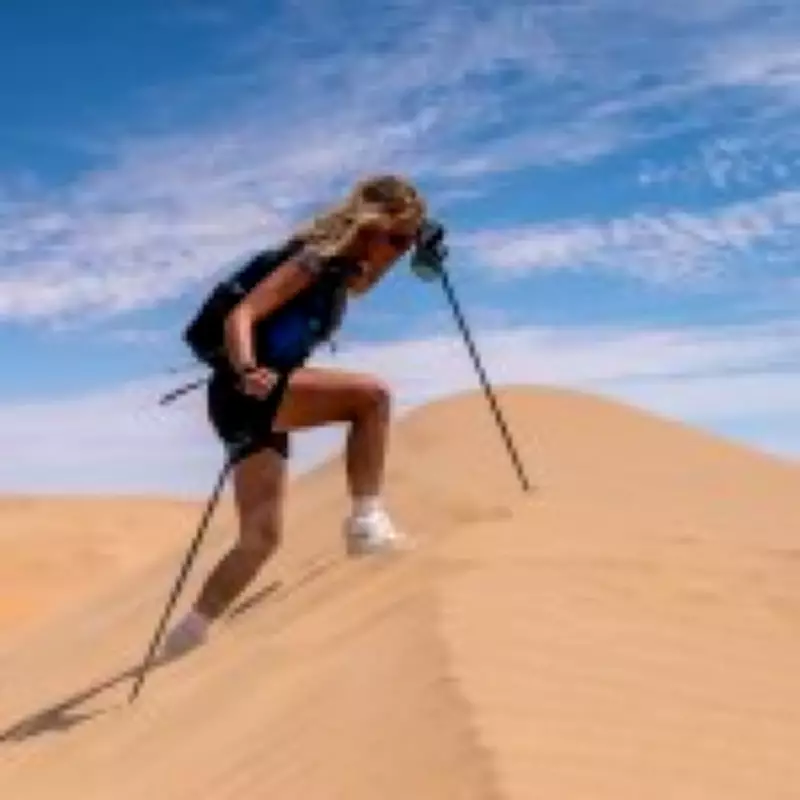
With walking poles extended before me, I drove them into the steep, unforgiving slope of sand, attempting to haul my weary body upwards. Sweat poured from my brow as the wind lashed sand against me from every direction, my legs screaming in protest. In that moment, I genuinely questioned why I had embarked on one of the planet's most demanding adventure races with minimal training under my belt.
The Call of the Fringes
Rat Race had long been on my radar. This adventure company, founded by the intrepid Jim Mee in 2004, orchestrates physically punishing challenges across the globe, from the steppes of Mongolia to the dunes of Morocco. Mee himself speaks of being drawn to "the fringes of the map" and crafting "adventure-filled memories to last a lifetime." Driven by curiosity, I explored their website and secured one of the last available spots for their annual spectacle: Race to the Wreck.
Listed under "Bucket List" adventures, this event entails a 4.5-day, 303km one-way trek across Southern Africa's Namib Desert to the Skeleton Coast, culminating at the famed Eduard Bohlen shipwreck. This vessel has lain stranded on the sandy flats since its grounding in 1909. This is the very race that pushed Radio 1's Nick Grimshaw to his limits during Sports Relief 2020, battling heat exhaustion. My arrival in Windhoek, Namibia, was fraught with trepidation, though the efficient logistics and camaraderie among the 35 competitors offered some reassurance.
Gearing Up for the Unknown
The group ranged from seasoned marathoners to generally fit novices like myself, aged 27 to 64, hailing predominantly from the UK with others from New York, Jordan, and Dubai. Mandatory kit included walking poles, a GPS for self-navigation, and sand gaiters to shield against intrusive sand. After a three-hour drive to the remote Namigrens farm camp—complete with rock-face bathrooms and hot showers—we underwent gear checks and briefings around a campfire, sending final messages before entering a communication blackout.
Into the Land of Many Faces
We embarked at sunrise, with runners and a biking group, which I joined, setting off on a 90km cycle through the Khomas Hochland region. While others sped ahead, I lingered at the rear, absorbing the awe-inspiring, desolate scenery. Namibia's raw wilderness, dubbed "the land of many faces," unfolded in vast, empty valleys. The first day's trials included scorching 38°C heat and jarring, rock-strewn tracks that battered my body. After nine gruelling hours, camp offered cold drinks, a shower, and chef-prepared hot food—a small mercy before race director Jim Mee warned of even tougher soft sand and dunes on day two.
The Crushing Dunes and Mental Battle
We began day two at 4am under vehicle guidance, tackling 110km of relentless terrain. The dunes were brutal, with near-vertical ascents, though descents provided thrilling relief. Checkpoints every 20km offered ice-cold drinks, snacks, shade, and medical support. By 80km, exhaustion and pain nearly defeated me, but the support team's encouragement spurred me on. The final stretch along the rain-softened Kuiseb Riverbed felt like wading through powdery ash. At 91km, as dusk fell, I conceded, joining many others; only ten from both teams completed the leg.
On Foot Among Giants
From day three, we all proceeded on foot. I partnered with Inge from the Netherlands, who, like others, noted that the cycling segment made this race tougher than the famed Marathon des Sables. Charlotte, a 27-year-old UK maritime engineer, consistently led, making it look effortless. Camp on day three offered stunning dune views and a breathtaking starry sky.
Day four brought the world's largest dunes and 9,000ft of ascent over 19 "waves." Walking poles proved essential for scaling these sandy giants; without them, a bear crawl was necessary. Descending felt exhilarating, like childhood play. I walked with David, a Rat Race veteran, and Ken, a novice who caught the adventure bug, planning his next event for 2024. With 5km left, 40km/h winds and battered legs tested my resolve, but their support and paracetamol kept me going. After over 12 hours, we reached camp to cheers and cold beers.
The Final Push to the Wreck
The last 20km, though shorter, felt endless, traversing baby dunes and Mars-like salt flats where jackals darted past. Crossing the finish line was profoundly emotional, a testament to extreme physical and mental strain, exacerbated by my lack of preparation and a pre-race ankle sprain. Rat Race celebrated with oysters, biltong, and champagne before we explored the haunting Eduard Bohlen wreck and embarked on a thrilling dune ride to Walvis Bay.
Reflections from the Desert
Back at the hotel, a proper shower and soft bed felt heavenly. The consensus was clear: Race to the Wreck delivered an unforgettable, expectation-exceeding week. Champion Charlotte called it a "fave week ever," while fellow competitor Sheena found it "surreal." For anyone yearning to push boundaries and explore distant lands, Rat Race offers a non-judgmental arena for novices and athletes alike. Ultimately, it is the participation that truly counts, forging memories in the planet's most remote corners.