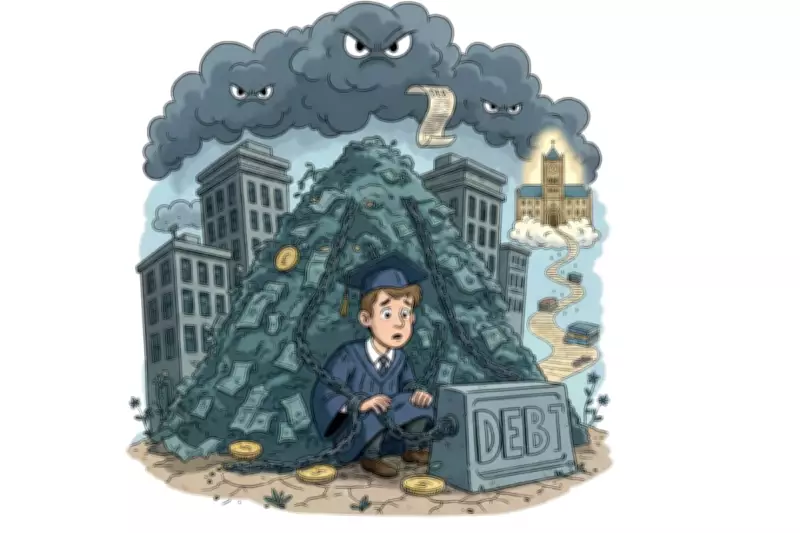
Student Loan Book Masks £33bn in National Debt, ASI Analysis Shows
The market value of the UK's student loan book is approximately £33 billion lower than official government accounts indicate, according to research from the Adam Smith Institute. This discrepancy means the national debt is significantly higher than publicly reported, obscured by billions in loans that are far less valuable than their stated worth.
Overeducation and Financial Strain on Graduates
Britain now boasts the most educated generation in its history, with nearly half of school leavers attending university. However, the push to send half the population into higher education has proven misguided, burdening a generation with lifetime debt and stagnant earnings. The graduate earnings premium has largely disappeared, unlike in other countries with similar graduate populations.
The UK's dysfunctional student finance system funds unproductive degrees while accumulating state debt annually. The state uses an artificially low discount rate to value these loans, failing to account for their inherent riskiness, which distorts the true financial picture.

The Broken Plan 2 Regime
Plan 2, covering English and Welsh students who began undergraduate courses between 2012 and 2023, is particularly flawed. It imposes substantial costs on taxpayers and creates fiscal traps for borrowers. Under this system, the government writes off unpaid debt after 30 years, forcing productive graduates—such as engineers and medics—to subsidize degrees that do not lead to high-paying jobs.
Combined with income tax and National Insurance, some high-earning graduates face an effective marginal tax rate of 77 percent. This perverse incentive contributes to stagnant GDP per capita since 2008 and drives young talent abroad. Meanwhile, 70 percent of borrowers, not expected to repay in full, see balances balloon into six figures due to high interest rates, causing psychological distress despite eventual write-offs.
Proposed Reforms for Plan 2
Reforming Plan 2 need not be complex. Key proposals include:
- Cutting the real interest rate to zero to stem phantom balance growth.
- Extending the write-off period from 30 to 40 years to align with modern working lives.
- Lowering the repayment threshold and reducing the repayment rate from nine to five percent to ease tax traps.
These changes would increase the loan book's value for the Treasury while reducing borrower burdens, creating a win-win scenario.
Long-Term Solutions and University Accountability
Reforming Plan 2 is not a complete solution. In the long term, risk must shift from taxpayers to universities. Currently, institutions receive tuition fees upfront regardless of graduate outcomes, bearing no liability for low-value degrees. To ensure value for money, universities should be held accountable for unpaid loans if degrees consistently fail to lead to decent employment.
This could result in the closure of universities peddling wasteful degrees, aligning with a shift toward vocational mastery. Emulating models like Switzerland's, where technical skills are respected equally with academic credentials, could better serve Britain's economy.
While broader supply-side reforms are needed for growth, simplifying and fairing graduate financial lives is a crucial starting point for policymakers.