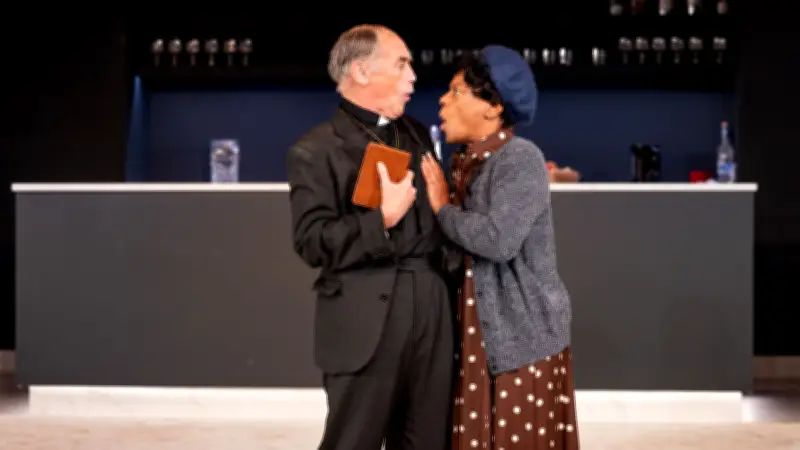
Mark Rylance's performance as a rooking priest with false teeth is the standout element of Tartuffe (Remixed), a new adaptation of Molière's 1664 comedy now running at the Marylebone Theatre in Regent's Park. The production, directed and adapted by Darren Raymond, earns three out of five stars from Time Out critic Tim Bano, who notes that the stage comes alive whenever Rylance appears but diminishes in his absence.
A Modern Spin on a 400-Year-Old French Comedy
Raymond follows his previous approach of remixing Shakespeare plays to open classics to new audiences, this time applying the same treatment to Molière's satire about faith and hypocrisy. The plot centres on a priest who pretends piety and inveigles his way into a devout family whose young members are about to marry, fleecing them in the process. Raymond adds a thick extra layer exploring the culture clash of a Jamaican and a Nigerian family coming together in marriage.
The production runs 2 hours 30 minutes at the Marylebone Theatre, with tickets priced between £20 and £120. Performances began on Monday, 14 September 2026, and continue through October 24, 2026, with matinee and evening shows scheduled throughout the run.

Comedy Grandmas and Rhyming Couplets
Raymond has fun with the culture clash idea, particularly through two comedy crotchety grandmas whose disdain for the young and their wayward ways raises laughs. The production also touches on interesting themes about faith. However, Bano describes the show as a slow trudge through two and a half hours of enervating rhyming couplets, as in the original, which seem frequently to trip up several cast members.
Craig Blake as Delroy and Nakeba Buchanan as Elmire, the wronged wife, hold the stage enjoyably, while Morenike Onajobi as the bride's best friend Kemi brings bolshiness and adds touches of humour beyond just the gags in her lines.
Rylance's Scene-Stealing Turn
Rylance, sticking out like a seventies variety act, plays the rooking priest Pastor Blake with false teeth forward, all salivary, and comically raised eyebrows directed at the audience. He pulls on all the tricks that made him great at the Globe: full acknowledgement of the crowd and playing up to the audience entirely. It is wonderful to watch, but seems plucked from a different production.
The play's caution about blind faith and how it justifies weird things without the possibility of challenge still holds very well. But it is one of those plays where audiences must endure long drawn out and easily solvable consequences of miscommunication, and where characters do things that make no sense in order to keep the plot going a bit longer.
In Raymond's take, Pastor Blake can be seen as a vestige of a parochial and rapacious white England which swindles and steals from black communities. Alternatively, audiences can simply enjoy the false teeth. The stage comes alive with Rylance on it, including a moment where he tries to seduce a baffled woman while waddling around with his trousers down. Without him, the show diminishes into shouty arguments about belief too constrained by the simple rhyme scheme to find real power.