Henry V's Timeless Relevance: How Shakespeare's War Play Mirrors Modern Chaos
A new Royal Shakespeare Company production of Henry V, directed by Tamara Harvey, arrives at a moment of global instability, prompting fresh examination of how this Shakespearean history play serves as a barometer of our times. Revivals of this work have consistently reflected the political anxieties of their eras, from wartime propaganda to contemporary conflicts.
The Chameleon Quality of Shakespeare's War Play
Critic Michael Billington argues that Shakespeare's history plays possess more urgent relevance today than his tragedies, grappling with themes of governance, tyranny, and leadership that continue to haunt modern politics. Henry V proves particularly timely as global tensions escalate, with the threat of war becoming painfully real across multiple continents.
As scholar James Shapiro observed in 2008, there's no better way to know which way the cultural and political winds are blowing than by seeing a performance of Henry V. The play's meaning constantly shifts with historical context, much as it did during its 1599 premiere when audiences anxiously awaited news of an Irish uprising.
Production History: From Wartime Propaganda to Modern Ambiguity
Two landmark film adaptations demonstrate this interpretive flexibility. Laurence Olivier's 1944 version was explicitly dedicated To the Commandos of England and served as wartime propaganda, while Kenneth Branagh's 1989 film reflected Vietnam War disillusionment through its muted, muddy palette.
Stage productions have similarly adapted to contemporary concerns. The 1964 Stratford production, directed by Peter Hall and John Barton as part of an eight-play cycle, balanced rhetoric with reality through Ian Holm's transformation from calculating Prince Hal to sympathetic Henry.
Michael Boyd's 2007 RSC production emphasized the play's ambivalence through Geoffrey Streatfeild's Henry - a pensive solitary forced into military leadership, capable of both unspeakable threats and unexpected tenderness.
Deglamorising War: Recent Interpretive Approaches
Modern productions have consistently sought to deglamorise war while sharpening contemporary relevance. Key examples include:
- Adrian Noble's 1984 production featuring a young Kenneth Branagh, which depicted workaday soldiers huddling in rain
- Ron Daniels's 1997 version with Michael Sheen, framed by the Cenotaph as reminder of war's consequences
- Edward Hall's 2000 production referencing Dad's Army and 'Allo 'Allo to explore confused patriotism
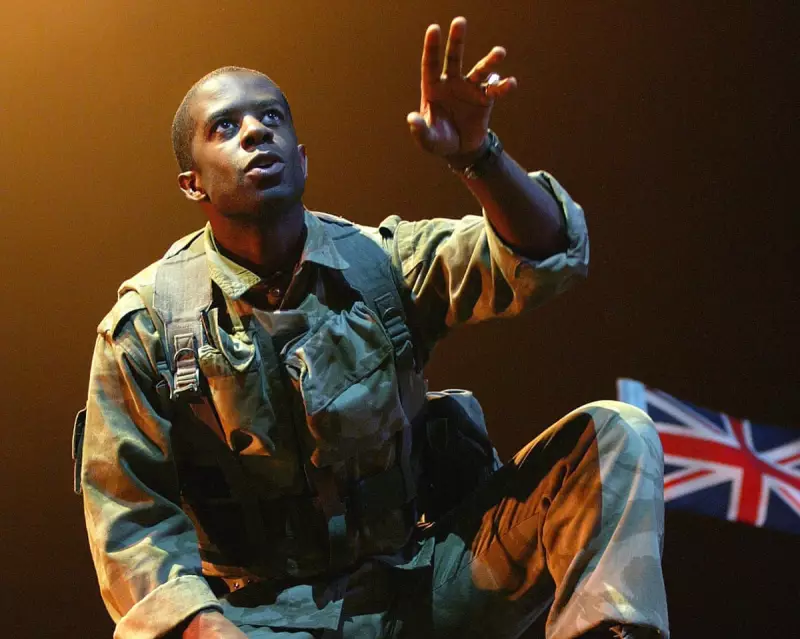
- Nicholas Hytner's 2003 National Theatre production with Adrian Lester, explicitly shadowed by the Iraq invasion
Hytner described his production as the story of a charismatic young English leader who commits his troops to a dangerous foreign invasion for which he has to struggle to find justification in international law - a description that resonates with multiple contemporary conflicts.
The New RSC Production: Refracting Current Events
Tamara Harvey becomes the first woman to direct Henry V for the RSC, with Alfred Enoch assuming the title role in a company of 11 men and eight women. The production arrives during what Billington describes as a world of chaos, instability and fractured alliances.
Burgundy's climactic speech about war's devastating impact - where survivors grow like savages - as soldiers will / That nothing do but meditate on blood - has acquired new potency amid current conflicts. For the first time in generations, the possibility of global war feels tangible, yet contemporary conflicts also reveal remarkable acts of individual and collective courage.
This context makes the current moment particularly appropriate for reviving Shakespeare's richly ambivalent play with its strange mixture of the heroic and the ironic. As global tensions continue to shape international relations, Henry V remains a vital lens through which to examine leadership, conflict, and national identity in turbulent times.