Safe Haven Review: Diplomatic Drama Lacks Kurdish Perspective at Arcola Theatre
Chris Bowers' historical drama about the 1991 Kurdish uprising in Iraq brings authentic diplomatic experience to the London stage but struggles to translate political wrangling into compelling human drama. The production at Arcola theatre, running until 7 February, features former British diplomat Bowers' firsthand knowledge yet ultimately leaves the Kurdish experience on the sidelines.
Diplomatic Authenticity Versus Dramatic Impact
The play abounds with diplomatic characters, from Whitehall officials discussing Kurds hiding in mountains to Iraqi diplomat Al-Tikriti, Saddam Hussein's half-brother. Bowers infuses the crisis debates with weighty authenticity drawn from his time in Iraqi Kurdistan, but this doesn't automatically create gripping theatre. The heroes are diplomats Clive (Richard Lynson) and Catherine (Beth Burrows), who deliver political detail including references to Britain's transition from Margaret Thatcher to John Major.
However, diplomacy's nature means sensible discussion often overrides dramatic sparks. The production emphasizes planning, manoeuvring, and strategic resourcefulness rather than emotional engagement. While these elements could support effective political drama, the complexity and depth needed for truly impactful storytelling remain underdeveloped throughout the performance.
Structural Challenges and Character Limitations
Under Mark Giesser's direction, brief scenes shift rapidly between Whitehall, press conferences, Clive's garden, and Iraqi mountains. This fragmented approach feels overly functional, prioritizing information delivery over human connection. Characters emerge as paper-thin creations, with some performances appearing stilted and underdeveloped.
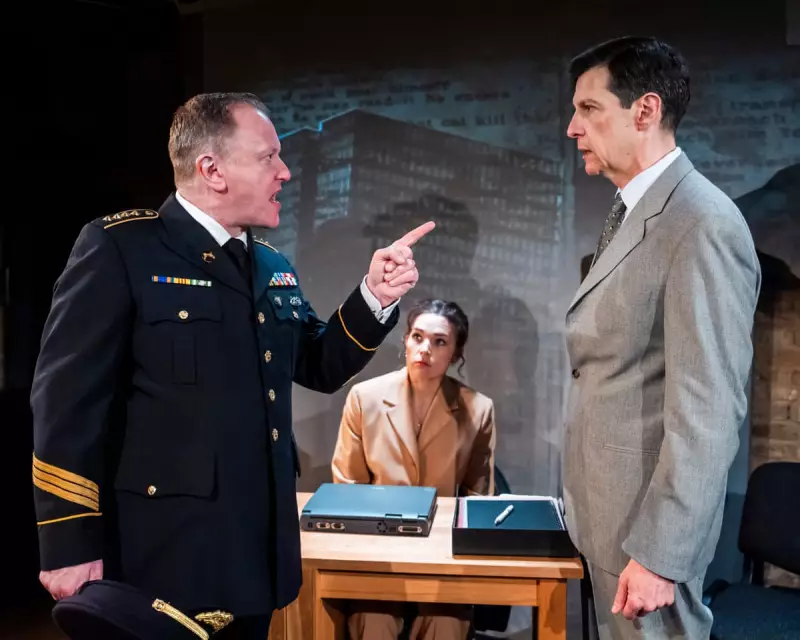
Clive unfortunately proves as dull as John Major's grey suits, relying on predictable cricketing metaphors, while Catherine remains generic in her portrayal. Al-Tikriti (Mazlum Gül) serves merely as a mouthpiece when he briefly appears. The most dramatic moments come from Clive's Middle England wife Anne (Lisa Zahra), who insists he take responsibility for Kurdish suffering when he initially hesitates.
The Missing Kurdish Perspective
The terror facing Kurdish populations receives limited representation through pregnant woman Najat (Eugenie Bouda) and her companion (also played by Zahra) hiding in mountains while coalition forces debate their protection. Najat's brother, a doctor and refugee, manages to appeal directly to Catherine about his people's plight, but these moments feel snatched rather than fully developed.
Audiences might reasonably expect greater focus on Kurdish experiences rather than diplomatic manoeuvring. What about debates and resourcefulness on mountain tops where Kurdish people faced immediate danger? This overlooked chapter of Iraq's history, often eclipsed by Iraq's invasion of Kuwait and subsequent US intervention, deserves richer dramatic treatment with deeper emotional and political complexity.
While the play attempts to highlight Operation Safe Haven's origins through diplomatic conflicts with a blustering American general (Stephen Cavanagh), the pacing and emotional resonance never fully materialize. The production ultimately demonstrates how authentic political insight requires equally powerful human storytelling to create truly memorable theatre.