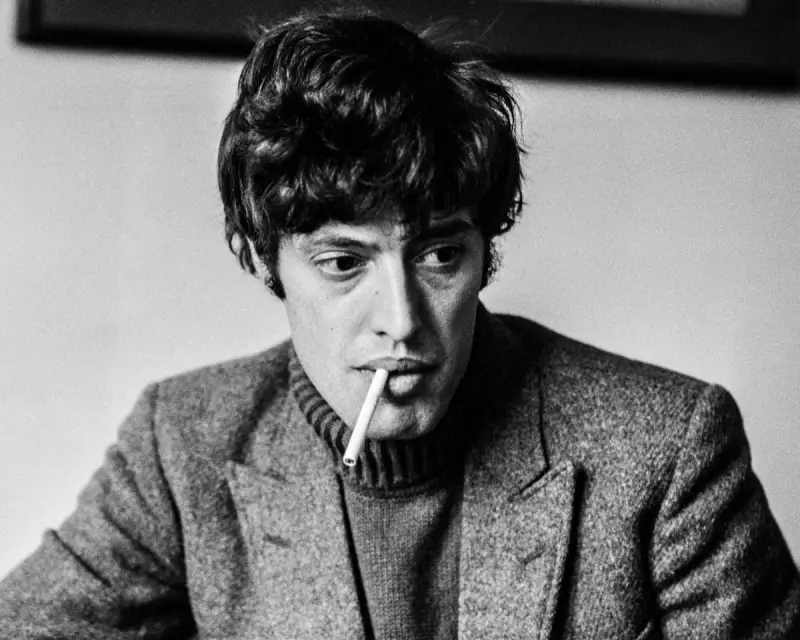
The world of British theatre is in mourning following the announcement of the death of Sir Tom Stoppard, one of the nation's most celebrated and intellectually formidable playwrights. He passed away at the age of 88, leaving behind a monumental body of work that reshaped modern drama.
A Life and Career of Unparalleled Brilliance
Born Tomáš Sträussler in Zlín, Czechoslovakia, in 1937, his family fled the Nazis, eventually settling in Britain. Stoppard's journey from a journalist to a theatrical titan is the stuff of legend. His breakthrough came with 'Rosencrantz and Guildenstern Are Dead' in 1966, a witty and profound reimagining of Shakespeare's 'Hamlet' from the perspective of two minor characters. This instant classic established his signature style: a dazzling fusion of intellectual rigour, linguistic playfulness, and deep humanity.
Over the following decades, Stoppard's output was both prolific and extraordinarily varied. He tackled complex scientific ideas in 'Arcadia', explored the nature of love and journalism in 'The Real Thing', and delved into 19th-century Russian philosophy in 'The Coast of Utopia'. His later masterpiece, 'Leopoldstadt', was a deeply personal and critically acclaimed exploration of Jewish identity and history in Vienna, winning the Olivier Award for Best New Play in 2020.
An Enduring Legacy on Stage and Screen
Stoppard's influence extended far beyond the theatre. He was a highly sought-after screenwriter, earning an Academy Award for his work on 'Shakespeare in Love'. His adaptations, including 'Empire of the Sun' and 'Anna Karenina', demonstrated his skill in translating complex narratives for the cinema. Despite his knighthood in 1997 and a lifetime of accolades, he remained famously self-deprecating about his own genius, often referring to his plays as mere 'entertainments'.
The reaction from the arts community has been one of profound loss and immense gratitude. Fellow playwrights, actors, and directors have hailed him as a unique and irreplaceable voice. National Theatre Artistic Director Rufus Norris described Stoppard's passing as "the loss of a beloved and monumental literary figure", a sentiment echoed across the industry.
The Final Curtain on a Theatrical Giant
Tom Stoppard's death marks the end of an era for British culture. His work was not just entertainment; it was an invitation to think deeply about time, chance, art, politics, and what it means to be human. He possessed the rare ability to make the most abstract concepts thrillingly dramatic and emotionally resonant.
While the curtain has fallen on his remarkable life, his plays will continue to be performed, studied, and adored for generations to come. They stand as a permanent testament to a mind of boundless curiosity and a playwright who forever changed the landscape of the stage. The lights of theatreland may dim slightly, but the brilliance of his words ensures they will never go out.