Opera Booing Controversy: UK Audiences Adopt Unwelcome Tradition
Opera audiences have long prided themselves on understanding the appropriate moments to express appreciation during performances. The traditional cries of "bravo", "brava" and "bravi" represent celebrated elements of operatic culture, with such vocal approval often seen as evidence of sophisticated connoisseurship. However, a less welcome tradition appears to be gaining ground in British theatres as booing becomes increasingly common, raising concerns among critics and performers alike.
Recent Incident at Royal Opera House
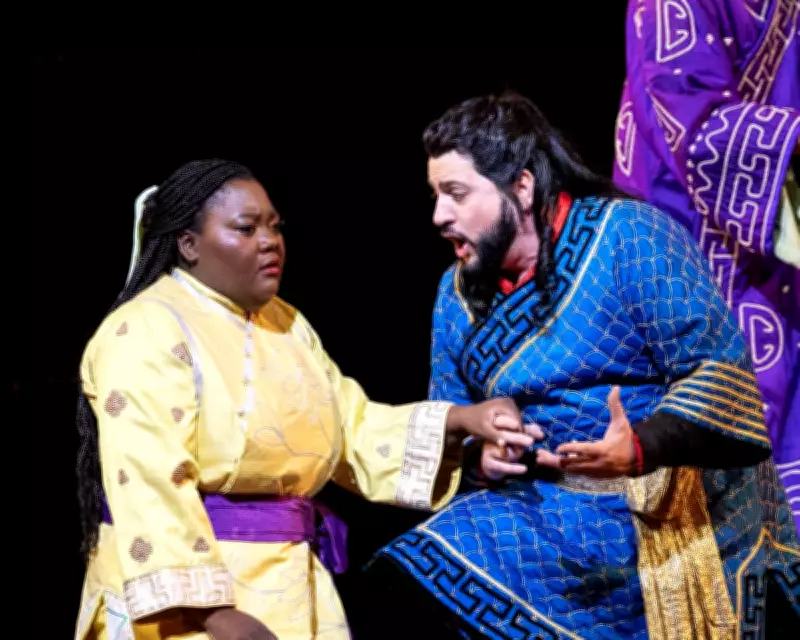
The controversy came to the forefront during a recent performance of Puccini's Turandot at the Royal Opera House in Covent Garden. When tenor Roberto Alagna, who was singing Prince Calàf, fell ill after the second act and withdrew from the performance, the company faced an unexpected challenge. Richard Hetherington, the company's head of music, gamely sang from the wings while choreologist Tatiana Novaes Coelho performed the role on stage.
The situation escalated when the third act resumed without including Nessun Dorma, one of opera's most famous arias, due to its technical difficulty. This decision prompted boos from some audience members who were disappointed at missing this iconic musical moment. While the reaction may have seemed harsh toward the stand-in performers, the displeasure appeared directed more at the programming decision than at individual artists.
Historical Context of Opera Booing
Opera historian Flora Willson notes that while booing has a long history in opera, British audiences have traditionally been more restrained than their Italian counterparts. "Opera seems to provoke more vocal reactions than spoken theatre or musicals," Willson explains, "but mostly booing is directed at opera singers, whose job it is to perform frankly astonishing athletic feats on a nightly basis."
Willson draws parallels between audience responses to opera singers and football matches, though she highlights a crucial distinction: "But of course yelling and chanting in a football stadium doesn't actually prevent a game from continuing in the way that a wave of booing can disrupt an unamplified musical performance."
The historian points to historical precedents at Covent Garden, including riots in 1809 when theatre management raised ticket prices, and protests in 1840 because star baritone Antonio Tamburini hadn't been hired for the season. In those days, theatres operated on a subscription system that gave audiences a direct sense of ownership and right to complain when their preferences weren't prioritised.
Changing Audience Demographics and Behaviour
"Audience demographics have also changed hugely over the past two centuries," Willson observes. "In combination with broader shifts in audience behaviour in classical music – which saw audiences start to sit still and in silence throughout performances – opera audiences have generally become much, much less rowdy."
John Berry, former artistic director of English National Opera and co-director of Scenario Two, confirms that while booing remains uncommon in UK theatres compared to some European venues, the tradition persists in certain contexts. "It's a tradition in some theatres but uncommon in the UK," Berry notes, adding that creative teams typically receive the brunt of booing during curtain calls, with some directors "well prepared to put on their hard hats before they walk on to the stage."
Impact on Performers and Productions
Berry expresses particular concern about booing directed at singers, describing it as "distasteful" – especially in an era when social media provides alternative outlets for audience dissatisfaction. "Singers are human and sometimes they soldier on and sometimes their voice disappears completely within the hour," he emphasises. "Although very disappointing, these things happen – it's a live performance, not a film, that's what makes the whole experience of live theatre so powerful and unpredictable."
Former Guardian columnist and opera enthusiast Martin Kettle suggests that booing can sometimes reflect passionate engagement with how audiences want opera to sound and look. However, he warns: "But it can be very boorish, and we live in an increasingly boorish culture. Social media is often aggressive, and I suppose that translates into the opera house."
Kettle recalls witnessing a particularly cruel incident at the Royal Opera House when a heckler shouted "rubbish" at a 12-year-old actor during a production of Handel's Alcina. The heckler was drowned out by cheers from other audience members and subsequently banned for life from the venue. "It was just horrible," Kettle remembers. "It's often an assertion of a reactionary and narrow view of what an opera ought to be like."
Concerns About Pantomime-Style Reactions
Opera critic Tim Ashley expresses particular concern about pantomime-style booing, where audiences boo villainous or flawed characters regardless of performance quality. "It can be unpleasant, and deeply unfair on the singers," Ashley warns.
The critic witnessed this phenomenon during a production of Madama Butterfly at the Royal Opera House several years ago. When Marcelo Puente, playing Pinkerton, took his curtain call, he received boos despite delivering what Ashley described as "one of the most complete and convincing portrayals of the role to be heard for some time."
The Perfect Storm of Circumstances
For Flora Willson, the recent Turandot incident represented "an operatic perfect storm." Several factors converged to create the controversial situation: Roberto Alagna's status as a major operatic star, Turandot's popularity as an accessible opera often recommended to newcomers, and the iconic status of Nessun Dorma as perhaps the best-known three minutes of music in the entire operatic repertoire.
"For better or worse, that one hit aria will have been the main reason some audience members wanted to see Turandot – and the idea that it could suddenly be cut mid-performance may have seemed outrageous," Willson concludes, highlighting the complex interplay between audience expectations, artistic decisions, and traditional operatic etiquette that continues to evolve in UK theatres.