My Brother's a Genius Review: Neurodivergent Twins' Dreams Take Flight in Sheffield
Debris Stevenson's My Brother's a Genius arrives at Sheffield Playhouse as a co-production between Sheffield Theatres and the National Youth Theatre, bringing a lyrical and imaginative exploration of neurodivergent siblinghood to the stage. This two-hander drama, running until 14 February before touring, blends poetry, grime music, and movement to create an idiosyncratic and infectious theatrical experience.
A Poetic Exploration of Sibling Dynamics
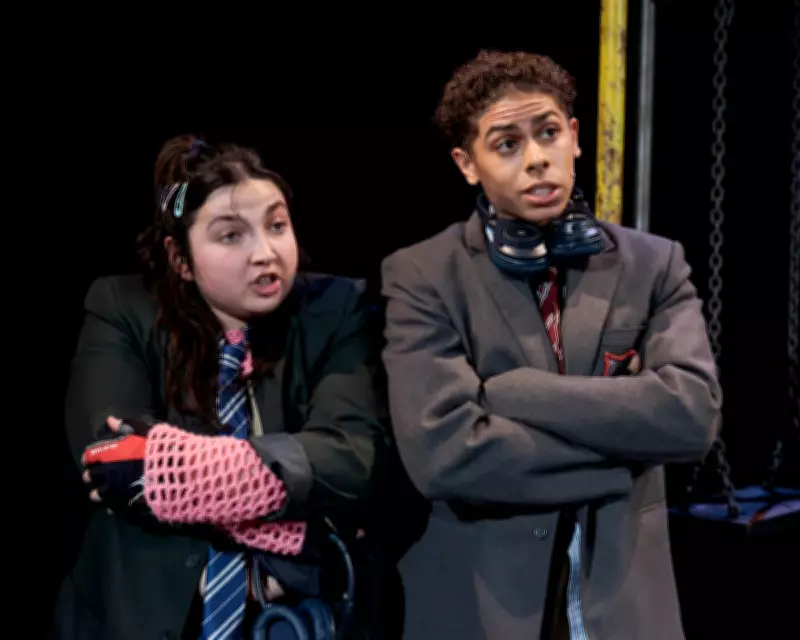
The play centres on twins Daisy and Luke, portrayed with compelling chemistry by Jess Senanayake and Tyrese Walters. Both characters are neurodivergent, growing up in a high-rise environment where their dreams of escape take dramatically different forms. Stevenson, herself a grime poet as well as playwright, infuses the script with a beautiful lyricism that elevates the intimate story of these siblings.
We first meet the twins at age eleven, with Daisy navigating dyslexia and ADHD while trying to live authentically, and Luke in denial about his autism. Their relationship is defined by closeness yet marked by comparison - he's labelled the family genius while she's dismissively called the "idiot." This dynamic creates a rich emotional landscape that the production explores with both tenderness and ambition.
Musical and Movement Elements
Jammz's grime compositions provide an infectious energy that brings the show to life, blending seamlessly with the young actors' impressive rap performances. The integration of poetry and movement creates a distinctive theatrical language that feels both contemporary and emotionally resonant.
Under Eleanor Manners' direction, the production maintains a brisk pace, though some viewers might appreciate more tonal nuance to fully absorb the beauty of Stevenson's script. The movement sequences, while energetic, could benefit from sharper clarity to help audiences navigate the story's switches between inner and outer realities.
Production Design and Narrative Structure
Erin Guan's set design features minimal elements - a curtain, a swing, and a cardboard stereo system - that leave much to the imagination. While this undefined quality suits the play's dreamlike aspects, it occasionally makes scene transitions challenging to follow.
The narrative packs considerable emotional weight, touching on parental violence, maternal mental health issues, and complex sibling rivalry. Both actors skillfully voice multiple roles, from teachers to parents, while omniscient narration adds another layer to the storytelling. This narrative richness sometimes creates confusion, but may intentionally reflect the oblique, non-literal nature of the twins' experiences.
Standout Moments and Performances
When the production finds its rhythm, it becomes genuinely absorbing and moving. A particularly powerful scene shows Daisy feeling as if she's floating, finally finding her home in circus training - one of her escape fantasies alongside Luke's ambition to become the first teenager on Mars.
Walters delivers a lovely performance as the protective yet single-minded brother, while Senanayake captures Daisy's journey toward self-acceptance with sensitivity and strength. Their affectionate chemistry anchors the production, making the sibling relationship feel authentic and compelling.
A Unique Theatrical Voice
Ultimately, My Brother's a Genius affirms Stevenson as a uniquely gifted playwright whose words truly take flight. The production celebrates neurodiversity while exploring universal themes of family, ambition, and the search for liberation. As the twins seek different forms of escape - whether through space exploration or circus acrobatics - the play reminds us that genius comes in many forms, and that sibling bonds can both constrain and liberate.
This Sheffield production represents an important contribution to contemporary theatre, blending urban music forms with poetic drama to create something genuinely original. While the narrative complexity may challenge some viewers, those willing to engage with its distinctive rhythms will find a moving and thought-provoking exploration of what it means to dream differently.