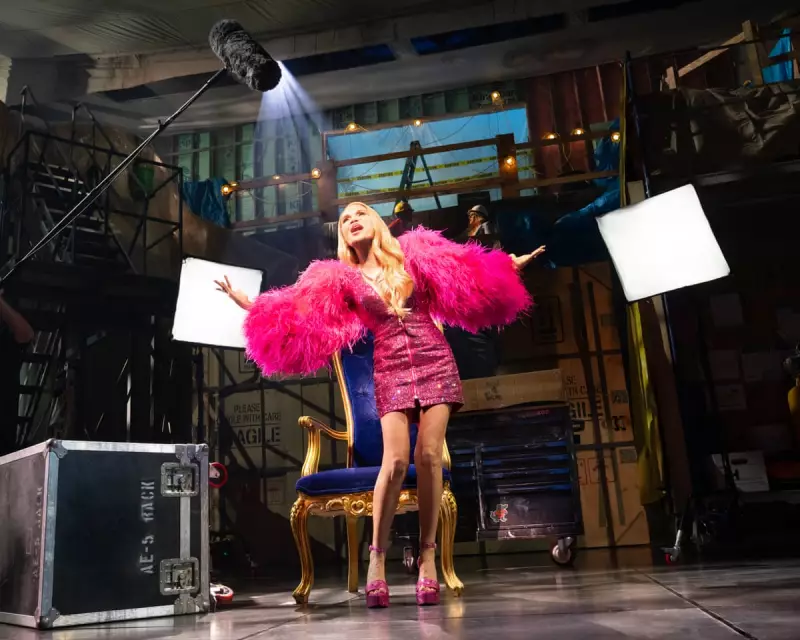
Kristin Chenoweth has made her long-awaited return to Broadway in The Queen of Versailles, reuniting with Wicked composer Stephen Schwartz for a spectacular yet exhausting new production at St James Theatre in New York.
A Shaky Foundation for a Broadway Spectacle
Much like the actual Palace of Versailles built on marshland by King Louis XIV, this musical rests on questionable foundations. The production marks Chenoweth's first leading Broadway role in a decade and brings her back together with Schwartz, yet the choice of material has raised eyebrows among theatre critics.
The show is loosely based on Lauren Greenfield's acclaimed 2012 documentary about Jackie Siegel, the wife of timeshare billionaire David Siegel, who embarked on building America's largest private residence - a scale-model Versailles in the Florida wetlands. Chenoweth plays the unapologetically new money blonde with big hair, dramatic outfits, and an even bigger appetite for excess.
Chenoweth's Commanding Performance
Despite the production's flaws, Chenoweth delivers what many are calling a gale-force performance. Her operatic soprano voice and decades of experience playing delusional but lovable characters give what could be risible material a surprising layer of heroism.
"Chenoweth relishes every bedazzled hot pink outfit, shameless punchline and literal emphasis on her 'keep on thrustin'' mantra," noted one critic. The actress blazes through the role of a middle-class striver who climbed from waitress to IBM engineer to pageant queen and ultimately trophy wife.
An Overstuffed and Unwieldy Production
Directed by Michael Arden, the nearly three-hour production struggles under the weight of its multiple narratives. The musical attempts to be several things at once: a multimedia spectacle featuring elaborate collage work and live camera operations, an American camp comedy, a family drama, and a clumsy commentary on wealth worship.
The production features Louis XIV and his court as Greek chorus, drawing parallels between French aristocratic excess and modern American materialism. Marie Antoinette even makes an appearance, courtesy of Cassondra James, to remind audiences that contemporary society may have outdone the Sun King when it comes to tacky displays of wealth.
Other narrative threads include Jackie's relationship with her black sheep daughter Victoria (Nina White) and foster-cousin Johnquil (Tatum Grace Hopkins), who quickly embraces the Siegels' late-2000s materialism. Christian Cowan's costume design provides painfully accurate period references to the era.
Schwartz's Forgettable Score
Stephen Schwartz's music has drawn particular criticism, with numbers ranging from "forgettable" to "outright offensive." The Ballad of the Timeshare King is described as unpleasantly deranged, while Little Houses - a song about lower-middle class homes with "big hearts" - comes across as condescending.
Even a final number meant to convey Jackie's staggering loneliness amid marble and mirrors fails to land with the emotional impact of classic Broadway showstoppers, instead serving mainly to highlight Chenoweth's aptitude for starring roles.
Missed Opportunities for Social Commentary
The production touches on significant issues including the 2009 financial crisis, government bailouts, and the stark contrast between the Siegels' wealth and their less fortunate associates, but these moments feel like self-conscious footnotes rather than meaningful commentary.
A brief but heartbreaking interlude from Filipino nanny Sofia (Melody Butiu), who lives in Victoria's old playhouse, suggests the deeper story that might have been told about the human cost of American excess.
Ultimately, The Queen of Versailles emerges as an ornate but flawed production that, like the mansion it depicts, seems lavish, unwieldy, and somewhat unfinished. While Chenoweth's performance provides moments of brilliance, the overall experience leaves audiences questioning whether the substantial runtime and production resources were wisely spent.