When I walk into renowned stage school Italia Conti, in the smart building in Woking that has been its home since 2022, the first thing that hits me is the quiet. Where are the students dancing on tables? Rehearsing scenes in the hallways? Some are offsite, it turns out, rehearsing for a show, but those I see are busy on their phones in the corridors, like any other young adults.
Life has changed at Italia Conti since its earliest days. The school celebrates its 115th anniversary this year. It was founded in London in 1911 by English actor Italia Conti to teach a group of children appearing in the play Where the Rainbow Ends at the Savoy theatre. Noël Coward was among the young performers. By the 1930s the school was advertising lessons in elocution, acting, singing, fencing and dance (ballroom, “operatic, Greek and stage dancing”).
Modern Shifts and Challenges
These days, it’s commercial dance, aerial circus skills and getting advice on your social media presence. There have been some big shifts during the last decade. The financial strain of Covid forced the closure in 2021 of the junior school for ages 11-16, the alma mater of Bonnie Langford, Louise Redknapp and Martine McCutcheon. (They are looking at how they could bring it back, “but it’s a 10-year plan rather than a two-year plan” as CEO Hayley Newton-Jarvis puts it.)
Italia Conti’s junior school wasn’t the only closure. Redroofs theatre school in Maidenhead stopped providing its full-time course, and the Barbara Speake stage school in Acton closed. When classes paused or went online during Covid, enough parents stopped paying fees that the schools couldn’t survive. In the state sector, Liverpool’s Lipa has announced it is closing its primary and secondary schools at the end of this summer term (its sixth form and degree courses, which are run separately, remain open).
Italia Conti alumna Claire Sweeney, who is currently starring in the musical Annie, tells me she has just signed a petition to save Lipa. “I love stage schools,” she says, especially for “kids who don’t thrive academically, to find their tribe and get that wonderful coaching”. And especially now there’s less arts provision in schools since the shift in focus to Stem subjects.
Alternative Paths and Bursaries
It’s not that there aren’t other ways into the industry, says Sweeney. “Now you can stay in your bedroom, do some recordings and get a record deal. There’s Britain’s Got Talent, YouTube.” But to have any sort of sustainable career you have to hone your skills. “In theatre, if you can’t do it you’ll be found out, you won’t last long.” Sweeney learned her craft singing in social clubs from the age of 14, but a two-year grant to send her to Italia Conti pushed her further. Amid frequent reports that fewer working-class people are entering the arts, Italia Conti is marking its anniversary with the launch of new bursaries for low-income students.
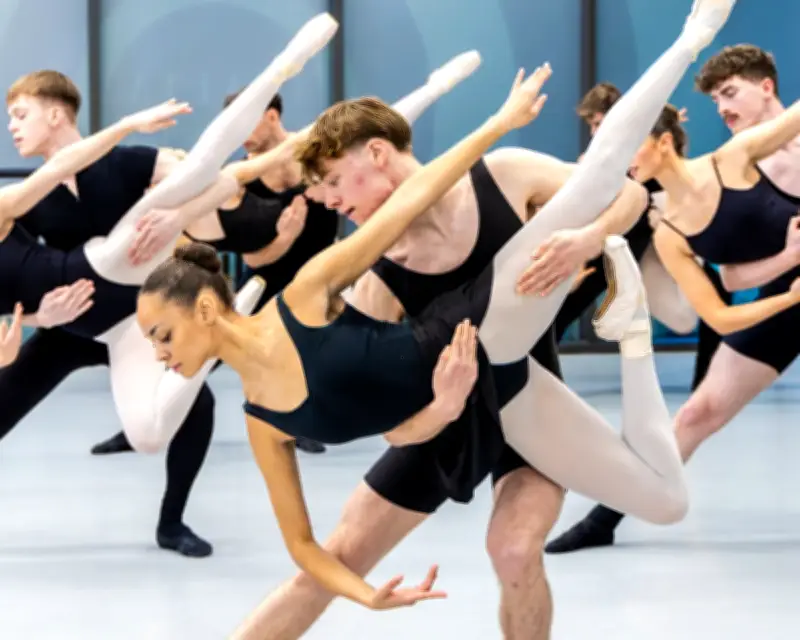
The school now takes students from 16 for dance and musical theatre courses, and 18 for acting. It has consolidated its previous three sites into one state-of-the-art building, with recording studios, a wellness suite and wardrobe department stuffed full of spangly outfits (they get hand-me-downs from Strictly). It’s on the edge of a shopping centre in Woking, with big windows inspired by New York’s Juilliard school, so you can see synchronised legs in ballet tights doing grands battements when you come out of the big Boots.
Teaching Methods Evolve
Ducking into the studios, I watch singers doing tongue-twisting warm-ups (“Thirty, flirty and thriving!”), and a dance break from Anything Goes. “I know we’re fighting for dear life but our faces don’t need to show that!” warns the teacher. I see theatre students being told “Have a little explore and let’s get it wrong” in Macbeth, and getting advice against “middle-distance acting” in Chekhov.
The manner of teaching has changed over the years, particularly in acting, says Harriet Whitbread, head of acting at the school. “In the past there was lots of swearing. Lots of telling you that you were crap. And you’d just have to cope with that. That was the training of old,” she says. “It used to be that they would deconstruct you, and if they put you back together again, you were lucky. Now we have a responsibility to ensure that the young person who travels through the training is intact all the way through, and is robust and resilient for when they leave.”
Resilience is a word that crops up again and again. It is a necessity in a profession in which rejection is part of the game. So how do you build it? “Is resilience built by students being challenged and being constantly given obstacles and barriers?” asks Michael Vickers, deputy head of musical theatre and dance. “Or is resilience built in the good times when you’re supported and feel safe in your education?” He leans towards the latter.
Mental Health and the Food Bank
Newton-Jarvis is thinking about resilience too. “I do feel the mental health is much worse than it was when we were training. I feel like they genuinely do struggle,” she says. “There is a lot of anxiety.” She has seen students less able to cope with part-time jobs as well as studying and, of course, costs are rising. The school has its own food bank.
“One thing that’s getting harder to teach is the reality of what’s going to happen out there,” says Newton-Jarvis. When she was a student here, teachers had the same expectations as in the professional world, she says. Now, the feel is more “I’m paying to be in an educational establishment”, and student feedback is increasingly important. “The training is not as intense as it used to be,” she says. “I don’t know whether that’s good or bad. Now we try to nurture more.” Her concern is how well prepared they are for the real world. “It’s like the expectations are too high for them to comprehend, which always worries me because when they leave I always feel they’re in absolute shock.”
Commercial Dance and Graft
The students certainly aren’t getting an easy ride in Lawrence Parsons’ commercial dance class. They quickly swap ballet shoes for heels as Parsons leads with dynamite energy, expecting quick-fire learning and attention to specifics. “Style. Detail. Dynamics. Performance.” That’s what’ll get you a job, he tells his charges.
A lot of performing arts training, in dance and music especially, is repetitive graft – something Newton-Jarvis says students are finding tougher, which she puts down to smartphones. Not just the distraction from practising but the dopamine addiction, the instant gratification. “It’s like their brains can’t deal with the repetitiveness of what you need to do,” she says.
Social Media and AI
But, she concedes, her students are just keeping up with the world they’re going to enter into. They’re going into a very public profession, they will have to market themselves, they’ll need a social media presence – people get jobs that way. Some students are already making money out of TikTok content.
Sophia Oram, a 19-year-old third-year musical theatre student, is already curating her feed. She tells me she puts dance on TikTok and uses Insta for acting. But she is very committed to the graft, too. She wants to get into film and TV but chose to come to Italia Conti at 16. “I wanted the training in musical theatre, I wanted the discipline that comes from it.” She got a full government Dance and Drama Award grant: “Otherwise I probably wouldn’t have been able to come.”
On that other great tech question, AI, Newton-Jarvis says that of course the school is always thinking how new technology might affect students, but she can’t imagine it replacing the human element of live performance. “There’s nothing like the risk of a human going wrong!” But Vickers says his session singer friends are concerned they could be replaced on recordings. “Currently it still requires so much work to make AI sound human, so humans are cheaper. But we might see that change over the next five years or so.”
Student Perspectives
The students I speak to have a certain amount of trepidation about their futures, but mainly they’re excited. Excited to be here, to be pursuing their passions. They are flush with the possibilities of youth and the drive to make their dreams come true, just as all the generations before them were. “It’s not just going to be given to you,” says Oram, “but if you really fight for what you want and put the work in to reach your goals, you will succeed.”