A powerful new play is taking the stage at Newcastle's Live theatre, tackling the pressing issue of societal division head-on. Jamie Eastlake's 'Big Ange' presents a compelling morality tale for modern Britain, asking difficult questions about the forces pulling the country apart.
A Dinner Lady's Mission
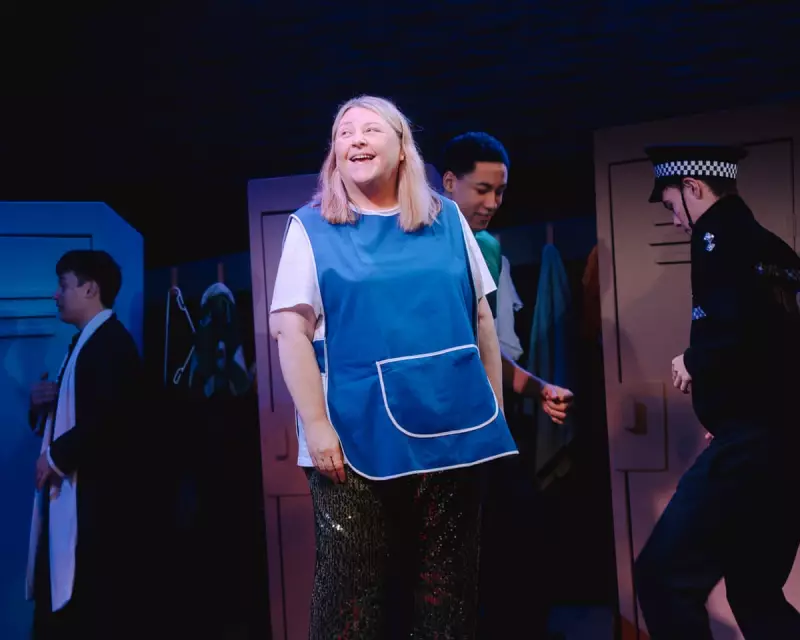
At the heart of the story is Angela, brilliantly portrayed by Joann Condon. A dinner lady who has spent twenty years in the north-east while retaining her Tottenham accent, Angela experiences an epiphany after seeing football manager Ange Postecoglou. She reinvents herself as Big Ange and transforms the school football team into a winning squad.
Her character represents the community spirit increasingly under threat in contemporary Britain. In one of the play's more memorable moments, Angela offers her own theory about when society became so polarised - pointing to 2005 when Jamie Oliver's campaign against junk food led to the banning of Turkey Twizzlers. While playwright Eastlake acknowledges this as a "wonky analysis," it effectively illustrates how ordinary people struggle to make sense of complex social changes.
The Battle for a Young Man's Soul
The central conflict revolves around eighteen-year-old Steven Mooney, played by Curtis Appleby. As a young man from Blyth distressed by his Northumberland town's economic decline, Steven becomes vulnerable to extremist influences seeking someone to blame for his community's struggles.
Two opposing forces compete for his allegiance: his sister Caroline (Erin Mullen), who has moved south and embraced middle-class socialist values, and a charmingly sinister fascist (Lucy Eve Mann) who encourages his Islamophobic online videos. This dynamic creates a tense narrative that reflects real-world concerns about radicalisation and the appeal of simple answers in a complex world.
Theatrical Innovation and Social Commentary
As both playwright and director, Eastlake makes several bold creative choices. Most notably, he fields an all-dancing, all-scoring chorus of eight performers on the Live theatre's relatively small stage. Their synchronised movements bring theatrical energy to the weighty themes being explored.
While the writing occasionally shows some unevenness with underdeveloped themes and misfiring jokes as it switches between parallel stories, Eastlake demonstrates a keen understanding that issues like deprivation, justice, and radicalisation need to be discussed openly with both empathy and humour.
The production continues at Live theatre, Newcastle until 22 November, offering audiences a timely exploration of the forces shaping contemporary British society. Eastlake, who continues to enjoy success with his adaptation of Jonathan Tulloch's Gerry & Sewell, proves once again his ability to create theatre that matters.