A controversial Christmas mural in the London borough of Kingston has left local residents baffled and concerned, with many branding the festive artwork a 'nightmare' and blaming artificial intelligence for its bizarre flaws.
A Festive Nightmare on the High Street
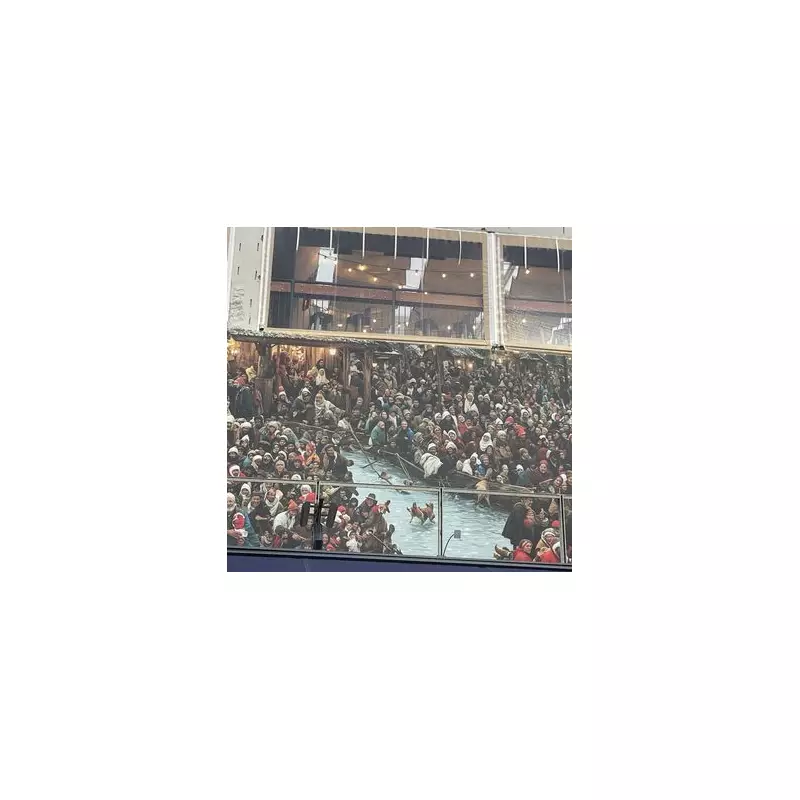
The huge mural has appeared on the side of the Bishops Palace House development, positioned above popular restaurants including Côte and Bill's. While the image depicts groups of people in Santa hats and animals sailing on a river, a closer look reveals deeply unsettling details.
Residents were quick to point out the artwork's 'weird' features, which include headless people and dogs mysteriously missing their front legs. The disturbing imagery has turned what should be a cheerful seasonal display into a topic of local outrage.
Local Reaction: From Bafflement to Outrage
James Crawshaw, who lives nearby, told reporters that the mural looked like a scene from The Hobbit. "It doesn't look like a place I want to be," he said. "It's not very festive, there's a lot of people crowded into a small space."
He expressed a strange sense of relief at the poor quality, suggesting it proves there's still a future for human artists. "It would have been much nicer for some children from a local school to do it," Crawshaw added.
Other residents were more direct in their criticism. Annabelle Pak and Nick Bruni, who also live in the area, described the Christmas mural as a complete "nightmare." They questioned why the developers hadn't commissioned work from a local artist instead.
Annabelle specifically pointed to artificial intelligence as the likely culprit, stating: "This AI gone wrong - you question how it got this far." She also noted the confusing mix of religious and Christmas themes, leaving viewers uncertain about the mural's intended message.
The Broader Implications of AI Art
While most residents expressed dismay, the mural has certainly succeeded in one regard - sparking conversation. Mariam, another local, admitted she was less offended but acknowledged the artwork was "definitely sparking conversation."
"I didn't look that closely at first but I thought it looked quite nice - it feels quite inclusive and topical," she commented. "The intention was lovely but the execution was subpar."
The discussion quickly moved beyond mere aesthetics to larger concerns about technology's role in creative fields. Paul, who lives in Wallington, said the mural served as a stark reminder that we should not yet trust AI to do jobs as well as humans.
"It's rubbish, it's all wrong," Paul stated bluntly. "They could have just put some Christmas trees up." He added that whenever he uses AI tools, he makes sure to double-check the information they provide.
Paul expressed concern that while his generation knows to question such content, younger people might not recognize the importance of verifying AI-generated information. This raises important questions about digital literacy in an increasingly AI-driven world.
While MyLondon has not yet received confirmation from the building owners about whether AI was used to create the controversial image, the public consensus seems clear. The mural has become an unintended case study in the limitations of artificial intelligence in creative applications.